
Butler Building
FIRE DAMAGE RECOVERY
Engineering-Led Fire Recovery
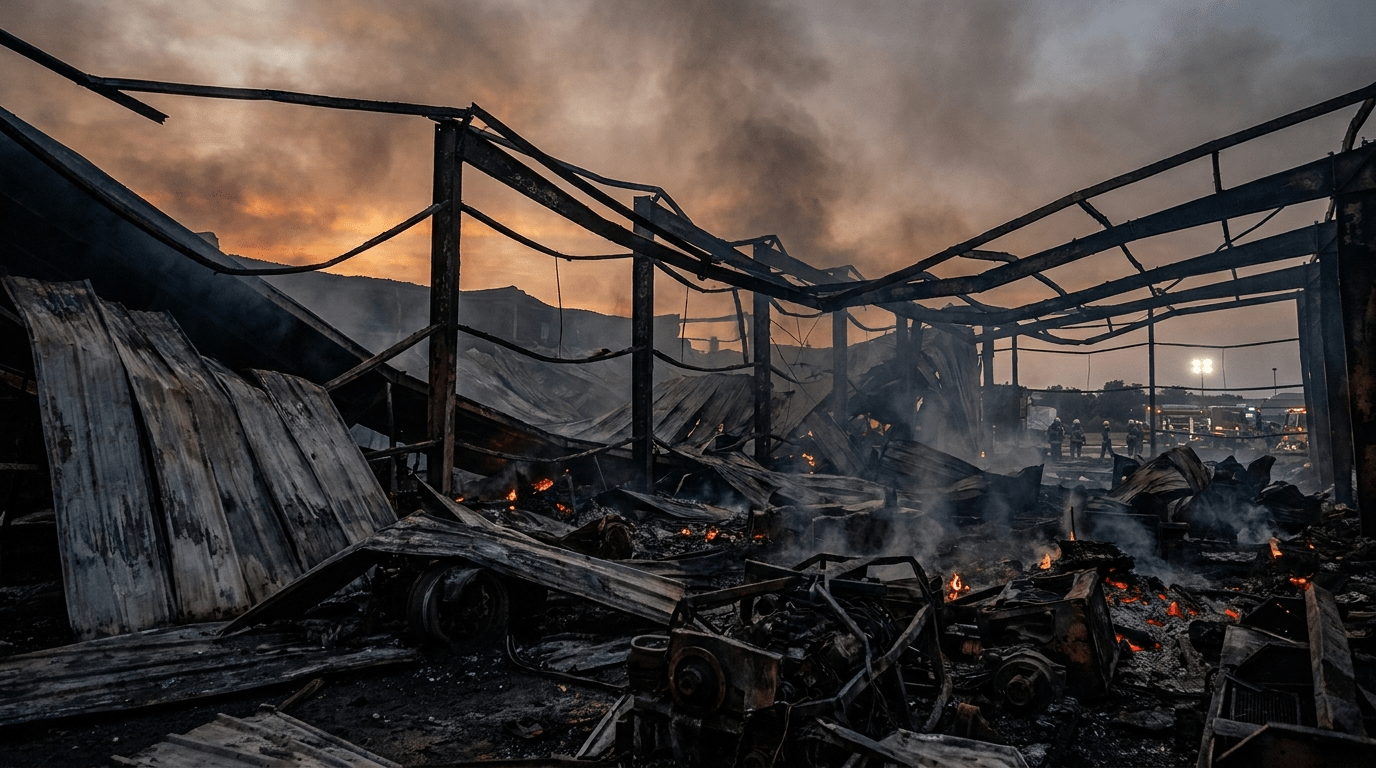
Industrial fire damage extends far beyond charred surfaces. Structural steel elements undergo molecular changes under extreme heat, potentially compromising the structural integrity of the entire facility. Our specialized engineers assess connection fatigue and localized buckling that traditional contractors often overlook.
Soot mitigation is equally critical. Corrosive particles can penetrate deep into HVAC systems and structural crevices, causing long-term degradation of electrical components and secondary oxidation of metal surfaces if not addressed within the immediate recovery window.
Critical Insight
Immediate stabilization within 24-48 hours prevents irreversible structural warping and toxic particulate embedding. Delaying remediation doubles long-term restoration costs.
Signs Your Building Has Sustained Fire Damage
Structural Steel Warping
Visible bowing or elongation of support beams due to thermal expansion and rapid cooling.
Connection Fatigue
Stress fractures or sheared bolts at structural nodes caused by extreme temperature differentials.
Soot-Induced Corrosion
Acidic soot deposits that rapidly eat through galvanized coatings and electronic components.
Thermal Stress Cracks
Hairline fractures in concrete foundations or slabs caused by thermal shock from extinguishing agents.
Encapsulated Odor
Pervasive smoke odors trapped within building insulation and ceiling cavities.
Insulation Compromise
Melting or charring of vapor barriers and internal wall insulation affecting thermal rating.
Outgassing Residue
Toxic chemical film on surfaces resulting from the combustion of synthetic materials.
Sealer Degradation
Failure of weather-tight seals and panel joints due to heat-induced brittleness.
The Fire Recovery Protocol
Emergency Site Securing and Safety Assessment
Emergency board-ups and roof tarping are essential to secure the property and prevent further damage from weather elements, vandalism or theft following the fire event. Our rapid-response team establishes a safe perimeter, secures all exposed openings and conducts an immediate visual assessment of the primary structural system to determine whether the building can be safely re-entered before a formal engineering inspection begins.
Structural Engineering Assessment
The first step in the fire repair process is an inspection to assess the extent of damage. The repair team evaluates the extent of damage to the building spotting weakened walls, beams and foundations and using devices to detect damage that cannot be seen such as beams weakened by smoke or heat. Our licensed structural engineers inspect every primary and secondary framing member for heat-induced deformation, section loss and connection integrity using factory engineering data for your specific Butler building system to determine which components can be safely retained and which must be replaced.
Water Mitigation and Debris Removal
Water used to extinguish the flames often causes a tremendous amount of damage. Water damage restoration using high-powered pumps, industrial dehumidifiers and air movers removes standing water and moisture from all affected areas. Thorough drying and dehumidification prevent mold contamination, warping and corrosion of metal components. All fire debris, charred materials, damaged insulation and contaminated components are removed and properly disposed of to prepare the structure for reconstruction.
Smoke and Soot Remediation
Smoke that has coated or penetrated surfaces continues to affect the chemical composition of fabrics, metals, walls, ceilings and tile. Comprehensive soot and smoke removal as well as odor remediation is required across all affected surfaces including areas not directly touched by the fire. Our remediation team addresses all smoke-affected surfaces throughout the building envelope ensuring your facility meets air quality standards before reconstruction begins.
Insurance Documentation and Claim Support
Our engineering team produces a complete stamped structural assessment and line-item component manifest documenting every damaged and compromised element of your Butler building system in the exact technical format insurance adjusters require to approve your claim. We coordinate directly with your adjuster to answer technical questions and clear documentation requests that delay claim approval and extend your operational downtime.
Structural Reconstruction and Panel Replacement
Damaged primary and secondary structural members are replaced with genuine OEM Butler components sourced directly from our authorized wholesale supply network. Roof and wall panels are replaced with profile-matched Butler panels in the correct gauge and Butler-Cote finish color. We match nearly any metal profile and our deep knowledge of building helps us know exactly how your structure is assembled so we can restore it effectively.
Final Inspection and Certificate of Occupancy
All required field inspections are coordinated with your local building department throughout the reconstruction process. Upon completion of all inspections and final agency sign-off your facility receives a Certificate of Occupancy confirming full code compliance and clearance for occupancy and operations.
Critical Safety Notice for Building Owners
Do not allow personnel to enter a damaged structure without professional structural assessment. Maintain a safe perimeter and contact emergency services if the building is at risk of collapse. Our emergency teams are trained in OSHA safety protocols and structural stabilization.
Request Emergency Structural Assessment
Ready to Build Your Butler Project?
Download the Spec Sheet
Fill in the fields below to instantly download your spec sheet. A backup copy will also be sent to your email.