
Butler Building
TORNADO DAMAGE RECOVERY
Restoring Certainty in the Wake of Chaos
Tornadic events subject industrial and commercial steel buildings to forces far exceeding standard design loads. The violent rotation and pressure differentials created by high-category winds don’t just damage surfaces—they challenge the very fundamental skeleton of your facility. Structural failure often begins at the secondary member level before propagating to the main framing system.
At Butler Recovery, we specialize in the forensic analysis and reconstruction of complex building systems. We understand that every hour of downtime represents significant revenue loss. Our mobilization units are equipped with high-precision engineering tools to identify invisible stressors and implement immediate structural shoring to prevent further collapse.
CRITICAL WARNING
Tornado-force winds often cause latent structural fatigue at connection points that are invisible to the naked eye. Immediate professional assessment is mandatory.
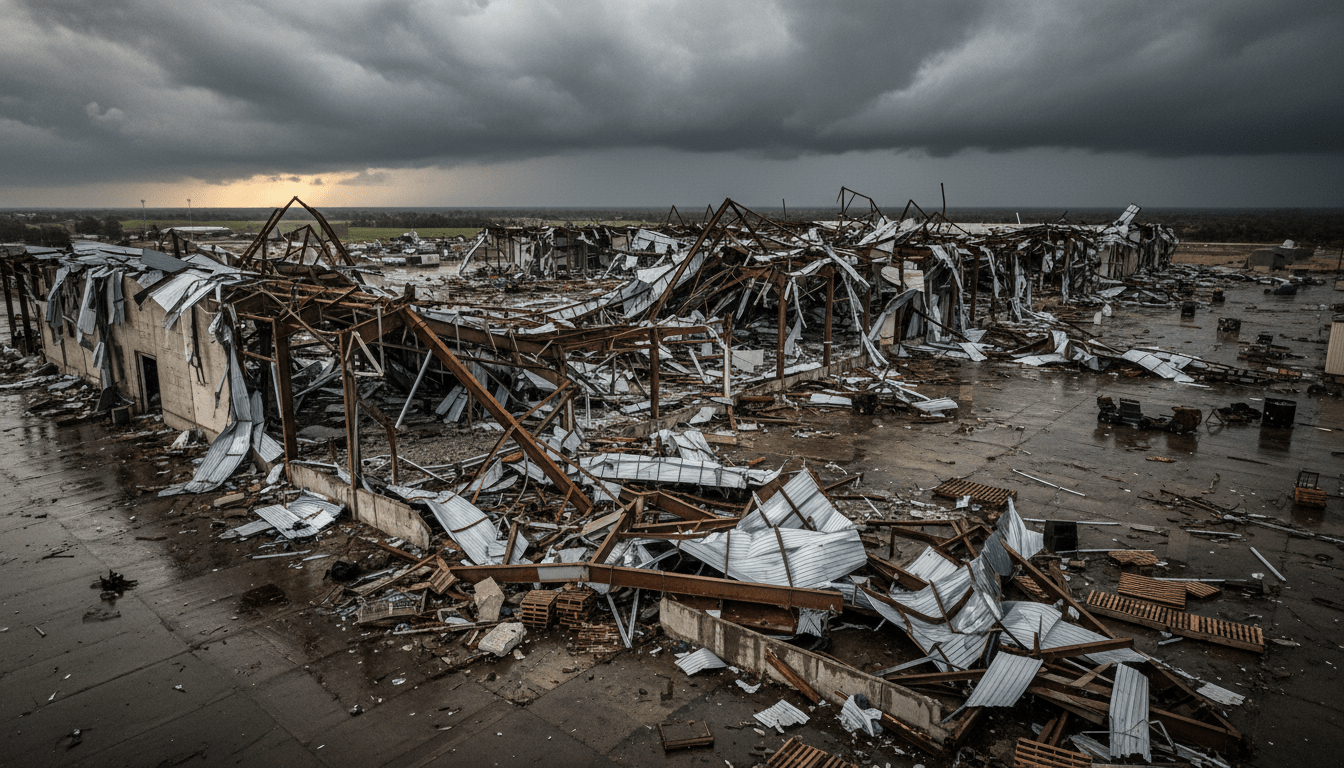
What a Tornado Does to a Pre-Engineered Metal Building
Tornadoes are the most destructive wind event a commercial steel building can experience. Unlike straight-line winds that apply consistent lateral pressure tornado vortex winds create simultaneous uplift, suction, lateral and rotational forces that attack every connection in your building system at once. When a door or window fails during a tornado the resulting internal pressurization dramatically increases the uplift force on the roof system — often the primary cause of complete roof loss even on well-built facilities.
For Butler pre-engineered metal buildings tornado damage assessment requires engineering expertise that goes far beyond a visual inspection. Primary rigid frame members that appear straight may have experienced plastic deformation that has permanently compromised their load-carrying capacity. Anchor bolts that appear intact may have experienced shear loading that has reduced their connection strength to unsafe levels. Only a licensed structural engineer with specific PEMB expertise can make these determinations with the certainty your facility’s safety requires.
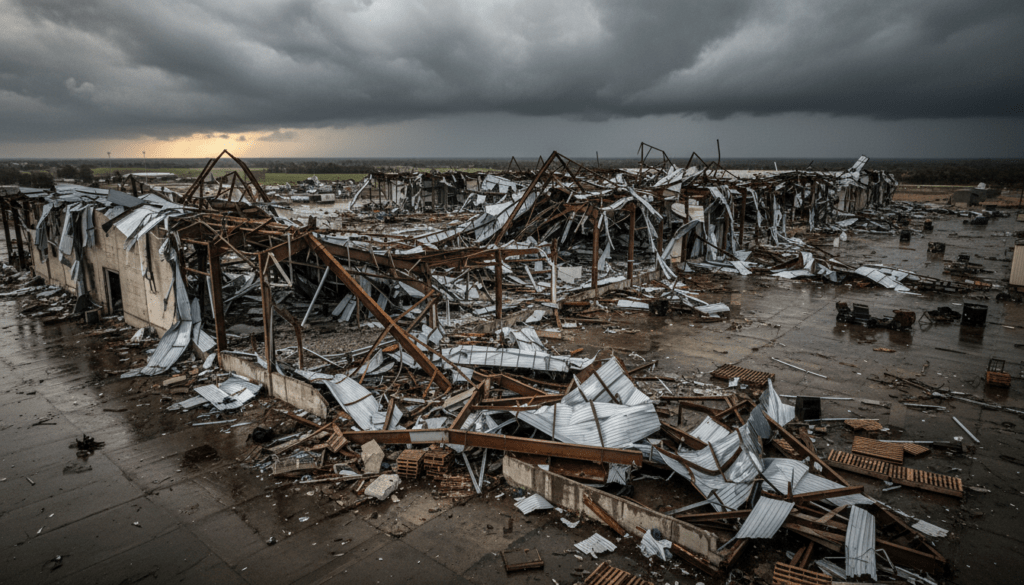
Signs Your Building Has Sustained Fire Damage
Sheared Bolt Heads
High-tension shear forces can snap fastener heads without full structural failure.
Purlin Displacement
Roof uplift can cause secondary members to roll or unseat from their clips.
Foundation Anchor Stress
Cracking around column bases indicates massive uplift attempts during the storm.
Girt Rotation
Wall support members twisting indicates lateral wind pressures exceeded design.
Siding Fastener Failure
Enlarged fastener holes indicate panel vibration and impending sheet loss.
Main Frame Misalignment
Visible leaning or buckling of primary rigid frames requires immediate shoring.
Roof Diaphragm Tearing
Separation of roof panels compromises the entire building’s lateral stability.
Sub-Structural Warping
Permanent deformation of X-bracing or interior support channels.
The Tornado Recovery Protocol
Emergency Structural Stabilization and Safety Assessment
Establish a safe perimeter and inspect primary framing members including rigid frames, columns and rafters for twisting, buckling or plastic deformation. Check anchor bolts for shear failure or foundation pull-out before allowing any crews inside the building. Temporary structural shoring and envelope securing using heavy-duty tarps and boarding are deployed immediately to prevent ongoing weather exposure from compounding the tornado damage.
Secondary Framing and Diaphragm Evaluation
Assess all secondary framing members for wind uplift damage. Tornado uplift frequently twists purlins and girts, breaks bridging connections and laps creating widespread secondary system failures across the entire roof structure. Check if the roof diaphragm has been compromised by looking for sheared fasteners and elongated screw holes in the remaining panels indicating that the roof has moved relative to the secondary framing.
Engineering Review and Insurance Documentation
Utilize factory engineering data to verify if the primary steel can be safely retrofitted or if specific frames must be replaced. Provide stamped engineering assessments and precise wholesale component manifests to accelerate the insurance approval process. We work directly with your insurance adjuster throughout the claim review process providing the technical documentation and engineering authority needed to clear claim disputes and approve the full scope of structural replacement required.
Structural Component Sourcing and Delivery
As an authorized Butler wholesale distributor we source genuine OEM replacement primary and secondary structural steel components directly from the factory bypassing regional supply delays that can add weeks to a standard contractor’s recovery timeline. Matching roof and wall panels, fasteners, closures and accessories are ordered simultaneously ensuring all components arrive together for a coordinated reconstruction start.
Fast-Track Reconstruction and High-Performance Upgrades
Remove all compromised primary and secondary framing and replace with high-capacity genuine OEM Butler components. Rebuild the roof system using continuous-seam standing seam panels engineered for superior wind uplift resistance compared to the original through-fastened system. Upgrade anchor bolt connections and base plate details where engineering analysis indicates that the original design can be improved to provide better performance in future high-wind events.
Final Inspection and Certificate of Occupancy
All required structural, framing, roof and final occupancy inspections are coordinated with your local building department throughout the reconstruction process. Upon completion of all inspections and final agency sign-off your facility receives a Certificate of Occupancy confirming full code compliance and clearance for occupancy and operations.
Critical Safety Notice for Building Owners
Do not allow personnel to enter a damaged structure without professional structural assessment. Maintain a safe perimeter and contact emergency services if the building is at risk of collapse. Our emergency teams are trained in OSHA safety protocols and structural stabilization.
Request Emergency Structural Assessment
Ready to Build Your Butler Project?
Download the Spec Sheet
Fill in the fields below to instantly download your spec sheet. A backup copy will also be sent to your email.