

Butler Building
VEHICLE IMPACT DAMAGE RECOVERY
Restoring Structural Integrity After Collision
Industrial facilities are engineered as a unified structural frame, with load distributed evenly across columns, girts, and purlins. A vehicle collision doesn’t distribute force — it delivers the full energy of the impact to a single column, girt, or panel section in an instant, often exceeding that member’s design capacity even at low collision speeds.
The visible damage from a vehicle strike is rarely the full extent of it. A column that looks only dented or scuffed can be out of plumb, understrength, or transferring stress into the adjacent frame line through the girts and eave struts that tie it to the rest of the building. That hidden displacement can go unnoticed for weeks until normal roof or wind loading exposes the compromised connection.
Our engineering-led approach prioritizes forensic assessment of the impacted frame line over superficial panel repair. We verify column plumbness, connection integrity, and foundation anchor condition to confirm the load path through that bay hasn’t been permanently altered before any reconstruction begins.
CRITICAL WARNING
A vehicle impact that appears to have damaged only wall panels can mask a compromised structural column. Continued occupancy or operation before a professional engineering assessment risks progressive structural failure under normal building loads.
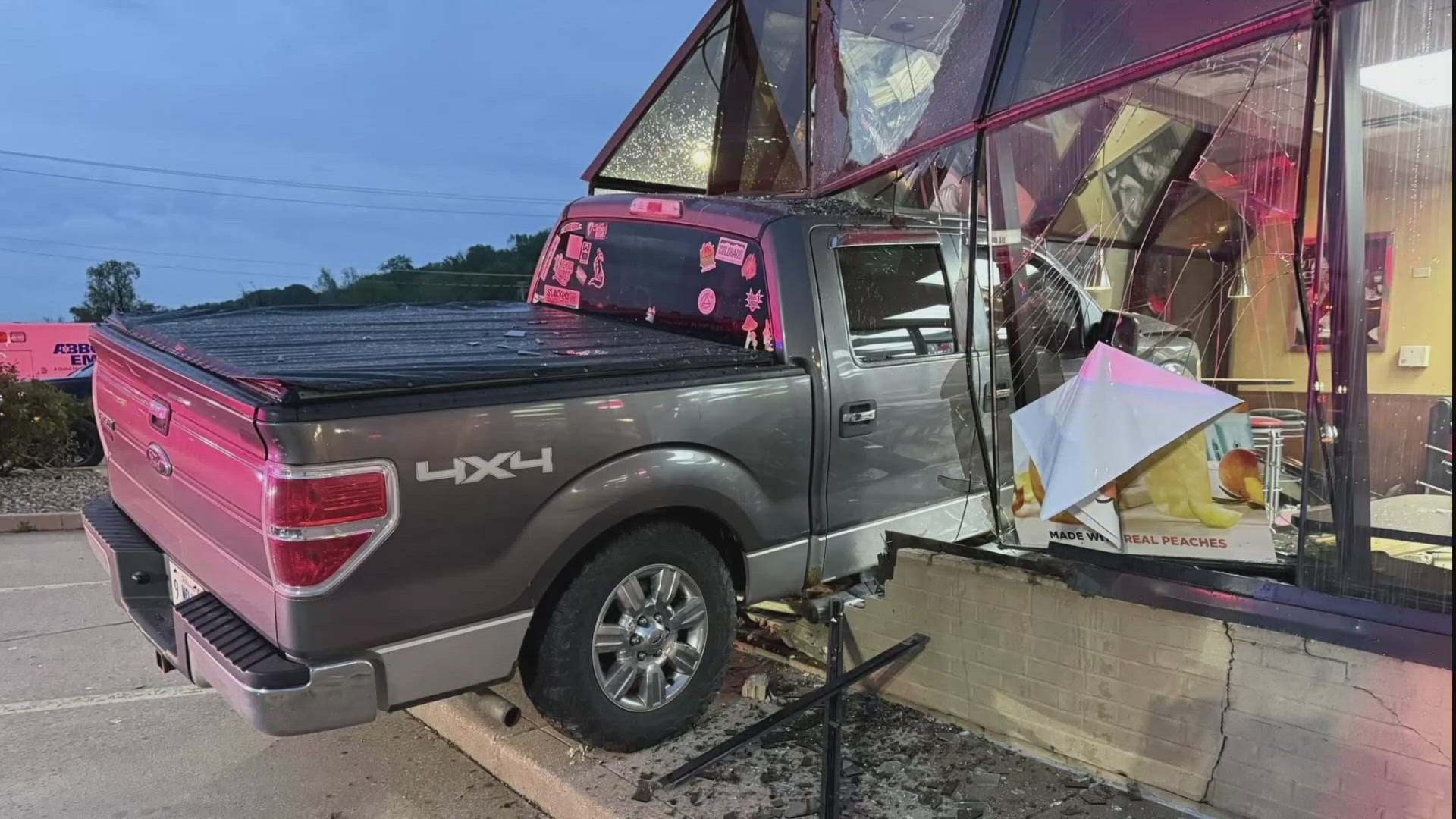
What a Vehicle Collision Does to a Commercial Steel Building
Vehicle-into-building collisions are among the most common causes of severe, localized structural damage at commercial and industrial facilities — forklifts backing through loading dock walls, delivery trucks misjudging clearance at a bay door, and vehicles jumping curbs into a storefront or warehouse wall all deliver a fundamentally different damage profile than wind, fire, or hail: a concentrated, high-energy point load instead of a distributed force.
Butler pre-engineered buildings are designed around uniform wind and seismic loads spread across the structural frame, not the concentrated impact energy of a moving vehicle. When a vehicle strikes a corner column, wall panel, or door frame, that force is absorbed entirely by whatever structural member sits in the collision path — frequently exceeding its design capacity even when the vehicle was moving slowly.
The hidden danger in vehicle impact damage is what happens beyond the point of contact. Because columns, girts, and eave struts are all connected as a single frame line, an impact at one column can transfer stress into neighboring bays, meaning the structural consequences often extend well past the visibly damaged panel. Column plumbness and foundation anchor integrity have to be verified before any panel repair begins to confirm the frame line’s load path is still intact.
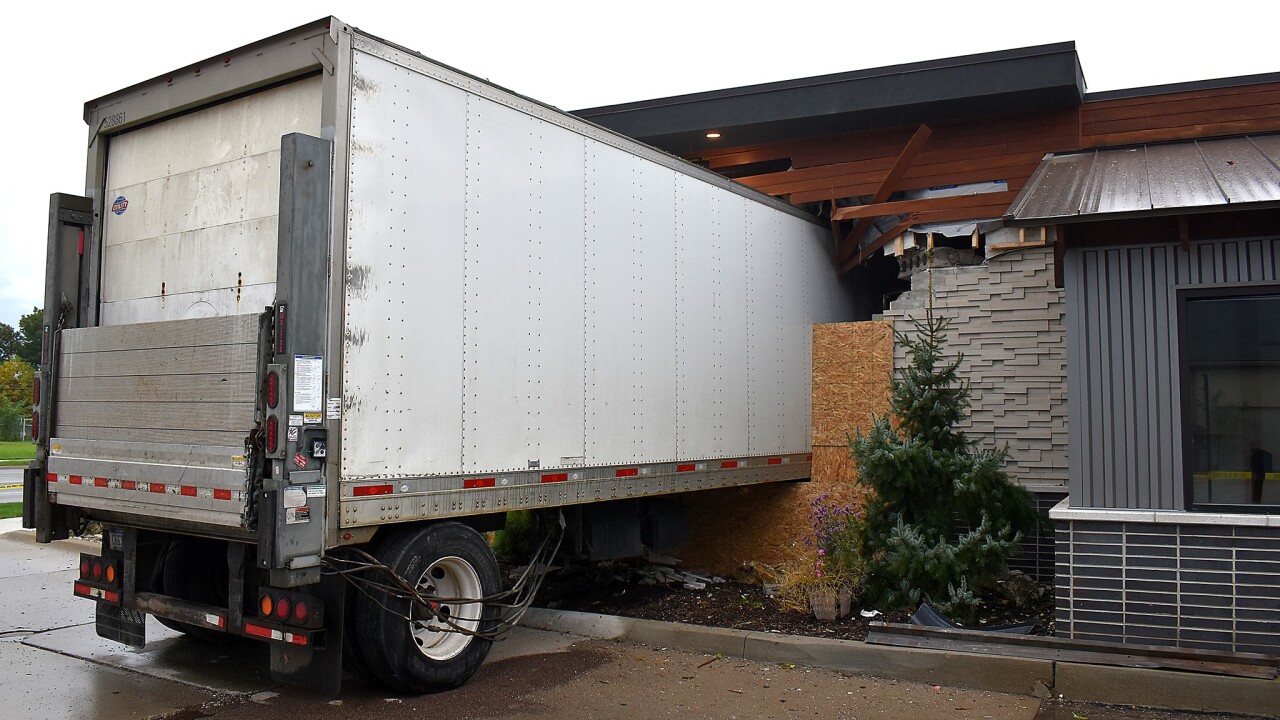
Signs Your Building Has Sustained Vehicle Impact Damage
Column Impact Deformation
Bending, bowing, or buckling of a primary structural column at the point of contact, often visible as a kink in an otherwise straight frame line.
Door Frame & Track Misalignment
Overhead door tracks, jambs, or headers knocked out of square, causing doors to bind, jam, or fail to seal.
Wall Panel Puncture & Tearing
Sheared, punctured, or torn wall panels at the point of impact, exposing girts and insulation to the exterior.
Corner Trim & Flashing Separation
Torn or displaced trim at building corners and openings, exposing the underlying wall assembly to water intrusion.
Girt Displacement or Shear
Horizontal wall-framing members knocked out of alignment, bent, or sheared free of their clip connections at the point of contact.
Frame Line Racking
Secondary framing out of plumb or square along the full bay adjacent to the impact — a sign that stress has transferred beyond the point of contact.
Foundation Anchor Bolt Damage
Cracking, spalling, or bolt elongation at the base of an impacted column where collision force transferred directly into the foundation connection.
Slab & Footing Cracking
The Vehicle Impact Recovery Protocol
Emergency Envelope Securing
Following a vehicle collision, securing the breach against weather, unauthorized entry, and further vehicle intrusion is the immediate priority. Our rapid-response team deploys temporary structural shoring at any compromised column, boards or panels the breached opening, and stabilizes the site — stopping ongoing exposure before the formal engineering assessment begins.
Complete Impact Damage Inspection
Documenting the collision with clear photos and video of the point of impact and any secondary damage is the essential first step for insurance claims. Our inspection team assesses the impacted column, adjacent frame line, wall and roof panels, and foundation connection, recording every affected component in the format required for insurance adjuster review.
Engineering Assessment
A licensed structural engineer evaluates the impacted column and connecting frame members for deformation, connection failure, and loss of plumbness that may not be visible from a surface inspection. Factory engineering data for your specific Butler building system confirms which structural components remain within design tolerance and which require replacement before reconstruction can proceed safely.
Insurance Documentation and Adjuster Coordination
Our engineering team produces a complete stamped damage assessment and line-item replacement manifest covering every component affected by the collision. We coordinate directly with your insurance adjuster — and, where applicable, the at-fault party’s carrier — to provide technical documentation and advocate for full claim approval covering the complete scope of the repair.
Component Sourcing and Panel Replacement
Damaged structural members and all affected roof and wall panels are sourced directly from our authorized Butler wholesale supply network. Genuine OEM Butler replacement components in the correct gauge, profile, and Butler-Cote finish color are installed by our certified crews to restore the frame line to its original design specification.
Reinforce Against Future Impacts
Collision repair is the right time to reduce the odds of a repeat incident. We evaluate whether bollards, guard rails, impact-rated wall assemblies, or reinforced corner columns at vulnerable loading dock and drive-through zones would meaningfully lower the risk of future vehicle impact damage.
Final Inspection and Certificate of Occupancy
All required inspections are coordinated with your local building department throughout reconstruction. Upon completion of all inspections and final agency sign-off, your facility receives a Certificate of Occupancy confirming full code compliance and clearance for occupancy and operations.
Critical Safety Notice for Building Owners
Do not allow personnel to enter a damaged structure without professional structural assessment. Maintain a safe perimeter and contact emergency services if the building is at risk of collapse. Our emergency teams are trained in OSHA safety protocols and structural stabilization.
Request Emergency Structural Assessment
Ready to Build Your Butler Project?
Download the Spec Sheet
Fill in the fields below to instantly download your spec sheet. A backup copy will also be sent to your email.