

If your Butler metal building roof is leaking, visibly corroding, or showing panel separation, those are strong signals that replacement is no longer optional. Catching these warning signs early can save you thousands of dollars in interior damage and structural repairs.
Key Takeaways
- Visible rust, persistent leaks, and panel gaps are the clearest signs your roof has reached the end of its service life.
- Felt underlayment failure accelerates moisture intrusion and often goes undetected until water damage is already visible inside.
- Butler metal roofs are built to last decades, but age combined with deferred maintenance shortens that lifespan significantly.
- A rusted roof does not always need full replacement, but widespread corrosion almost always does.
- You have two main replacement paths: full tear-off or a metal overlay system, each with distinct cost and timeline trade-offs.
- Acting before complete failure preserves structural integrity and keeps your replacement costs lower.
What Your Roof Is Telling You
Butler metal building roofs are engineered for durability, but no roof lasts forever without maintenance. The US metal roofing market was estimated at $5.2 billion in 2024 and is projected to reach $8.0 billion by 2035 at a 3.9% CAGR, according to Market Research Future (2026). That growth reflects just how many building owners are facing aging roofs right now.
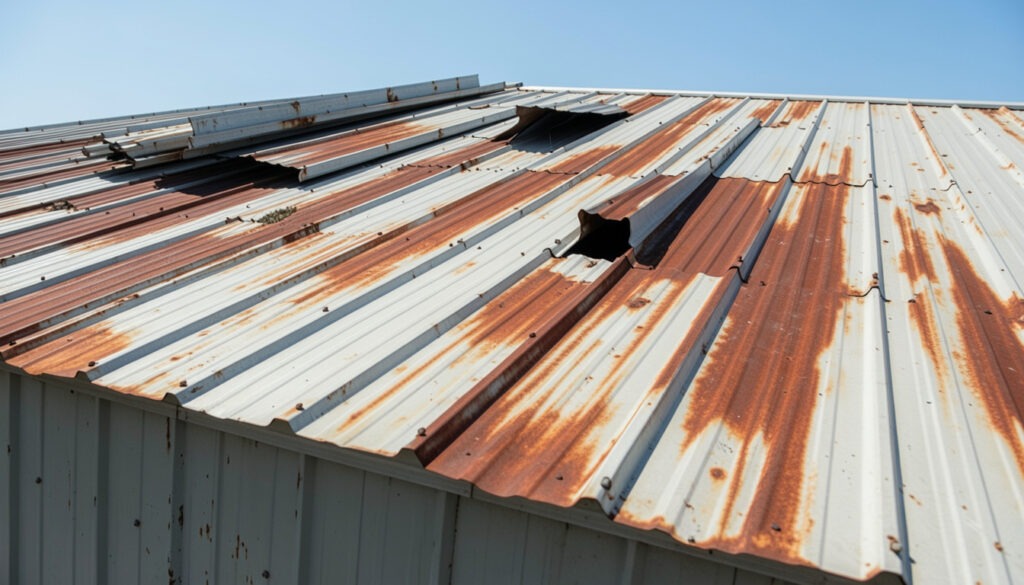
The most reliable warning signs that your Butler roof is failing include:
- Active or recurring leaks that return after patching
- Visible rust streaks or panel corrosion spreading across large sections
- Separated or lifted panels that allow wind and water infiltration
- Fastener failure, where screws back out or pull through the panel
- Interior condensation or water staining on walls or equipment below the roof line
- Sagging or distorted panels indicating prolonged moisture exposure or structural stress
If you are seeing two or more of these signs at once, a repair-only strategy is likely costing you more money per year than a full replacement would.
The Role of Felt Underlayment in Roof Failure
Felt underlayment sits between your metal panels and the roof deck, acting as a secondary moisture barrier. When it deteriorates, water that gets past even a small panel gap goes straight into your building. This is one of the most overlooked contributors to interior water damage on older Butler buildings.
Signs that your felt underlayment is failing include brittleness during inspection, visible tearing, moisture trapped beneath panels, and accelerated rust developing from the inside out. Many building owners focus entirely on the outer panel condition without checking beneath it, which means the real damage is already done by the time they notice.
Browsing all butler building metal roof panels can help you identify which panel system your building uses and whether your underlayment type is still compatible with a repair or requires a full system change.
Rust: When It Is a Warning and When It Is a Death Sentence
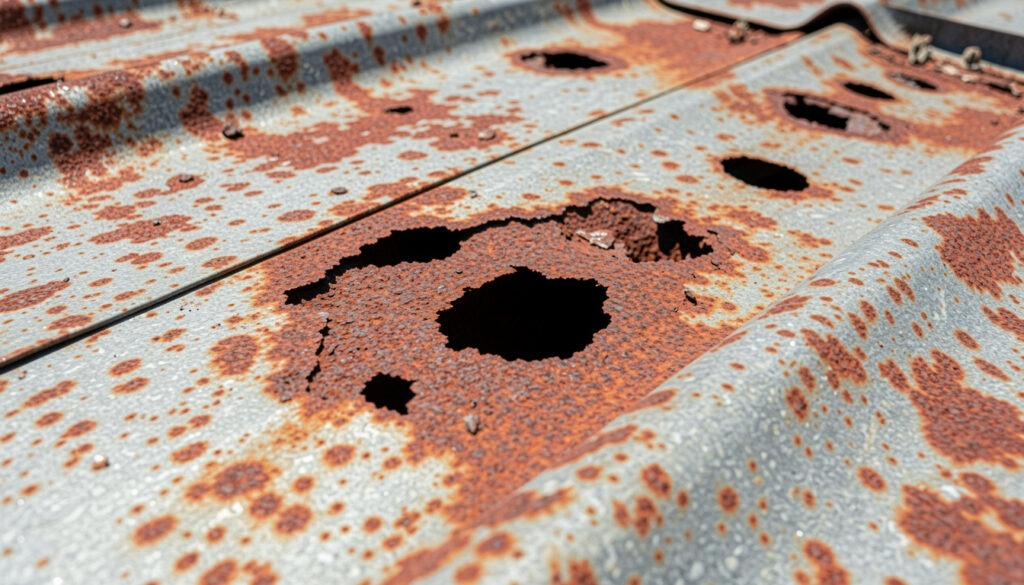
Surface rust on a metal roof is not automatically a reason to replace everything. Localized oxidation on fasteners or around cut edges can often be treated with a rust-inhibiting primer and sealant. The issue becomes critical when:
- Rust has penetrated through the panel thickness
- Corrosion has spread to more than 20-30% of the total panel surface
- Panel edges are deteriorating, leaving gaps along seams
- Structural components beneath the panels show corrosion damage
At that point, patching becomes structurally unreliable. Reviewing your options through butler building re roof tear off replacement metal overlay will show you whether a tear-off or an overlay approach makes sense for your specific situation.
Things to Know
- Butler’s MR-24 standing seam system is among the most resilient commercial roof designs available, but it still requires periodic inspection every 3 to 5 years.
- Metal roofs in coastal or high-humidity regions of the US tend to show corrosion symptoms significantly sooner than those in dry climates.
- An overlay installation can be completed faster and with less disruption to building operations than a full tear-off, making it a practical option for occupied facilities.
- Deferred maintenance is the number one factor that shortens Butler roof lifespan, not the quality of the original installation.
Protect Your Building Before the Next Storm Season
Waiting until your roof fails completely is one of the most expensive decisions a building owner can make. Water damage to equipment, inventory, and structural components compounds quickly, and storm-season repairs always cost more because demand spikes.
Get a new butler building replacement parts quote from Butler Metal Building Parts today, and find out exactly what your replacement or restoration project will cost before the damage grows. Visit the quote page now and provide your building details to get a fast, accurate response.
Frequently Asked Questions
Q: How do I know if my roof felt needs replacing?
If your felt underlayment is brittle, torn, or showing moisture damage when inspected beneath the panels, it needs to be replaced.
During any roof inspection, have a technician check the felt for cracking, wet spots, or deterioration along panel edges. Felt that has lost its moisture-blocking integrity will accelerate rust development on the panels above it, compounding your repair costs.
Q: What is the biggest problem with metal roofs?
The biggest problem with metal roofs is fastener and seam failure, which allows water infiltration that worsens quickly if left unaddressed.
Exposed fastener systems are especially vulnerable because screws expand and contract with temperature changes, eventually backing out or losing their seal. Standing seam systems like Butler’s MR-24 reduce this risk, but seam integrity still needs periodic verification.
Q: Does a rusted metal roof need to be replaced?
Not always, but widespread or through-panel corrosion almost always requires full replacement rather than patching.
Surface rust on isolated sections can be treated with appropriate coatings. However, if rust has compromised the panel thickness or spread across large portions of the roof, replacement is the only structurally sound option.
Q: How many years does a metal roof usually last?
A well-maintained metal roof on a Butler building can last 40 years or more under typical US climate conditions.
The actual lifespan depends heavily on maintenance frequency, local weather conditions, and whether the original installation met Butler’s specifications. Roofs in coastal areas or regions with heavy snowfall often require attention sooner.
Q: What happens if a roof has no felt?
Without felt underlayment, a metal roof has no secondary moisture barrier, meaning any panel gap or fastener failure sends water directly into the building structure.
This accelerates interior corrosion, promotes mold growth, and can compromise insulation performance significantly. If your roof was originally installed without felt or the felt has fully deteriorated, replacing both the panels and the underlayment together is the most cost-effective long-term solution.
The Bottom Line on Signs Your Butler Metal Building Roof Needs Replacement
Recognizing the warning signs early gives you the most options and the lowest costs. Active leaks, panel corrosion, fastener failure, and felt deterioration are not problems that resolve themselves over time.
Butler Metal Building Parts provides the parts and expertise to help you address these issues correctly. Review your situation, document what you are seeing on your roof, and take action before minor damage becomes a structural problem.