

Fasteners are among the most frequently used components in a metal building system. They secure roof panels, wall panels, trim, flashing, accessories, and other components to the building structure.
Although fasteners are relatively small compared with roof panels or structural framing, their performance directly affects the reliability of the building envelope. The wrong fastener, incorrect length, damaged washer, or improperly installed connection can create a pathway for water intrusion or compromise the attachment of a metal building component.
For Butler metal building repairs and replacement projects, selecting a fastener that matches the panel type, substrate, application, and existing building system is essential.
Butler Metal Building Parts offers Butler-compatible fasteners, closures, sealants, mastic, and Dektites for metal building maintenance, repair, and replacement applications.
Key Takeaways
- Fasteners secure metal roof, wall, trim, flashing, and accessory components.
- The correct fastener depends on the panel profile, substrate, thickness, and application.
- Roofing fasteners commonly include a washer designed to help seal the penetration.
- Overdriving or underdriving a fastener can compromise the connection and weather seal.
- Corroded, loose, or damaged fasteners should be inspected and replaced when necessary.
- Fastener selection is especially important during Butler building roof and wall repairs.
- Different Butler roof systems can require different attachment methods.
- Fasteners work together with sealants, mastic, closures, and flashing to maintain the building envelope.
- Reusing damaged fasteners can create unnecessary leak and attachment risks.
- Proper installation is just as important as selecting the correct fastener.
What Are Metal Building Fasteners?
Metal building fasteners are mechanical components used to connect one building component to another.
Depending on the application, they can attach:
- Roof panels
- Wall panels
- Trim
- Flashing
- Gutters
- Downspouts
- Closures
- Structural components
- Accessories
- Building openings
- Replacement components
Fasteners may be self-drilling, self-tapping, threaded, bolted, or designed for a particular structural connection.
The specific fastener depends on what is being attached and what material it is being attached to.
For example, fastening a thin metal trim component is fundamentally different from making a structural connection between steel framing members.
Why Fastener Selection Matters
A fastener is only effective when it is appropriate for the connection.
Several factors influence fastener selection:
Substrate: The fastener must be compatible with the material receiving the fastener.
Length: The fastener must provide sufficient engagement without unnecessarily extending beyond the intended assembly.
Diameter: The fastener diameter influences holding strength and compatibility with the existing connection.
Head configuration: The head needs to work with the intended installation method.
Washer: Roofing and wall fasteners may use washers to help seal the penetration.
Corrosion resistance: The fastener must withstand the environmental conditions where it is installed.
Application: Roof, wall, trim, and structural applications can have different requirements.
Using a fastener simply because it physically fits the hole does not necessarily mean it is appropriate for the application.
Fasteners in Butler Metal Roof Systems
Roof panels depend on secure and properly sealed connections.
The attachment method varies according to the Butler roof system.
For example, an exposed-fastened system such as Butlerib II uses visible fasteners through the panel, while standing-seam systems such as MR-24 use a different attachment approach.
This distinction matters when ordering replacement fasteners.
Using the wrong fastener can result in:
- Poor panel attachment
- Improper washer compression
- Water leakage
- Panel damage
- Corrosion
- Premature fastener failure
- Incompatible replacement components
Before ordering roof fasteners, identify the roof system and determine the specific location where the fastener will be installed.
Butler Metal Roof Panels can help identify the major Butler roof systems.
Roof Fasteners and Weather Sealing
One of the most important functions of a roof fastener is securing the panel without creating a significant pathway for water.
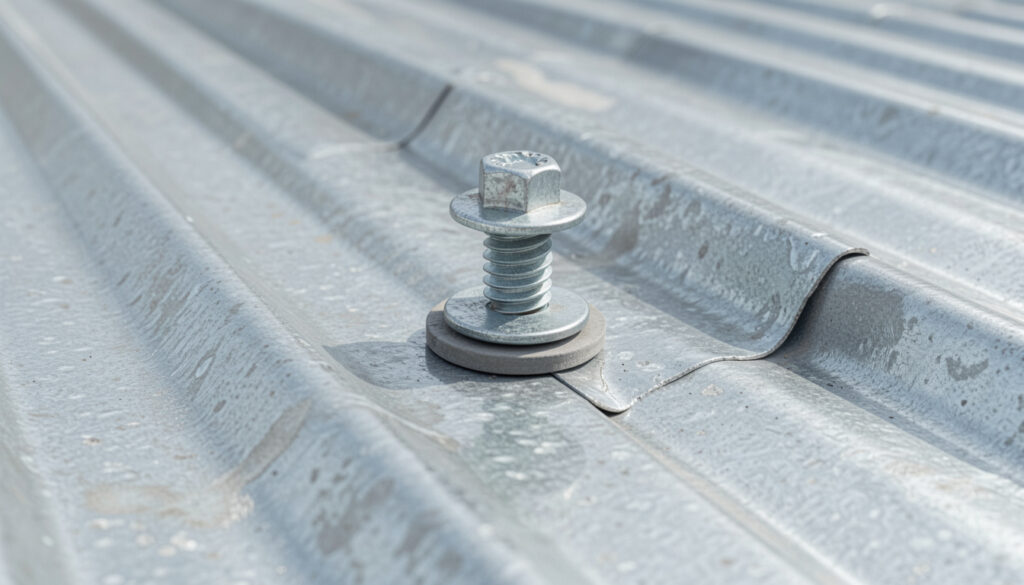
Many exposed roof fasteners use a washer beneath the head.
When properly installed, the washer compresses against the metal panel and creates a seal around the penetration.
The installation must be precise.
If the fastener is underdriven, the washer may not compress sufficiently.
If it is overdriven, the washer can become distorted or damaged.
Both conditions can reduce the effectiveness of the seal.
Fasteners for Metal Wall Panels
Wall panels also depend on properly selected and installed fasteners.
Exterior wall fasteners are exposed to rain, humidity, temperature changes, and other environmental conditions.
A compromised wall fastener can allow water to enter through the panel penetration.
Wall fasteners may be used to secure:
- Exterior wall panels
- Trim
- Corners
- Base components
- Flashing
- Openings
- Accessories
The fastener must be appropriate for both the panel and the supporting substrate.
Butler wall systems use different panel configurations, so the correct fastener should be determined based on the specific system.
Self-Drilling vs. Self-Tapping Fasteners
These terms are sometimes used interchangeably, but they describe different characteristics.
A self-drilling fastener incorporates a drill-point tip that allows the fastener to create its own hole in the substrate within its intended application range.
A self-tapping fastener forms or cuts threads as it enters a pre-existing or appropriately prepared hole.
The distinction matters when working with different metal thicknesses and substrates.
The correct fastener should be selected according to the manufacturer’s specifications rather than simply based on whether it appears to penetrate the material.
Fastener Washers and Why They Matter
A washer may appear to be a simple accessory, but it can be an important part of a metal building connection.
Roofing and wall fasteners may use sealing washers designed to:
- Distribute pressure
- Seal around the penetration
- Reduce water entry
- Protect the panel surface
- Improve the weather-resistant connection
The washer must be compatible with the fastener and application.
A damaged, cracked, hardened, or missing washer can compromise the seal even when the metal fastener itself appears to be in good condition.
This is one reason why replacing only the screw may not always address an existing leak.
What Happens When Fasteners Are Overdriven?
Overdriving is one of the most common installation problems with exposed metal panel fasteners.
When excessive torque is applied, the fastener can pull too deeply into the panel.
This may:
- Distort the metal
- Damage the sealing washer
- Create a depression around the fastener
- Reduce washer effectiveness
- Damage the protective coating
- Increase the possibility of water intrusion
The goal is not simply to drive the fastener as tightly as possible.
The fastener should be installed to the appropriate seating condition for the specific application.
What Happens When Fasteners Are Underdriven?
Underdriving creates the opposite problem.
If the fastener is not seated correctly, the washer may not compress sufficiently against the panel.
This can leave a small pathway around the penetration.
An underdriven fastener may also fail to provide the intended connection strength.
During inspection, look for fasteners that appear visibly raised, loose, or improperly seated.
How to Identify Damaged Metal Building Fasteners
Fasteners should be inspected periodically, particularly on older buildings.
Common warning signs include:
- Rust or corrosion
- Loose fasteners
- Missing fasteners
- Damaged heads
- Cracked washers
- Deteriorated washers
- Fasteners backing out
- Overdriven fasteners
- Underdriven fasteners
- Damaged surrounding metal
- Water staining near fastener locations
A single damaged fastener may be relatively minor.
A large number of deteriorated fasteners, however, can indicate a broader maintenance issue.
Fastener Corrosion on Metal Buildings
Corrosion resistance is particularly important for exterior fasteners.
Metal buildings are exposed to:
- Rain
- Humidity
- Condensation
- Temperature changes
- Salt-laden environments
- Industrial pollutants
- Chemical exposure
The appropriate corrosion resistance depends on the environment.
Fasteners should be compatible with the metal panels and coatings they contact.
This is especially important in coastal or industrial environments where corrosion can occur more rapidly.
When replacing fasteners, avoid creating a mixed-material connection that could introduce compatibility or galvanic-corrosion concerns.
Fasteners and Metal Building Repairs
Fastener replacement is a common part of metal building maintenance.
During a roof or wall inspection, contractors may find individual fasteners that have:
- Backed out
- Corroded
- Lost their sealing washer
- Been damaged
- Been incorrectly installed
- Become loose
- Been removed during previous repairs
Replacing these fasteners can help restore the intended connection.
However, a replacement fastener should match the original application.
A longer or larger fastener is not automatically a better fastener.
Fasteners During Roof Replacement
Roof replacement projects often involve significantly more than installing new metal panels.
The supporting components and connection details should also be evaluated.
Depending on the system, a roof replacement may require replacement of:
- Panel fasteners
- Washers
- Closures
- Mastic
- Sealants
- Flashing
- Trim
- Roof accessories
Using new panels with severely deteriorated existing fastening components can undermine the performance of the replacement assembly.
For this reason, fastener condition should be considered during the planning stage of a roof replacement.
Fasteners and Butler Roof Accessories
Fasteners are also used to attach many roof accessories.
These can include:
- Ridge components
- Flashing
- Gutters
- Downspouts
- Skylights
- Roof vents
- Solar attachments
- Trim
- Snow-management components
- Other roof accessories
The attachment requirements can differ significantly between products.
For example, solar mounting components require fasteners and clamps designed specifically for their intended roof profile and attachment method.
The fastener should therefore be selected as part of the complete accessory system.
Fasteners, Closures, and Sealants Work Together
A weather-resistant metal building assembly rarely depends on one component alone.
Fasteners provide mechanical attachment.
Closures fill profile openings.
Sealants and mastic provide flexible sealing.
Flashing directs water away from vulnerable transitions.
Together, these components create a more complete building-envelope assembly.
For Butler building repairs, fasteners, closures, sealants, mastic, and Dektites can be considered together when addressing roof and wall sealing requirements.
How to Choose Replacement Butler Fasteners
When ordering replacement fasteners, collect as much information about the existing building as possible.
Useful information includes:
- Butler roof system
- Butler wall system
- Panel profile
- Panel thickness
- Supporting substrate
- Existing fastener dimensions
- Fastener head style
- Washer type
- Installation location
- Building age
- Environmental exposure
Photographs can also help identify the existing fastener.
If the building’s original documentation is available, it can provide additional information about the original construction and component specifications.
For older Butler buildings, professional identification may be necessary when the original fastener specifications are unknown.
Fastener Replacement During Maintenance
Routine inspection can identify fastener problems before they develop into larger building-envelope issues.
A maintenance inspection should pay particular attention to:
- Roof panel fasteners
- Wall panel fasteners
- Fasteners around penetrations
- Flashing connections
- Ridge and eave components
- Areas with visible corrosion
- Locations with recurring leaks
Replacing isolated damaged fasteners is generally much simpler than repairing extensive water damage caused by years of unresolved leakage.
Things to Know
- The correct fastener depends on the application. Do not select replacements based solely on appearance.
- Roof and wall fasteners can have different requirements.
- Washer condition is important. A damaged washer can compromise the weather seal.
- Avoid overdriving fasteners. Excessive torque can damage both the washer and panel.
- Avoid underdriving fasteners. Insufficient seating can reduce connection and sealing performance.
- Corrosion resistance matters, particularly in humid, coastal, and industrial environments.
- Do not assume a longer fastener is better. Fastener length should match the intended connection.
- Identify the Butler roof or wall system before ordering replacement fasteners.
- Inspect surrounding components when replacing a leaking fastener.
- Fasteners work with closures, sealants, mastic, and flashing as part of the overall building envelope.
Frequently Asked Questions
Q: What are Butler building fasteners used for?
Butler building fasteners are used to secure roof panels, wall panels, trim, flashing, accessories, and other metal building components.
The appropriate fastener depends on the specific Butler system and application.
Q: Can I use any metal roofing screw to repair a Butler building?
No. The replacement fastener should be compatible with the existing panel, substrate, dimensions, washer, and installation requirements.
A generic screw may physically fit while still being unsuitable for the intended connection.
Q: How do I know which Butler fastener I need?
Identify the Butler roof or wall system, panel profile, substrate, existing fastener dimensions, and location of the connection.
Photos and measurements of the existing fastener can also help with identification.
Q: Why do metal roof screws have washers?
The washer helps distribute pressure and create a weather-resistant seal around the fastener penetration.
The washer must be properly compressed without being excessively deformed.
Q: What happens if a roof fastener is overdriven?
Overdriving can damage the sealing washer and distort the metal panel around the fastener.
This can reduce the effectiveness of the weather seal and potentially contribute to water intrusion.
Q: What happens if a roof fastener is loose?
A loose fastener may provide inadequate attachment and can create a pathway for water around the penetration.
Loose fasteners should be inspected and replaced or corrected according to the applicable system requirements.
Q: How long do metal building fasteners last?
Fastener service life depends on the material, coating, environmental exposure, installation quality, and building conditions.
Fasteners in aggressive environments may deteriorate faster than those in mild conditions.
Q: Should I replace all fasteners when replacing a metal roof?
It depends on the roof system and condition of the existing fasteners.
During a roof replacement, fasteners should be evaluated as part of the overall assembly. Severely deteriorated or incompatible fasteners should not simply be reused.
Q: Can fasteners cause metal building roof leaks?
Yes. Damaged, loose, incorrectly installed, or deteriorated fasteners can create potential water-entry points.
However, a roof leak may have multiple possible sources, so the entire surrounding assembly should be inspected.
Q: Do Butler fasteners work with Butler roof and wall panels?
Butler-compatible fasteners are available for specific roof, wall, trim, and accessory applications.
The correct fastener should be matched to the particular building component rather than assuming that one fastener works throughout the entire building.
The Bottom Line on Butler Building Fasteners
Fasteners are fundamental to the performance of a metal building. They provide the mechanical connection that keeps roof panels, wall panels, trim, flashing, and accessories securely attached to the structure.
For exterior applications, fasteners also form part of the building’s weather-resistant envelope. Proper fastener selection, washer compression, installation, and corrosion resistance can make a significant difference in long-term performance.
When repairing an existing Butler building, identify the roof or wall system before ordering replacement fasteners. The correct product should match the panel profile, substrate, connection, and environmental conditions.
Fasteners also work alongside closures, sealants, mastic, and flashing to protect the building from water and air infiltration.
Need replacement fasteners for your Butler metal building? Request a Quote and provide your building and fastener information so the appropriate replacement components can be identified.