

Roof penetrations are among the most vulnerable areas of a metal roofing system. Pipes, conduits, vents, exhaust systems, and mechanical equipment must pass through the roof, creating openings in an otherwise continuous weather barrier.
That is where Dektites come in.
Dektites are flexible roof penetration flashings designed to seal around pipes and other penetrations while accommodating movement caused by thermal expansion and contraction. On Butler metal buildings, the correct penetration flashing helps maintain the roof’s weather resistance without requiring an unnecessarily complicated modification to the surrounding roof panels.
Butler Metal Building Parts currently offers several Dektite configurations, including UEC, Retrofit Original, Soaker Diverter, Ezi-Seal, Combo, Premium, and High Pitch models for different roof penetration applications.
Key Takeaways
- Dektites create flexible, weather-resistant seals around roof penetrations.
- They are commonly used around pipes, conduits, vents, and mechanical penetrations.
- The flexible flashing material allows the boot to conform around the penetration.
- Dektites can accommodate normal thermal movement of the roof and penetration.
- Different Dektite models are designed for different penetration configurations.
- Retrofit Dektites can be useful when repairing existing penetrations without completely removing surrounding roof panels.
- Proper sizing is critical for achieving a reliable seal.
- The roof profile and penetration type should be considered when selecting a flashing.
- Damaged or deteriorated penetration flashing can become a source of roof leaks.
- Dektites are an important part of maintaining the weather-resistant performance of a metal roof system.
What Is a Dektite?
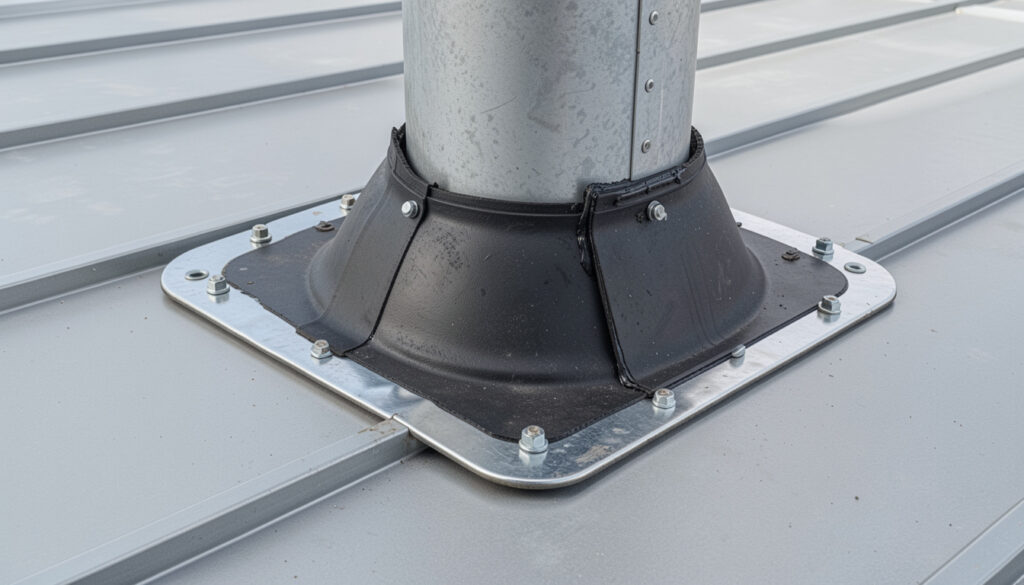
A Dektite is a flexible flashing boot designed to seal the area where a pipe or other penetration passes through a roof.
Unlike rigid flashing components, a flexible boot can conform around different pipe diameters and accommodate some movement between the penetration and roof.
A typical Dektite installation includes:
- Flexible flashing boot
- Pipe or penetration
- Roof panel
- Fastening system
- Sealant
- Base flange
The flashing is positioned over the penetration, shaped around the pipe, and secured to the roof according to the manufacturer’s installation requirements.
The result is a controlled transition between the roof surface and the penetration.
Why Roof Penetrations Are Vulnerable
A metal roof performs best when its surface remains continuous.
Every penetration introduces a break in that continuity.
The roof must accommodate the penetration while still managing:
- Rainwater
- Wind-driven moisture
- Thermal movement
- Debris
- UV exposure
- Temperature changes
The penetration itself can also move relative to the roof.
For example, a pipe may expand and contract as its temperature changes. The roof panels can also move as the metal heats and cools.
A rigid connection between the two can create stress around the opening.
Flexible flashing helps accommodate this movement.
How Dektites Help Prevent Roof Leaks
A Dektite creates a flexible seal around the penetration while its base is secured to the roof.
The boot conforms to the pipe, while the base flange follows the roof surface.
When properly installed, the system helps prevent water from entering the opening around the penetration.
However, the Dektite is only one part of the waterproofing system.
The installation also depends on:
- Correct flashing size
- Proper positioning
- Appropriate fasteners
- Compatible sealant
- Correct roof profile
- Proper installation technique
An incorrectly sized or damaged flashing can still leak even when the Dektite itself is made from a suitable material.
Dektites and Thermal Movement
Metal buildings experience continuous temperature changes.
During the day, roof panels can heat up and expand. At night, they cool and contract.
Penetrations can experience their own movement depending on their material, temperature, and connection to the building.
The flexibility of a Dektite helps accommodate these changes without creating a rigid connection around the pipe.
This is particularly useful on large commercial and industrial metal roofs where thermal movement can occur across substantial panel lengths.
Dektites for Butler Metal Roof Systems
Butler uses several different roof systems, and penetration detailing must be compatible with the specific roof assembly.
Butler Metal Building Parts identifies Dektites as suitable for applications involving the MR-24 and Butlerib II roof systems, among other metal roof configurations.
The correct flashing should be selected based on the actual roof system and penetration.
A flashing that works well on one roof profile should not automatically be assumed to work on another.
For replacement work, identify the roof system before selecting the Dektite.
Butler Metal Roof Systems can help identify the major Butler roof systems used on existing and new buildings.
Types of Roof Penetrations That May Require Dektites
Dektites can be used around a variety of round roof penetrations.
Common examples include:
- Plumbing vents
- Electrical conduits
- HVAC penetrations
- Exhaust pipes
- Mechanical piping
- Ventilation pipes
- Small equipment penetrations
The penetration’s diameter and configuration determine the appropriate flashing size and style.
Larger or unusual penetrations may require a different flashing system altogether.
Common Problems With Dektites
Cracked or Deteriorated Flashing
Flexible flashing materials can deteriorate after prolonged exposure to UV radiation, weather, and temperature changes.
Cracks or splits can allow water to enter around the penetration.
Improper Sizing
A boot that is too large or too small may not form a reliable seal around the pipe.
The flashing should be selected according to the penetration diameter and manufacturer’s specifications.
Loose Fasteners
Fasteners securing the flashing base can loosen, corrode, or become damaged.
This can create gaps between the flashing and roof surface.
Failed Sealant
Sealant around the flashing base or penetration can deteriorate over time.
Cracked, separated, or missing sealant should be evaluated as part of the penetration inspection.
Damaged Roof Around the Penetration
A Dektite may appear damaged when the underlying problem is actually the roof panel around the penetration.
Bent panels, damaged seams, or excessive corrosion should be addressed as part of the repair.
Improper Installation
A flashing can fail prematurely if it is cut incorrectly, installed at the wrong location, improperly fastened, or incompatible with the roof profile.
Signs Your Dektite Needs Replacement
Roof penetration flashings should be inspected when investigating unexplained leaks.
Look for:
- Cracks
- Splits
- Brittle material
- Deformation
- Loose flashing
- Missing fasteners
- Failed sealant
- Gaps around the pipe
- Corrosion around the base
- Water staining inside the building
- Visible damage from maintenance activities
A roof leak near a penetration does not necessarily mean the Dektite itself has failed.
Water can travel along roof panels and framing before becoming visible inside the building.
The penetration and surrounding roof area should therefore be inspected together.
Dektites and Roof Leak Repair
A leaking penetration should be addressed as soon as practical.
Water entering around a roof penetration can eventually affect:
- Insulation
- Interior liner panels
- Structural framing
- Electrical systems
- Equipment
- Interior finishes
The visible water stain may also be located some distance from the actual entry point.
For this reason, simply applying additional sealant over the visible leak may provide only a temporary solution.
If the flashing is cracked, improperly sized, or deteriorated, replacing the Dektite may provide a more appropriate long-term repair.
Dektites for Retrofit Applications
Existing metal buildings frequently receive new equipment after the original construction.
Examples include:
- New ventilation systems
- Electrical conduits
- HVAC equipment
- Plumbing
- Exhaust systems
- Production equipment
These additions may require new roof penetrations.
A Dektite can provide a practical method for sealing certain round penetrations without requiring extensive modification to the surrounding roof.
The roof structure and panel system should still be evaluated before creating a new penetration.
Retrofit Dektites for Existing Pipes
Some existing roof penetrations cannot easily be removed.
Removing a pipe may require disconnecting equipment or disrupting building operations.
A retrofit-style flashing can be useful in these situations because it can be designed to work around an existing penetration.
Butler Metal Building Parts lists a Dektite Retrofit Original specifically for reflashing existing pipe and conduit penetrations without requiring complete panel removal.
This can be particularly useful during maintenance or reroofing projects where minimizing disruption is important.
Dektite Soaker Diverters
Roof penetrations can sometimes interrupt the normal flow of water down a roof surface.
A penetration located in the path of drainage can create an area where water collects or is redirected.
The Dektite Soaker Diverter is designed to help direct water flow away from the pipe penetration and reduce ponding around the flashing.
This type of flashing can be useful when the location of the penetration creates additional water-management considerations.
Dektite Ezi-Seal
The Dektite Ezi-Seal is a self-sealing flashing designed for round pipes and conduits.
According to Butler Metal Building Parts, it provides a fast installation approach for applicable penetration configurations.
The specific installation requirements should always be followed according to the product instructions.
Dektite Combo
Not every penetration has the same shape.
The Dektite Combo is designed to accommodate both round and square pipes, conduits, and other applicable penetrations.
This type of flexible flashing can be useful where a standard round-pipe boot is not appropriate.
The actual penetration dimensions should be confirmed before selecting the flashing.
Dektite Premium
High-exposure applications can place additional demands on roof penetration flashings.
The Dektite Premium is a heavy-duty EPDM flashing option designed for applications requiring enhanced durability around roof penetrations.
The appropriate product depends on the penetration, roof system, environment, and project requirements.
Dektite High Pitch
Roof pitch is another factor when selecting penetration flashing.
A flashing designed for a relatively low-slope roof may not be appropriate for a steeply pitched application.
The Dektite High Pitch is designed for steeper roof applications and helps maintain a weather-resistant transition around pipe penetrations.
Always verify compatibility with the actual roof pitch before installation.
Dektites During Metal Roof Replacement
Roof replacement projects provide an opportunity to inspect existing penetration flashings.
A roof may have several penetrations that were installed at different times.
During a reroofing project, inspect each penetration for:
- Flashing deterioration
- Sealant failure
- Pipe movement
- Fastener corrosion
- Roof-panel damage
- Improper previous repairs
Replacing an old flashing while the roof is already being worked on can help avoid having to revisit the same penetration later.
However, each penetration should be evaluated individually.
Dektites and Roof Maintenance
Regular roof inspections should include all penetration points.
A maintenance program can identify deterioration before it becomes a major interior leak.
Inspect Dektites for:
- Cracking
- Splitting
- Shrinkage
- Movement
- Sealant failure
- Fastener problems
- Corrosion
- Gaps
The inspection should also verify that the pipe or penetration has not moved excessively.
A change in pipe position can place additional stress on the flashing.
How to Choose the Right Dektite
Selecting a Dektite starts with identifying the penetration and roof.
Important information includes:
- Butler roof system
- Roof profile
- Roof pitch
- Pipe diameter
- Pipe shape
- Penetration material
- Location of penetration
- Existing flashing type
- Environmental exposure
- Whether the installation is new or retrofit
Photographs are also useful when evaluating an existing penetration.
Measure the outside diameter of round pipes accurately. For square or irregular penetrations, record both dimensions and photograph the complete installation.
Dektites and Building Weather Resistance
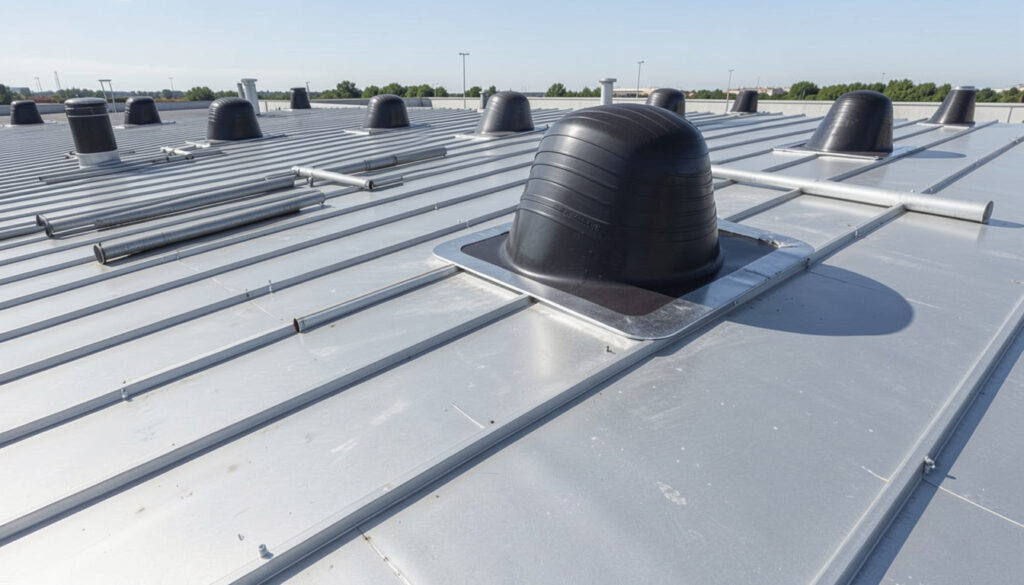
A metal roof’s weather resistance depends on hundreds of individual details working together.
Roof panels provide the primary surface.
Seams, fasteners, closures, flashings, sealants, and penetration systems all contribute to the overall assembly.
A small component such as a Dektite can therefore have an outsized effect on the building’s performance.
When properly selected and installed, it helps maintain the continuity of the roof around a location where the roof surface has necessarily been interrupted.
Things to Know
- Dektites are designed for roof penetrations, not as a substitute for proper roof construction.
- Measure the penetration before selecting a flashing.
- Confirm the Butler roof system and roof profile.
- Roof pitch can affect the appropriate flashing configuration.
- Inspect the surrounding roof panel as well as the flashing.
- Do not assume every roof leak near a pipe originates from the Dektite.
- Failed sealant does not always mean the entire flashing needs replacement.
- Retrofit Dektites can be useful around existing penetrations.
- New roof penetrations should be properly planned before cutting the roof.
- Thermal movement should be considered when detailing roof penetrations.
- A damaged flashing should be addressed before water intrusion causes secondary building damage.
Frequently Asked Questions
Q: What is a Dektite used for?
A Dektite is used to create a flexible, weather-resistant seal around roof penetrations such as pipes, conduits, and vents.
Q: Can Dektites be used on Butler metal roofs?
Yes.
Butler Metal Building Parts lists Dektite solutions for Butler metal roof applications, including the MR-24 and Butlerib II systems.
Q: How do I know what size Dektite I need?
Measure the outside diameter of the pipe or penetration and select a flashing designed for that size range.
The roof system and penetration configuration should also be confirmed.
Q: Can a Dektite stop a roof leak?
A properly selected and installed Dektite can help prevent water from entering around a roof penetration.
However, the surrounding roof and flashing installation must also be in good condition.
Q: How long do Dektites last?
Service life varies according to the flashing material, UV exposure, weather conditions, installation quality, and building environment.
Regular inspection is more reliable than assuming a fixed replacement interval.
Q: Can I replace a Dektite without replacing the roof panel?
In many situations, yes.
A replacement flashing can often be installed around an existing penetration without replacing the surrounding roof panel.
Q: What is a retrofit Dektite?
A retrofit Dektite is designed to accommodate certain existing penetrations where removing the pipe or surrounding roof components is impractical.
Butler Metal Building Parts offers a Retrofit Original configuration for applicable existing pipe and conduit penetrations.
Q: Do Dektites work with square pipes?
Some Dektite configurations are designed for square or non-round penetrations.
The Dektite Combo, for example, is designed to accommodate applicable round and square penetrations.
Q: Can Dektites be used on steep metal roofs?
Yes, but the flashing must be appropriate for the roof pitch.
A High Pitch Dektite is available for applicable steep-slope applications.
Q: Should Dektites be replaced during a roof replacement?
They should at least be inspected.
If an existing flashing is cracked, deteriorated, improperly fitted, or near the end of its service life, replacing it during the roof project may be appropriate.
The Bottom Line on Butler Building Dektites
Dektites are small but important components of a metal roof system. By sealing around pipes, conduits, vents, and other roof penetrations, they help maintain the weather-resistant barrier of the building where the roof surface has been interrupted.
The right Dektite depends on several factors, including the Butler roof system, penetration size and shape, roof pitch, and installation type. Options such as retrofit, high-pitch, diverter, and heavy-duty configurations allow the flashing to be matched to different applications.
If an existing Dektite is cracked, deteriorated, leaking, or improperly fitted, replacing it can be an important part of maintaining the roof before a small penetration leak develops into a larger building problem.
Need a Dektite or replacement roof penetration flashing for your Butler building? Request a Quote and provide your Butler roof system, penetration dimensions, roof pitch, and photos of the existing flashing.