

Butler Building
HAIL DAMAGE RECOVERY
Specialized Forensics for Commercial Hail Loss
Hail damage on large-scale steel buildings is rarely just cosmetic. For pre-engineered metal buildings like Butler systems, high-velocity impact can compromise the factory-applied protective coatings, leading to accelerated oxidation and structural substrate weakening long before visible leaks appear.
Our engineering-led assessment methodology goes beyond a standard visual walkthrough. We utilize metallurgical analysis and stress testing to document latent damage that insurance adjusters often overlook, ensuring your claim covers the true cost of structural restoration, not just a patch-and-paint fix.
CRITICAL WINDOW
90% of hail damage to metal roof systems is invisible from the ground, requiring drone and thermal imaging for accurate claims.
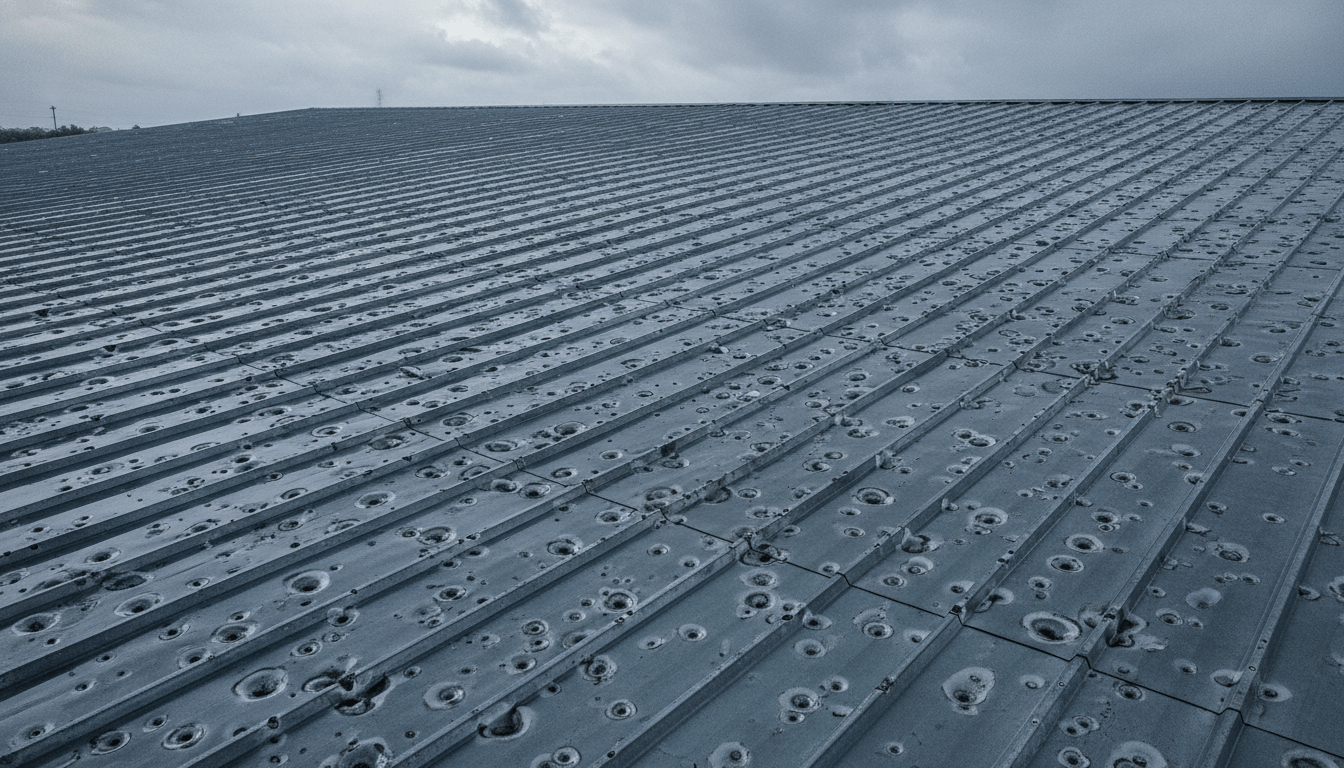
What Hail Really Does to a Commercial Steel Building
The real danger with hail damage is that a lot of this damage is not immediately visible and over time it is a direct line to costly repairs or premature replacement. For commercial and industrial properties roof damage is not just about the roof. It is about protecting your operations, assets and bottom line.
Metal roofs are generally very resistant to hail but can be dented like automobiles. Insurance may or may not cover a claim for dented metal roofs as some carriers determine denting to be cosmetic damage only and not covered under the policy. This is why having an experienced Butler building specialist conduct your post-hail assessment is critical. We know what to look for beyond the visible dents and we produce the technical documentation your insurance carrier needs to properly evaluate and approve your claim.
Your commercial metal roof could have damage that is not immediately visible to the naked eye. Those dents need to be carefully inspected for additional cracks as there are advanced testing methods that can show areas of the roof are not as sound as other areas due to hail impact.
Signs Your Building Has Sustained Hail Damage
Impact Dimpling
Visible dents caused by hail impacts that can affect the appearance and long term performance of metal roof panels.
Fastener Loosening
Repeated hail impacts can weaken or loosen fasteners, reducing the roof system’s structural integrity and weather resistance.
Coating Fractures
Hail strikes may crack or damage protective coatings, exposing metal surfaces to corrosion and premature deterioration.
Thermal Bridge Disruption
Damage to insulation systems or panel assemblies can reduce thermal efficiency and increase energy loss.
Seam Separation
Severe impacts can stress panel seams, creating openings that allow water infiltration and compromise weathertightness.
Substrate Compromise
Underlying roof materials may sustain hidden damage that affects structural support and overall roof performance.
Hidden Moisture Entrapment
Water can become trapped beneath damaged panels or insulation, leading to leaks, mold growth, and corrosion.
Micro-Fracturing
The Hail Recovery Protocol
Comprehensive Hail Damage Inspection
If your business has recently experienced a hailstorm it is critical to inspect your metal roof even if there are no visible leaks. Look for dents, scratches or missing components paying close attention to vents, chimney caps, skylights and roof valleys where hail can accumulate. Our inspection team conducts a full roof and wall surface assessment documenting every impact with detailed photographs and measurement data in the technical format required for insurance adjuster review.
Cosmetic vs Functional Damage Classification
There are two main categories of dents, dings or punctures when a metal roof is evaluated for damage after a hail storm. When locks, seams, flashing or other metal roofing components are damaged to the point of causing breaches in the metal itself the damage can be said to be functional and typically requires sectional replacements of appropriately gauged, painted and coated metal. Proper damage classification is critical for maximizing your insurance claim and ensuring that hidden functional damage is not dismissed as cosmetic by an insurance adjuster who lacks Butler building expertise.
Insurance Documentation and Adjuster Coordination
Our team produces a complete damage assessment report with detailed photographic documentation, panel-by-panel damage mapping and a line-item replacement component manifest in the technical format insurance adjusters require. We help affected building owners connect with resources to review their policy, expedite the claim and negotiate with the insurance company on their behalf.
Roof and Wall Panel Replacement
Damaged roof and wall panels are replaced with genuine OEM Butler components in the correct gauge, profile and Butler-Cote finish color. Functional hail damage requires sectional replacements of appropriately gauged, painted and coated metal. Damaged fasteners, closures, skylights, gutters, downspouts and accessories are replaced simultaneously ensuring the complete building envelope is restored to full weathertight performance.
Protective Coating Application
After panel replacement all repaired and adjacent surfaces receive a fresh application of protective coating to restore the corrosion resistance and UV protection of the Butler-Cote finish system. Restoration seals cracks, fixes seams and ensures that rainwater cannot seep into the building while improving insulation, strengthening protection and extending the building lifespan.
Final Inspection and Documentation
Verify that the roof structural integrity is restored and there are no signs of sagging or instability. Document the completed repairs with photos or videos for records and potential future insurance claims. All completed repairs are documented with a final photographic record and a post-repair inspection report confirming the building envelope has been fully restored to weathertight performance standards.
Critical Safety Notice for Building Owners
Do not allow personnel to enter a damaged structure without professional structural assessment. Maintain a safe perimeter and contact emergency services if the building is at risk of collapse. Our emergency teams are trained in OSHA safety protocols and structural stabilization.
Request Emergency Structural Assessment
Ready to Build Your Butler Project?
Download the Spec Sheet
Fill in the fields below to instantly download your spec sheet. A backup copy will also be sent to your email.