

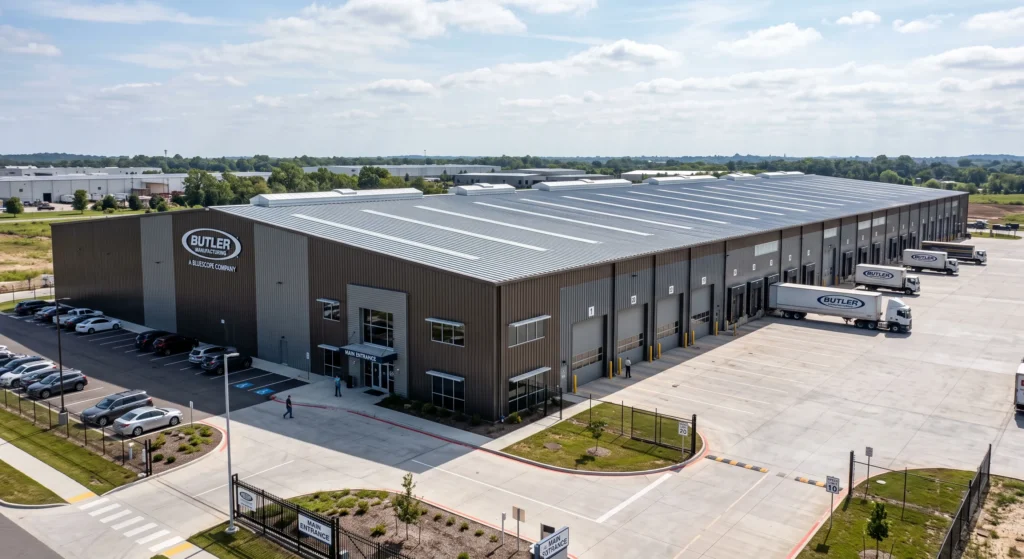
A Butler metal building is a pre-engineered steel structure manufactured by Butler Manufacturing, one of the most recognized names in commercial and industrial construction. These systems are designed with precision-engineered components that fit together with consistency, making them a practical choice for warehouses, agricultural facilities, and commercial spaces across the United States.
Key Takeaways
- Butler Manufacturing produces pre-engineered steel building systems used across commercial, agricultural, and industrial applications.
- Butler parts are manufactured to specific tolerances, which means replacement and expansion projects require components matched to the original system.
- Understanding the difference between primary and secondary framing helps when planning repairs, additions, or new builds.
- Sourcing authentic Butler parts from an authorized supplier protects both structural integrity and any existing warranties.
- Getting a same-day quote is possible with the right supplier, which can significantly speed up your project timeline.
What Makes Butler Manufacturing a Distinct System
Butler Manufacturing has been producing steel building systems since the early 1900s, and the brand has built its reputation on engineered consistency. Unlike generic steel structures, a butler metal building uses components that are designed as a complete system. That means the primary framing, secondary framing, roofing panels, wall panels, and trim all work together with specific tolerances and attachment methods.
This matters practically because if you need to replace a damaged panel, add a lean-to, or expand an existing structure, you cannot simply swap in generic parts and expect them to perform correctly. The connections, gauge specifications, and panel profiles are proprietary to Butler’s system. That specificity is one reason Butler buildings tend to hold up well over decades of use, but it also means you need to work with a supplier who understands the system.
Primary vs. Secondary Framing
One of the first things to understand when working with a Butler system is the difference between primary and secondary structural components.
- Primary framing refers to the rigid frame columns and rafters. These are the load-bearing elements that give the building its shape and structural strength.
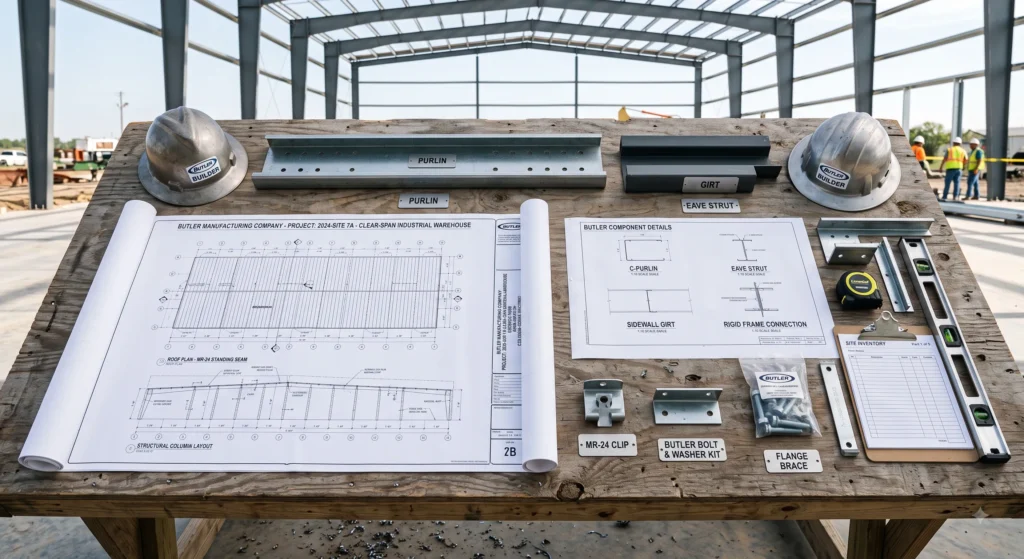
- Secondary framing includes purlins, girts, and eave struts. These connect to the primary frame and provide support for roof and wall panels.
- Roof and wall panels attach to the secondary framing and form the building’s weather envelope.
- Trim and accessories include flashings, gutters, doors, windows, and ventilation components.
Each of these categories plays a specific role. When sourcing parts for repair or expansion, knowing which category you need helps you communicate clearly with your supplier and avoid ordering mismatched components.
Common Butler Parts You May Need to Replace or Source
Maintenance and repair are inevitable with any steel structure, especially older buildings. Here are the components most commonly sourced as replacement parts for Butler systems.
Roofing Panels and Clips
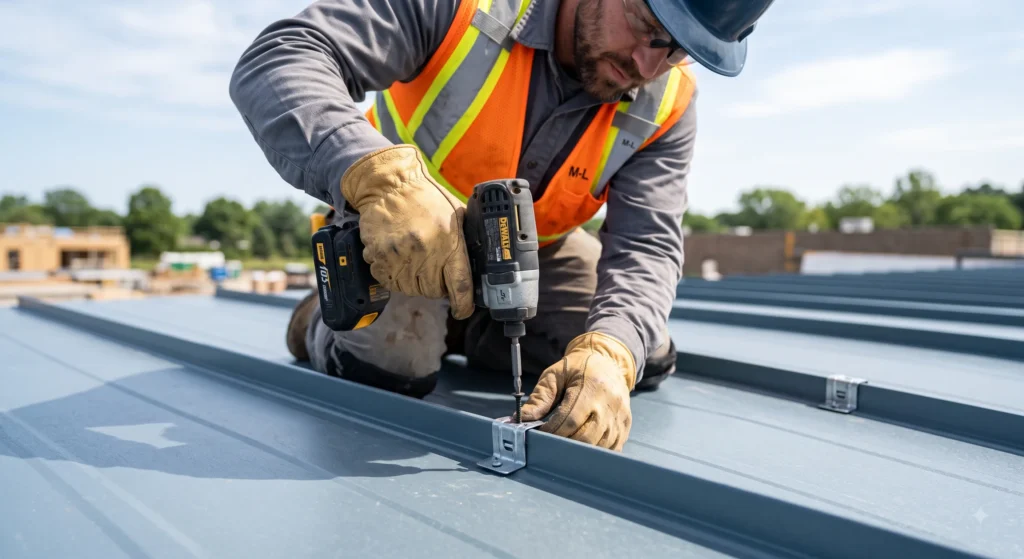
Butler’s MR-24 standing seam roof is one of the company’s signature products. It uses a concealed clip system that allows the metal to expand and contract with temperature changes without compromising the seal. If clips are damaged or missing, the roof’s thermal movement performance is compromised. Sourcing the correct clip profile for your specific roof generation is essential.
Girts and Purlins
These secondary framing members are typically cold-formed steel Zs or Cs. They span between primary frames and carry loads from the panels. If a girt or purlin is damaged by impact or corrosion, it needs to be replaced with a component that matches the original depth, gauge, and hole pattern for proper attachment.
Fasteners and Sealants
Butler systems use specific fastener types and sealants at panel laps, base conditions, and trim attachments. Using the wrong fastener can compromise the weathertight performance of the envelope. Matching the original specification matters especially at penetrations and transitions.
Comparing Butler Parts to Generic Aftermarket Options
When sourcing components, you will likely encounter both genuine Butler parts and generic aftermarket alternatives. The table below outlines the key trade-offs.
| Factor | Genuine Butler Parts | Generic Aftermarket |
|---|---|---|
| Profile match | Exact fit for existing system | May require modification |
| Gauge consistency | Matches original specs | Varies by manufacturer |
| Warranty compatibility | Preserves existing warranties | May void warranty coverage |
| Availability | Supplier-dependent | Often more widely stocked |
| Cost | Typically higher upfront | Lower upfront cost |
| Long-term risk | Lower structural risk | Higher risk of mismatch |
The bottom line here is that for structural components, genuine parts are almost always the right call. For non-structural accessories where tolerances are less critical, aftermarket options may work. But whenever a structural warranty or insurance policy is in play, confirm compatibility before purchasing.
Things to Know
- Butler buildings use proprietary panel profiles, which means you need to identify your specific building generation before ordering replacement panels.
- Older Butler buildings may use components that have since been updated or discontinued. A knowledgeable supplier can help identify cross-references.
- Expansion projects require matching not just the panel type but also the insulation system and vapor retarder to avoid condensation issues.
- Installation of primary framing components typically requires a certified erector familiar with Butler specifications to maintain structural integrity.
- Even minor trim components like base angles and corner trim affect water management. Using the wrong profile can lead to infiltration at the base of the wall.
Planning an Expansion or Repair: Where to Start
Whether you are repairing storm damage or adding square footage to an existing facility, the process follows a similar path. Start by gathering information about your existing building, including the original erection drawings, the building serial number if available, and photos of the affected areas. This information helps a supplier identify the exact components you need.
Next, get a quote before you commit to any scope. Lead times and pricing for Butler parts can vary depending on current steel market conditions and supplier inventory. Working with a supplier who can turn around quotes quickly means you can keep your project on schedule.
Finally, coordinate installation with an experienced erector. Pre-engineered systems are designed to go together in a specific sequence, and deviating from that sequence can create alignment problems downstream.
Start Your Butler Parts Order Without the Runaround
If you are working on a repair, expansion, or new project involving a butler metal building, getting accurate parts fast is what keeps your timeline intact. Book a Free Quote Today and get a same-day response from a supplier who specializes in Butler system components. Tell them your building’s serial number, the components you need, and your project timeline, and they will match you with the right parts without the guesswork.
Frequently Asked Questions
Q: How do I find out which Butler building system I have?
The most reliable method is locating the original erection drawings or the building’s serial number plate, usually found on a primary frame column near the entry.
Butler systems have evolved across multiple product generations, and the panel profiles and framing details differ between them. Your serial number allows a supplier to pull the original specifications and match parts accurately.
Q: Can I use non-Butler panels on a Butler roof?
Using non-Butler panels on a Butler roof is possible in some situations but carries real risk, particularly if a warranty is still active.
The clip spacing, panel width, and seam geometry must align with the original system. A mismatch at any of these points can create leak paths or reduce the roof’s wind uplift resistance.
Q: How long do Butler metal buildings typically last?
Butler metal buildings are designed to last several decades when properly maintained, with steel framing that resists the deterioration common in wood-framed structures.
Roof coatings, fastener integrity, and gutter maintenance are the most common factors that affect service life. Regular inspections every few years help catch issues before they become costly.
Q: What is the MR-24 roof and why does it matter?
The MR-24 is Butler’s signature standing seam roofing system, known for its concealed clip design that accommodates thermal movement without leaking.
It has been in production for decades and is widely regarded as a high-performance commercial roofing solution. Parts for this system, including clips, sealant tape, and panel sections, require careful matching to the correct generation.
Q: How quickly can I get Butler replacement parts?
Lead times vary based on part type and supplier inventory, but working with a specialized Butler parts supplier can often shorten the process significantly.
Standard secondary framing components and trim may ship faster than primary frame pieces. Getting a quote early in your planning process gives you the most accurate lead time estimate.
The Bottom Line on Butler Metal Building Parts
A butler metal building is a precision system, and treating it that way during repairs and expansions protects the investment you or a previous owner made in the structure. Matching parts correctly, working with knowledgeable suppliers, and planning ahead for lead times are the three habits that keep these projects on track and on budget.
Start by pulling your building’s original documentation, then reach out to a Butler-specialized supplier for a quote. That single step will give you accurate pricing, realistic lead times, and confidence that the parts you order will actually fit.