
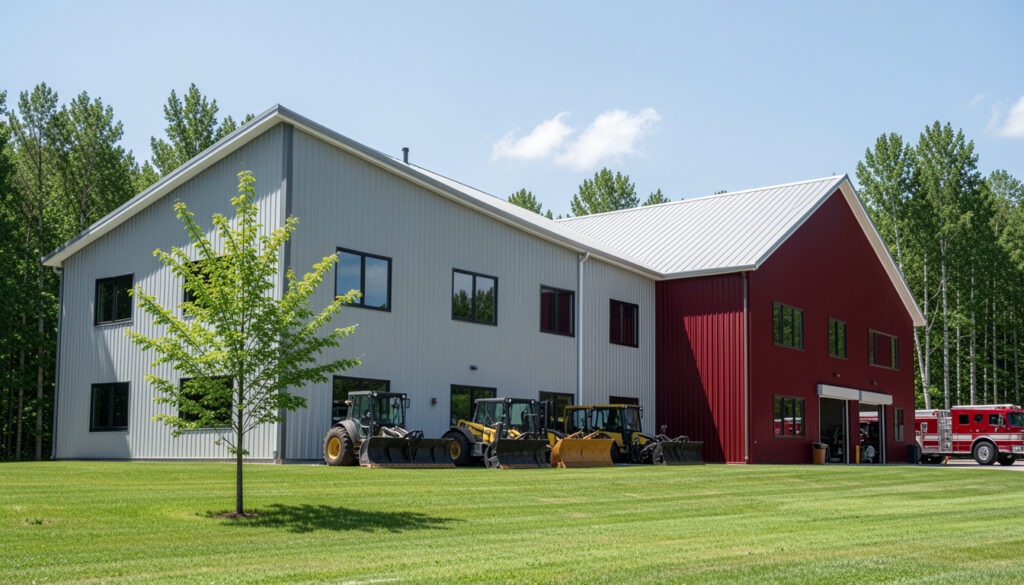
The Butlerib II Metal Wall Panel is a ribbed steel wall system designed for commercial, industrial, agricultural, and other metal building applications. Its recognizable profile provides a practical exterior wall solution while allowing the building to incorporate insulation, doors, windows, trim, and other building components.
Butlerib II is also relevant for existing Butler buildings that require wall panel replacement, repair, or reskinning. When replacing an existing panel, identifying the correct profile, gauge, finish, dimensions, and attachment configuration is important because similar-looking metal panels may not use the same connection details.
Key Takeaways
- Butlerib II is a ribbed metal wall panel designed for Butler building systems.
- The panel provides a traditional metal-building appearance with repeating ribs across the wall.
- It can be used on new construction as well as replacement and retrofit projects.
- Insulation is installed as part of the complete wall assembly rather than being integrated into the exterior panel itself.
- The system can be coordinated with windows, doors, trim, corners, and other building components.
- Proper panel alignment is important for maintaining consistent rib spacing.
- Replacement panels should be matched to the existing building configuration.
- Color and finish matching becomes increasingly important when replacing only part of an existing wall.
- Damaged panels should be inspected together with the surrounding framing, fasteners, closures, and trim.
- Accurate measurements and photographs can help identify the correct replacement material.
What Is Butlerib II Metal Wall?
Butlerib II is a ribbed steel wall panel system used as an exterior wall covering for Butler metal buildings.
Its repeating ribs give the building a familiar industrial metal-building appearance while providing a continuous exterior surface.
The system can be used across large wall elevations and can be coordinated with building openings and architectural components.
For an existing Butler building, Butlerib II can also be used when replacing damaged or deteriorated wall panels.
The Butlerib II Ribbed Profile
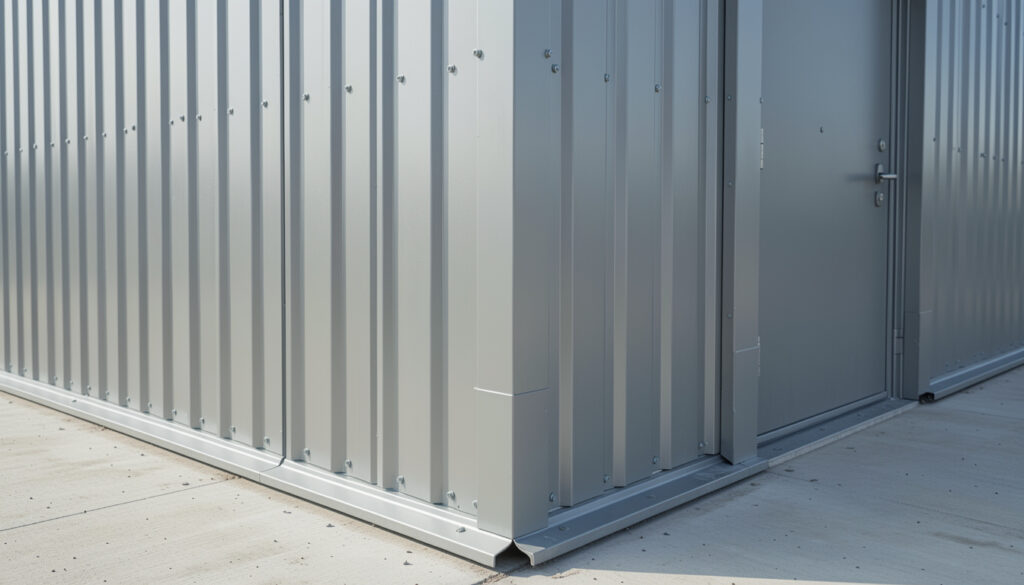
The defining feature of Butlerib II is its repeating ribbed profile.
The ribs provide structural shape to the sheet while creating a consistent visual pattern across the building.
On a large warehouse or industrial facility, this repeating pattern can extend across hundreds of feet of wall.
Because the profile is highly visible, accurate panel alignment is important during installation.
Even a relatively small discrepancy can become noticeable when repeated across a large elevation.
Why Ribbed Metal Wall Panels Are Common
Ribbed metal panels are widely used in metal building construction because they provide a practical combination of durability, relatively straightforward installation, and architectural consistency.
They are particularly useful for buildings where large exterior wall surfaces need to be covered efficiently.
Common applications include:
- Warehouses
- Manufacturing facilities
- Agricultural buildings
- Equipment storage buildings
- Distribution facilities
- Commercial buildings
- Industrial buildings
The panel can also be combined with different facade elements to create more visually differentiated areas around entrances and offices.
Butlerib II for New Construction
For new Butler buildings, the wall panel is coordinated with the building’s structural system from the design stage.
This makes it possible to plan the complete wall assembly around:
- Structural framing
- Insulation
- Doors
- Windows
- Wall openings
- Corners
- Base trim
- Eave trim
- Gutters
- Other wall components
Proper coordination before installation can reduce field modifications and help maintain consistent panel alignment.
Butlerib II for Existing Buildings
Existing Butler buildings can eventually require wall panel replacement for several reasons.
Panels may become damaged by:
- Vehicle impacts
- Forklifts
- Severe weather
- Falling objects
- Construction activity
- Corrosion
- Long-term exposure
Replacement can involve a single damaged panel, several panels, or an entire wall elevation.
The appropriate approach depends on the condition of the existing wall and the scope of the project.
Replacing a Butlerib II Wall Panel
Replacement should begin with identification rather than immediately ordering a visually similar sheet.
Useful information includes:
Panel profile: Confirm that the existing wall is actually Butlerib II.
Panel dimensions: Measure the panel width and required length.
Gauge: Determine the thickness of the existing material.
Finish: Identify the coating and surface finish.
Color: Match the existing building as closely as possible.
Fasteners: Determine the existing attachment method and pattern.
Trim: Inspect the surrounding base, corner, eave, and opening trim.
This information can help prevent ordering a panel that looks similar but does not properly match the existing system.
Why Panel Identification Matters
Metal wall panels can look deceptively similar.
Two panels may both have vertical ribs but differ in:
- Rib spacing
- Rib depth
- Overall width
- Seam configuration
- Fastener location
- Gauge
- Trim compatibility
Using the wrong profile can create installation problems and may require additional field modifications.
For replacement work, the safest approach is to verify the existing panel rather than relying only on a product name.
Butlerib II and Wall Insulation
The exterior panel is only one part of the wall assembly.
Insulation is installed behind the exterior wall panel to improve the thermal performance of the building.
Depending on the design, the wall may incorporate blanket, batt, rigid, or other insulation systems.
The appropriate insulation depends on the building’s:
- Location
- Occupancy
- Energy requirements
- HVAC system
- Interior conditions
- Condensation-control requirements
For additional information, see Butler Metal Building Wall Insulation.
Why Insulation Should Be Considered During Replacement
A wall panel replacement project can sometimes provide an opportunity to address problems within the existing wall assembly.
If the insulation is damaged, compressed, wet, or deteriorated, simply replacing the exterior panel may not resolve the underlying problem.
During a larger retrofit, it can therefore be useful to inspect:
- Existing insulation
- Vapor-control layers
- Structural framing
- Fasteners
- Closures
- Flashing
- Sealants
The goal should be to restore the entire wall assembly rather than only replacing the visible damaged component.
Butlerib II Around Windows
Windows interrupt the continuous wall panel pattern and require carefully coordinated trim and flashing.
A replacement project should inspect the area around the window for:
- Damaged panel edges
- Loose trim
- Failed sealants
- Corrosion
- Water staining
- Improper flashing
Water intrusion around a window may appear to be a panel problem even when the actual source is the surrounding flashing or sealant.
Butlerib II Around Doors
Doors create another important transition point.
Personnel doors, service doors, and larger equipment openings require the wall panel to terminate around the opening while maintaining weather resistance.
The surrounding trim should therefore be inspected whenever a panel near a door is replaced.
A damaged door opening can continue to leak even after a new panel is installed if the underlying transition detail is not corrected.
Base Trim
The bottom edge of the wall is particularly exposed to moisture, dirt, impact, and equipment.
Base trim helps create the transition between the wall panel and the building’s foundation or lower wall condition.
When replacing wall panels, inspect the base trim at the same time.
Bent, corroded, or damaged base trim can affect the appearance and weather resistance of the finished wall.
Corner Trim
Building corners are visually prominent and mechanically important.
Corner trim provides the transition between two wall elevations while helping protect the panel edges.
If a corner has been damaged by equipment or weather, replacing only the visible panel may leave damaged trim behind.
The complete corner assembly should be evaluated.
Eave and Upper Wall Transitions
The upper edge of the wall interacts with the roof and eave system.
This area can include:
- Eave trim
- Flashing
- Closures
- Sealants
- Roof-to-wall transitions
Leaks originating at the roof edge can sometimes appear as wall-panel leaks.
A complete inspection should therefore include the adjacent roof and eave components.
Fasteners and Corrosion
Fasteners are critical to the performance of a metal wall system.
Over time, fasteners can experience:
- Corrosion
- Loose connections
- Washer deterioration
- Seal failure
- Overdriving
- Underdriving
If a panel is being replaced because of long-term deterioration, the surrounding fasteners should also be inspected.
A new panel attached using deteriorated or incompatible hardware may not provide the desired long-term result.
Matching the Existing Color
Color matching is one of the most difficult aspects of partial panel replacement.
Even when the original color is known, the existing panel may have changed after years of exposure to sunlight and weather.
A new panel can therefore appear noticeably brighter or darker than the surrounding wall.
Providing photographs of the existing building can help when evaluating the closest available replacement finish.
Full Wall Reskinning
Not every building requires individual panel replacement.
If a wall has widespread deterioration, inconsistent color, or extensive damage, a larger reskinning project may make more sense.
Reskinning involves replacing a larger portion or the entirety of the exterior wall surface.
This can provide:
- Consistent appearance
- New exterior material
- Opportunity to upgrade insulation
- Opportunity to correct damaged trim
- Improved weather protection
- Updated building appearance
The existing framing should be evaluated before undertaking a full reskin.
Butlerib II and Architectural Appearance
Butlerib II has a distinctly industrial appearance.
For buildings where the goal is a more architectural facade, other Butler wall systems such as Shadowall or Stylwall II may provide a different visual treatment.
However, Butlerib II remains useful where a traditional metal-building appearance is appropriate.
The ribbed pattern can also be combined with glass, storefronts, masonry, and other materials to create visual contrast.
Maintenance of Butlerib II Wall Panels
Routine inspection can help identify problems before they become major repairs.
Inspect the wall periodically for:
- Scratches
- Dents
- Loose fasteners
- Rust
- Failed sealants
- Damaged trim
- Water staining
- Open seams
- Damaged closures
Particular attention should be given to areas near doors, loading docks, corners, and equipment traffic.
These locations generally experience greater risk of physical damage.
Cleaning Metal Wall Panels
Dirt and environmental deposits can accumulate on exterior metal walls.
Routine cleaning can help maintain the appearance of the coating.
Cleaning methods should be compatible with the manufacturer’s coating recommendations.
Aggressive chemicals, abrasive materials, or improper pressure washing can damage the finish.
For older buildings, cleaning can also reveal scratches, corrosion, and other conditions that may require repair.
Common Problems With Butlerib II Metal Walls
Panel Dents
Vehicle, forklift, or equipment impacts can deform individual wall panels.
Incorrect Panel Profile
A similar-looking ribbed panel may not properly match the existing Butlerib II configuration.
Color Mismatch
New panels can look different from weathered existing panels even when the same nominal color is selected.
Rust and Corrosion
Scratches, exposed steel, failed coatings, or persistent moisture can contribute to corrosion.
Loose Fasteners
Loose or damaged fasteners can compromise the attachment and weather-resistant performance of the wall.
Failed Sealants
Deteriorated sealants around openings, transitions, and joints can allow water infiltration.
Damaged Trim
Bent or corroded base, corner, or eave trim can affect the entire wall assembly.
Wet Insulation
Water intrusion can damage insulation behind the exterior panel and reduce its effectiveness.
Poor Panel Alignment
Misaligned panels can create visible inconsistencies across the wall elevation.
Improper Replacement
Replacing a damaged panel without addressing the surrounding components can leave the original problem unresolved.
Things to Know
- Butlerib II is a ribbed exterior metal wall panel system.
- The repeating rib profile gives Butler buildings their traditional metal-building appearance.
- The system can be used for new construction and replacement projects.
- Insulation is installed as part of the complete wall assembly rather than being built into the exterior panel.
- Windows and doors require properly coordinated trim and flashing.
- Base and corner trim should be inspected when replacing damaged wall panels.
- Fastener condition can affect both structural attachment and weather resistance.
- Existing panel dimensions and profile should be verified before ordering replacement material.
- Color matching can be difficult when replacing individual panels on older buildings.
- A full reskin may be appropriate when deterioration extends across a large wall area.
- Regular inspection can help identify corrosion, loose fasteners, failed sealants, and physical damage early.
- The complete wall assembly should be evaluated when addressing persistent moisture or insulation problems.
Frequently Asked Questions
Q: What is Butlerib II Metal Wall?
Butlerib II is a ribbed metal wall panel system used on Butler metal buildings and other compatible applications.
It provides a durable exterior wall surface with a traditional ribbed metal-building appearance.
Q: Can Butlerib II panels be replaced?
Yes.
Individual damaged panels or larger wall sections can be replaced when the correct panel profile and dimensions are identified.
Q: Can Butlerib II be used on an older Butler building?
Potentially, yes, but the existing building should be verified first.
Panel profiles and building configurations can vary depending on the age and construction of the building.
Q: Does Butlerib II include insulation?
The exterior panel itself is not the insulation.
Insulation is incorporated into the wall assembly behind the metal panel.
Q: What causes Butlerib II panels to rust?
Corrosion can result from coating damage, exposed steel, persistent moisture, incompatible materials, or long-term environmental exposure.
The surrounding fasteners and trim should also be inspected when corrosion is discovered.
Q: Can a single damaged Butlerib II panel be replaced?
In many cases, yes.
However, the replacement must match the existing profile, dimensions, gauge, finish, and attachment configuration.
Q: How do I match the color of an existing Butlerib II wall?
Provide the existing building’s color information and photographs when possible.
Keep in mind that an older panel may have weathered significantly compared with a new factory-finished panel.
Q: Can Butlerib II be used around windows and doors?
Yes.
The wall system can be coordinated with building openings using appropriate trim, flashing, and transition components.
Q: Is Butlerib II suitable for warehouses?
Yes.
Its ribbed metal profile is well suited to large commercial and industrial wall elevations, including warehouses and other metal building applications.
Q: Should I replace only the damaged panel?
Not always.
If the surrounding framing, insulation, fasteners, trim, or sealants are also deteriorated, repairing only the visible panel may not solve the underlying problem.
The Bottom Line on Butlerib II Metal Wall
Butlerib II remains a practical ribbed metal wall solution for Butler buildings, providing a durable exterior surface with a familiar industrial appearance.
For new construction, it can be coordinated with the building’s complete structural and envelope system. For existing buildings, it can be used for individual panel replacement, larger wall repairs, or complete reskinning projects.
The most important consideration when replacing Butlerib II is accurate identification. The panel profile, dimensions, gauge, finish, color, fasteners, trim, and surrounding wall assembly should all be evaluated before ordering.
If you need replacement Butlerib II wall panels or want assistance identifying the correct component for your Butler building, Request a Quote and provide your building details, measurements, and photos.