

Sealants are small but critical components of a metal building system. They help close gaps between panels, seal joints and laps, protect fastener penetrations, and maintain the building envelope against moisture and air infiltration.
For Butler metal buildings, the correct sealant must be compatible with the specific roof or wall system, panel material, environmental conditions, and installation method. Butler Metal Building Parts supplies Butler-compatible sealants, mastic tapes, and related sealing products for roof, wall, and panel applications.
A properly sealed building envelope is particularly important for commercial and industrial structures, where water intrusion can damage insulation, interior finishes, equipment, and structural components over time.
Key Takeaways
- Sealants help maintain the weathertight integrity of Butler roof and wall systems.
- They are used at panel joints, laps, penetrations, transitions, and other vulnerable areas.
- Butler-compatible sealants are designed to work with specific metal building components.
- Mastic tape provides a flexible sealing layer for many panel and flashing applications.
- Sealant selection should consider the roof system, substrate, temperature, movement, and exposure.
- Improperly applied sealant can fail prematurely and contribute to leaks.
- Existing buildings may require sealant replacement as part of roof repair or maintenance.
- Sealants work together with closures, fasteners, trims, and flashings to create a complete weather-resistant building envelope.
- Sealant should not be used as a substitute for properly designed flashing or compatible roof components.
- The correct product and installation method should always be verified for the specific Butler building system.
What Are Metal Building Sealants?
Metal building sealants are flexible materials used to create a weather-resistant barrier between building components.
Unlike rigid construction materials, sealants can accommodate a certain amount of movement caused by thermal expansion, contraction, vibration, and normal building movement.
This is important for metal buildings because steel panels expand and contract as temperatures change.
A roof panel exposed to direct sunlight can experience substantial temperature changes during a normal day. Connections between panels and accessories therefore need sealing materials capable of maintaining their seal while the components move.
Sealants can be used at:
- Roof panel laps
- Wall panel joints
- Flashing transitions
- Roof penetrations
- Trim connections
- Panel-to-panel joints
- Fastener locations
- End laps
- Curbs and equipment transitions
- Other building envelope interfaces
The exact application depends on the specific Butler system.
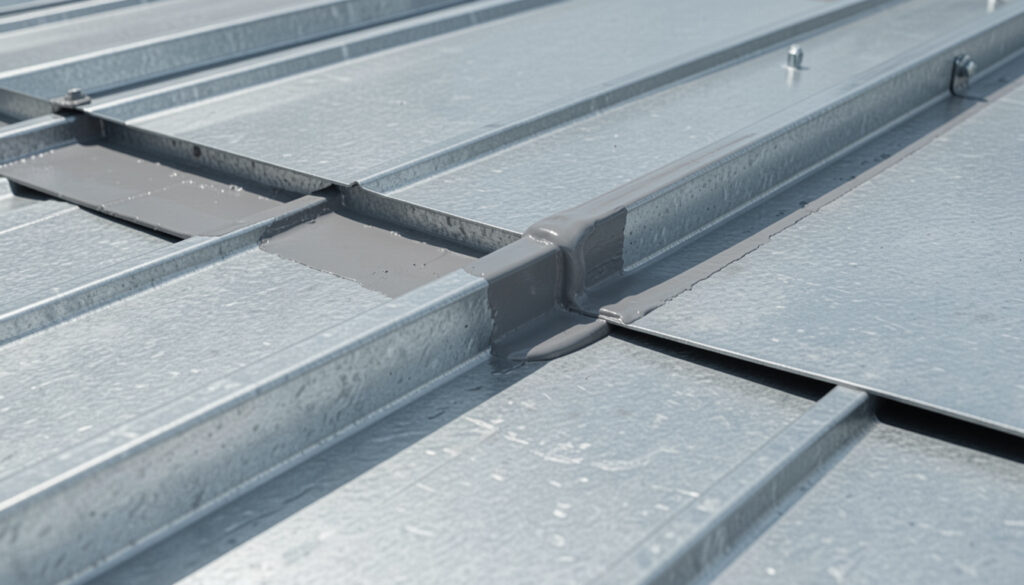
Why Sealants Matter in Metal Buildings
A metal building’s weather resistance depends on more than the roof and wall panels themselves.
Even high-quality metal panels can allow water infiltration if joints, penetrations, transitions, and fastener locations are not properly sealed.
The building envelope contains numerous connection points where two different components meet.
These locations can include:
- Roof-to-wall transitions
- Panel end laps
- Roof penetrations
- Ridge areas
- Eave conditions
- Wall corners
- Door and window openings
- Mechanical penetrations
- Trim connections
Sealants help close these potential paths for water and air.
Butler Metal Building Parts describes its compatible fastening and sealing components as products intended to help maintain structural integrity, prevent leaks, control airflow, and protect the building envelope from weather exposure.
Common Types of Butler Building Sealants
There is no single sealant that should automatically be used for every location on a metal building.
Different applications may require different products.
Common sealing materials used in Butler building applications include:
Mastic Tape
Mastic tape is a flexible, pressure-sensitive sealing material commonly used between overlapping metal components.
Butler-compatible mastic products are available in different widths for various applications. The current product selection includes 3/16-inch mastic tape and 1.5-inch by 40-foot mastic tape, along with other sealing materials.
Mastic tape can help create a continuous seal between metal surfaces while allowing some movement between components.
Cartridge Sealants
Cartridge-applied sealants are used where a continuous bead is required.
Butler-compatible products include gray sealant cartridges and sausage-style sealant packaging.
The appropriate application depends on the specific joint and manufacturer’s installation requirements.
Panel Caulking
Panel caulking provides another method for sealing joints and transitions within metal building assemblies.
It is particularly useful where a continuous flexible seal is needed between adjoining components.
Panalastic
Panalastic is another sealing product available for Butler building applications.
Like other sealants, its suitability depends on the particular roof or wall system and the joint being sealed.
Where Are Sealants Used on Butler Metal Buildings?
Sealants can be found throughout both roof and wall assemblies.
The exact locations vary according to the building system.
Roof Panel Laps
Roof panel laps are among the most important locations for sealing.
When two metal panels overlap, the connection creates a joint where water could potentially enter.
A properly installed sealant system helps close this interface.
The seal must remain continuous enough to prevent water from finding a path through the overlapping panels.
Wall Panel Joints
Exterior wall panels also contain joints and transitions that may require sealing.
These joints can be exposed to wind-driven rain, humidity, and temperature changes.
Proper sealing helps protect the interior building envelope from moisture intrusion.
Flashing and Trim
Trim components provide finished transitions around corners, eaves, bases, openings, and other areas.
Sealants can complement these components by closing gaps between the trim and adjacent panels.
However, sealant should complement properly designed flashing rather than replace it.
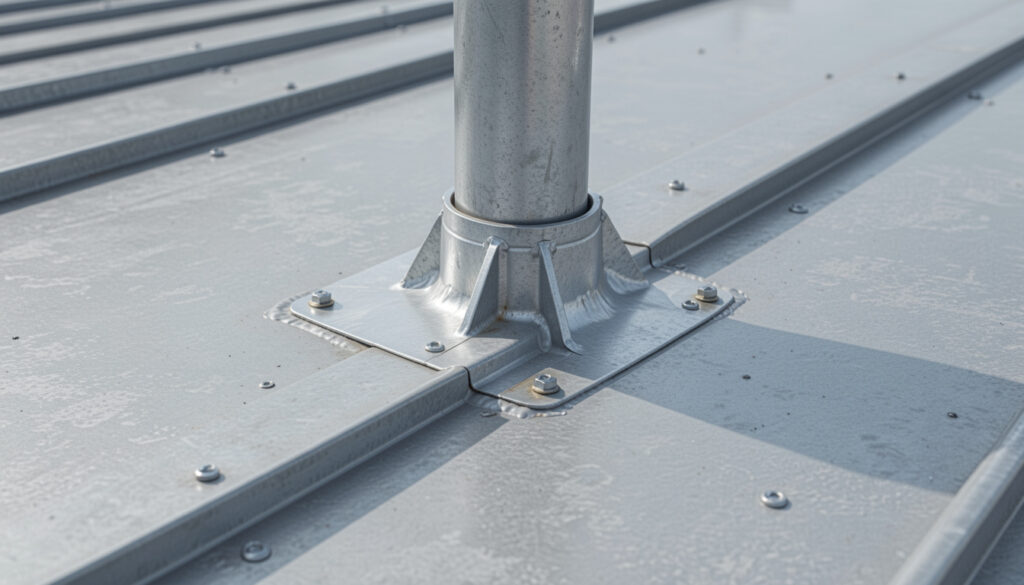
Roof Penetrations
Pipes, conduits, vents, HVAC equipment, and other components can penetrate the roof.
Each penetration creates a potential path for water intrusion.
For larger or more complex penetrations, a dedicated flashing system such as a Dektite may be required instead of relying solely on a conventional sealant bead.
Sealants and Butler Roof Systems
Different Butler roof systems have different panel profiles, seams, attachment methods, and detailing requirements.
For example, an exposed-fastened Butlerib II roof has different connection details from a standing-seam MR-24 roof.
This means a sealant appropriate for one location should not automatically be assumed to be appropriate for another.
Butler’s roof systems include Butlerib II, MR-24, VSR II, and other configurations, each with its own installation requirements.
Before replacing a failed sealant, identify the roof system and determine where the original sealing material was installed.
This is especially important during repairs because applying a generic sealant over an existing failed joint may not address the underlying problem.
Sealants and Butler Wall Systems
Wall panels also rely on properly sealed joints and transitions.
Exterior wall systems can be exposed to wind-driven rain and significant temperature changes.
Sealants may be required at panel laps, trim connections, corners, openings, and other transitions.
Butler-compatible wall systems include products such as Butlerib II, Shadowall, Stylwall II, and insulated metal panel systems.
Each system has different panel geometry and detailing requirements.
Using the correct sealing method helps preserve the intended performance of the wall assembly.
Sealants vs. Closures
Sealants and closures often work together, but they are not the same thing.
A closure is a shaped component designed to match the profile of a specific metal panel.
It fills the openings created by panel ribs and helps prevent water, air, debris, and pests from entering through those spaces.
A sealant is a flexible sealing material used to close joints and interfaces between components.
Butler Metal Building Parts describes its closures as profile-matched components designed for roof edges, ridges, eaves, and transition points.
In many applications, the closure and sealant work together.
For example:
Metal roof panel → profile-matched closure → mastic/sealant → flashing or trim
The exact assembly depends on the roof profile and installation detail.
How Sealants Help Prevent Metal Building Leaks
A roof leak does not necessarily originate directly above the location where water appears inside the building.
Water can travel along panel surfaces, framing members, insulation, or other components before reaching the interior.
That makes leak diagnosis more complicated than simply applying sealant to the first visible opening.
Common sources of metal building leaks include:
- Failed panel laps
- Deteriorated sealant
- Loose or damaged fasteners
- Improper flashing
- Roof penetrations
- Damaged panels
- Failed closures
- Inadequate drainage
- Deteriorated roof accessories
Sealant replacement can address one of these problems, but it should not be treated as a universal solution for every roof leak.
A proper inspection should identify the source of the water intrusion first.
When Should Butler Building Sealants Be Replaced?
Sealants can deteriorate over time due to environmental exposure.
UV radiation, temperature fluctuations, moisture, movement, and mechanical damage can affect the performance of sealing materials.
Signs that a sealant joint may require attention include:
- Cracking
- Shrinkage
- Separation from the substrate
- Loss of adhesion
- Brittle material
- Visible gaps
- Water staining
- Recurring leaks
- Deteriorated mastic
- Loose or damaged adjacent components
However, replacing the visible sealant without determining why it failed can result in a temporary repair rather than a durable solution.
If a joint repeatedly fails, the underlying movement, drainage, flashing, or attachment condition should be investigated.
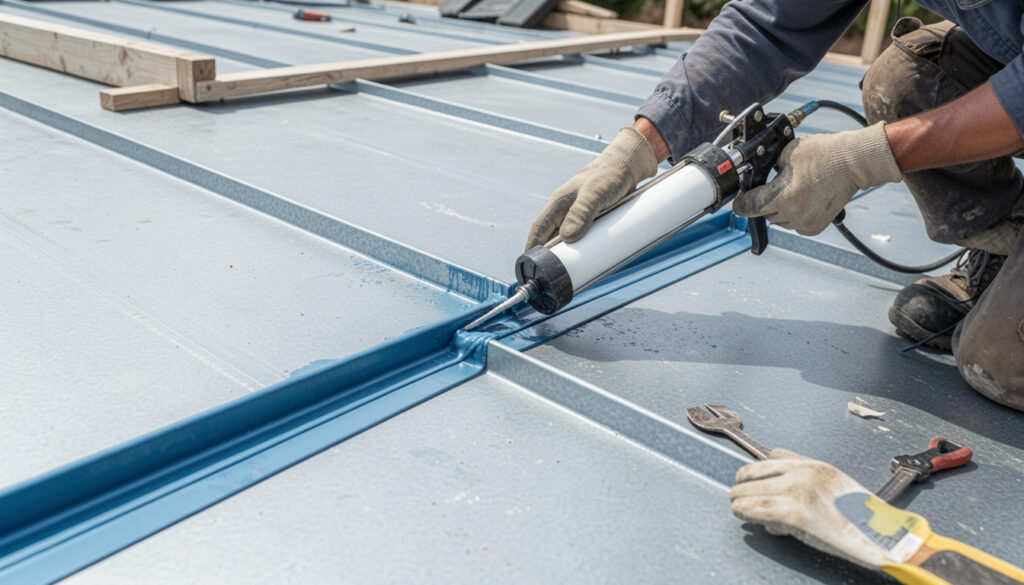
How to Apply Metal Building Sealant Properly
Proper surface preparation is just as important as the sealant itself.
Before applying a new sealant, installers should follow the product and building-system requirements for preparing the surfaces.
Typical preparation may involve:
- Removing failed or deteriorated sealant.
- Cleaning the surfaces.
- Removing dirt, oil, dust, and loose material.
- Allowing the substrate to dry where required.
- Applying the specified sealant or mastic.
- Maintaining the recommended bead size.
- Ensuring continuous contact between the sealant and the intended surfaces.
- Completing the joint according to the manufacturer’s instructions.
The specific procedure varies depending on the sealant product and application.
Using too little sealant can leave gaps.
Using too much can create unnecessary material buildup and may interfere with the intended connection.
Why the Correct Sealant Matters
Not all sealants have the same chemical composition, flexibility, adhesion characteristics, or weather resistance.
A sealant that works well on one construction material may not be appropriate for another.
Compatibility is especially important with coated metal panels.
The sealant must adhere properly without damaging the coating or creating an incompatible chemical reaction.
Temperature is another consideration.
Some products have minimum and maximum installation temperatures, while others may require dry surfaces for proper adhesion.
For this reason, the sealant should be selected based on the manufacturer’s technical requirements rather than simply choosing the most readily available caulk.
Sealants for Butler Building Repairs and Retrofit Projects
Sealants are particularly important during roof repair and retrofit projects.
Older Butler buildings may have deteriorated sealing materials even when the primary roof panels remain serviceable.
During a retrofit, contractors may encounter:
- Failed mastic
- Cracked caulking
- Deteriorated closures
- Loose fasteners
- Damaged flashing
- Previous repairs using incompatible materials
Replacing the sealing components can be part of restoring the weather resistance of the building envelope.
Butler Metal Building Parts offers compatible fasteners, closures, sealants, mastic, and Dektites for repair, retrofit, and maintenance applications.
Things to Know
- Sealant is part of the building envelope. It should not be treated as an insignificant finishing material.
- Identify the roof or wall system first. Different Butler systems have different sealing requirements.
- Mastic tape and liquid sealants are not interchangeable in every application.
- Surface preparation matters. Dirt, oil, moisture, and failed old sealant can affect adhesion.
- Sealant should complement flashing and closures. It should not be used to compensate for incorrectly installed components.
- Inspect recurring leaks carefully. The visible sealant failure may only be a symptom of a larger issue.
- Avoid generic substitutions when system compatibility matters.
- Check installation conditions. Temperature and substrate conditions can affect sealant performance.
- Use compatible products around coated metal panels.
- Follow the applicable manufacturer’s installation requirements for the specific Butler roof or wall system.
Frequently Asked Questions
Q: What are Butler building sealants used for?
Butler building sealants are used to create weather-resistant seals at panel joints, laps, transitions, penetrations, trim connections, and other building envelope interfaces.
They help reduce water and air infiltration and support the long-term weather resistance of the building system.
Q: Can I use any construction caulk on a Butler metal building?
Not necessarily. The sealant should be compatible with the specific metal panels, coatings, substrate, and application.
Using a generic product without checking compatibility can lead to poor adhesion or premature failure.
Q: What is the difference between mastic tape and sealant?
Mastic tape is a preformed flexible sealing material, while conventional sealant is generally applied as a liquid or paste that cures or forms a flexible seal.
Both can be useful in metal building applications, but the correct product depends on the specific joint and building-system detail.
Q: Where is mastic tape used on metal buildings?
Mastic tape is commonly used to seal joints and interfaces between metal components where a continuous flexible seal is required.
Butler-compatible mastic tape is available in different sizes for various applications.
Q: Can sealant fix a leaking Butler roof?
Sealant can repair certain failed joints, laps, and penetrations, but it should not automatically be considered the solution to every roof leak.
The source of the leak should first be identified. Damaged panels, failed closures, loose fasteners, flashing problems, or drainage issues may require additional repairs.
Q: How often should Butler building sealants be replaced?
There is no universal replacement interval because sealant life depends on the product, location, exposure, movement, and installation quality.
Instead of replacing sealant on a fixed schedule, inspect vulnerable joints periodically and replace material when deterioration or loss of sealing performance is identified.
Q: Can sealant be applied over old sealant?
Sometimes, but simply covering deteriorated sealant does not necessarily create a durable repair.
Failed material may need to be removed and the substrate properly cleaned before the new sealing material is applied.
Q: Are Butler building sealants used on both roofs and walls?
Yes. Sealants can be used in both roof and wall applications where the specific Butler system requires sealing at joints, transitions, laps, and other interfaces.
The appropriate product and installation method depend on the building system.
Q: Do Butler closures replace sealant?
No. Closures and sealants perform different functions and may be used together.
Closures are profile-matched components that fill openings created by panel ribs, while sealants create flexible seals between surfaces.
Q: Can I use sealant around a roof penetration?
Yes, sealants can be part of a roof penetration sealing assembly, but larger penetrations typically require a properly designed flashing component as well.
For example, Butler-compatible Dektite products are designed to provide flexible weatherproof flashing around certain roof penetrations.
The Bottom Line on Butler Building Sealants
Sealants play a critical role in maintaining the weather resistance of Butler metal building systems. Although they are small components compared with roof and wall panels, they protect some of the most vulnerable areas of the building envelope.
Properly selected and installed sealants help protect panel laps, joints, penetrations, trim connections, and transitions from water and air infiltration.
For repair and retrofit projects, replacing deteriorated sealant can restore weather resistance when the underlying panels and attachment components remain serviceable. However, recurring leaks should always be investigated to determine whether a larger problem exists.
Butler Metal Building Parts offers Butler-compatible sealants, mastic tapes, closures, fasteners, and Dektites for commercial and industrial metal building applications.
Need Butler-compatible sealants for your roof or wall system? Request a Quote and provide your building’s roof or wall system and the sealing components you need.