

Vapor retarders are an important component of many metal building roof and wall assemblies. Their primary purpose is to control the movement of water vapor through the building envelope and help reduce the potential for condensation.
Metal buildings can be particularly sensitive to moisture because steel components readily conduct temperature changes. When warm, moisture-laden air reaches a sufficiently cold surface, condensation can occur. A properly designed vapor retarder can help control vapor movement and contribute to a more durable, energy-efficient building envelope.
For Butler buildings, the vapor retarder needs to be considered as part of the complete roof or wall assembly rather than as an isolated product.
Key Takeaways
- Vapor retarders help control water-vapor movement through a building assembly.
- They can reduce the potential for condensation when properly incorporated into the building envelope.
- Vapor retarders are different from waterproofing materials and should not be treated as a replacement for flashing or weather barriers.
- Their placement depends on climate, building use, interior conditions, and assembly design.
- Vapor retarders can be used with metal building insulation systems.
- Damaged, torn, or improperly sealed vapor-retarder materials can reduce their effectiveness.
- Penetrations around doors, windows, pipes, ducts, and electrical components require careful detailing.
- The vapor retarder should be coordinated with the insulation and metal roof or wall system.
- Existing buildings may require inspection before replacing or modifying vapor-control materials.
- Proper installation is essential because gaps and unsealed penetrations can undermine the continuity of the assembly.
What Is a Vapor Retarder?
A vapor retarder is a material designed to slow the movement of water vapor through a building assembly.
It is not necessarily intended to completely stop vapor movement.
This distinction is important because buildings need to manage moisture in several different forms.
Moisture can move through:
- Air leakage
- Vapor diffusion
- Bulk water
- Rain
- Condensation
- Ground moisture
A vapor retarder primarily addresses vapor diffusion.
It does not replace the other components responsible for keeping rain and bulk water outside the building.
Why Vapor Control Matters in Metal Buildings
Metal buildings often contain large areas of steel roof and wall surfaces.
Steel changes temperature quickly when exposed to outdoor conditions.
When the interior of a building contains warm, humid air, that moisture can move toward colder parts of the building envelope.
If the moisture reaches a surface below the air’s dew point, condensation can form.
This can lead to:
- Wet insulation
- Corrosion
- Water staining
- Reduced insulation performance
- Mold-supporting conditions
- Interior moisture problems
A properly designed vapor-control strategy can help reduce these risks.
Vapor Retarder vs. Vapor Barrier
The terms vapor retarder and vapor barrier are sometimes used interchangeably, but they are not always technically equivalent.
A vapor retarder limits the rate at which water vapor can pass through a material.
A vapor barrier generally refers to a material with extremely low vapor permeance.
Building codes and specifications commonly classify vapor-control materials according to their permeance.
For a particular Butler building, the appropriate material and location should be determined based on the complete assembly and local requirements.
Vapor Retarder vs. Air Barrier
A vapor retarder controls vapor diffusion.
An air barrier controls air movement.
These functions can overlap, but they are not automatically the same.
This distinction matters because air leakage can transport substantially more moisture than vapor diffusion under some conditions.
A small gap in an air-control layer can therefore introduce moisture into a wall or roof assembly even when the vapor retarder itself has a low permeance.
Proper sealing and continuity are essential.
Vapor Retarders and Metal Building Insulation
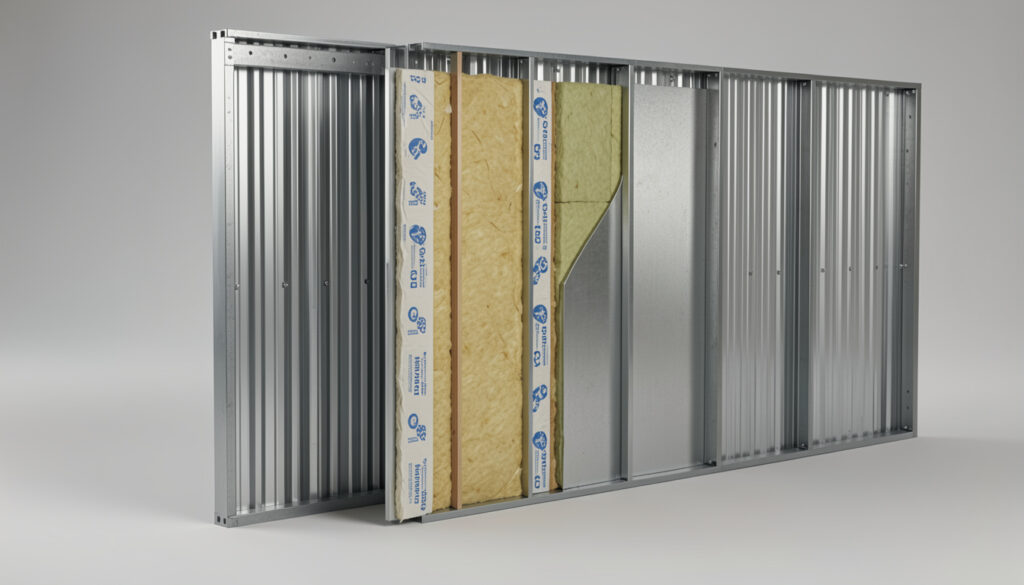
Vapor retarders are often integrated with metal building insulation systems.
A typical assembly may include:
Exterior metal panel → insulation → vapor retarder → interior environment
The exact position depends on the climate and design.
The vapor retarder may be incorporated into the facing of blanket insulation or installed as a separate component.
The correct configuration should follow the building design and applicable manufacturer’s instructions.
Condensation in Metal Buildings
Condensation occurs when moist air encounters a surface cold enough for water vapor to condense.
For example, consider a metal roof during a cold night.
The exterior steel can become significantly colder than the interior air.
If warm, humid interior air reaches the underside of the cold roof panel, condensation can occur.
A properly designed insulation and vapor-control system helps reduce the likelihood of this condition.
However, vapor retarders are only one part of the solution.
Humidity and Building Use
The amount of moisture generated inside a building depends heavily on its use.
A dry warehouse may have relatively low indoor humidity.
A facility involving:
- Food processing
- Washing operations
- Manufacturing
- Heated spaces
- High-occupancy areas
- Moisture-producing processes
may have significantly higher humidity.
The higher the interior moisture load, the more important proper moisture control becomes.
Climate Matters
Vapor-control strategies should not be identical for every geographic location.
The appropriate location of a vapor retarder can depend on:
- Heating-dominated climates
- Cooling-dominated climates
- Mixed climates
- Indoor humidity
- Seasonal temperature changes
A design that works well in one climate may not be appropriate in another.
This is one reason vapor retarders should be specified as part of a complete building-envelope design.
Vapor Retarders in Roof Assemblies
Roof assemblies are particularly important because the underside of a metal roof can experience significant temperature fluctuations.
A properly designed roof assembly may incorporate:
- Exterior metal roof panel
- Insulation
- Vapor-control layer
- Air-control layer
- Interior liner or ceiling system
The exact configuration depends on the building.
Roof penetrations also require special attention because every penetration can interrupt the continuity of the vapor-control layer.
Vapor Retarders in Wall Assemblies
Wall assemblies can have similar moisture-control requirements.
A typical metal wall may include:
- Exterior wall panel
- Structural framing
- Insulation
- Vapor-control layer
- Interior liner or finish
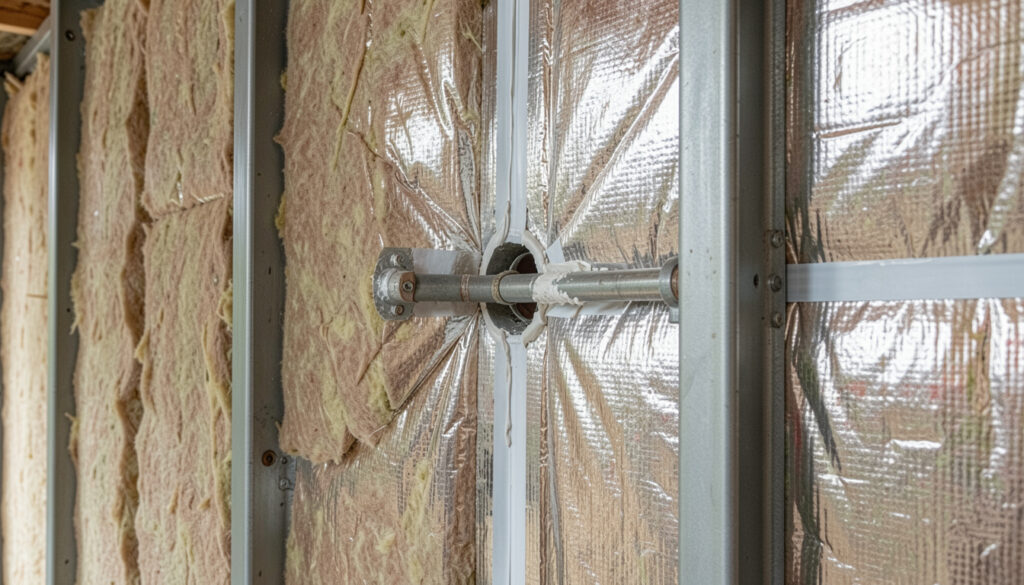
The vapor-control layer needs to remain continuous around wall openings and penetrations.
Windows, doors, pipes, electrical conduits, and mechanical systems can all create interruptions.
Penetrations Are Critical
A vapor retarder can only perform effectively if its continuity is maintained.
Common penetrations include:
- Electrical conduits
- Plumbing
- HVAC ducts
- Pipes
- Data cables
- Structural components
- Lighting
- Windows
- Doors
Each opening should be properly detailed and sealed according to the system design.
A small unsealed penetration can create a pathway for air and moisture movement.
Sealing Joints and Seams
The seams between vapor-retarder materials need appropriate treatment.
Depending on the product, this may involve:
- Compatible tape
- Sealant
- Mechanical fastening
- Factory overlaps
- Integrated adhesive strips
The sealing material should be compatible with the vapor-retarder membrane.
Using an incompatible adhesive or sealant can cause premature failure.
Vapor Retarder Damage During Construction
Construction activities can damage vapor-control materials.
Common causes include:
- Walking on materials
- Cutting insulation
- Installing electrical systems
- Installing ducts
- Moving equipment
- Fastener penetrations
- Improper handling
Small tears may appear insignificant but can compromise continuity.
The vapor retarder should therefore be inspected before the interior side of the assembly is closed.
Repairing Damaged Vapor Retarders
Damaged sections should be repaired using compatible materials and installation methods.
The repair should restore:
- Material continuity
- Proper overlap
- Air sealing
- Vapor-control performance
Simply covering a tear with an incompatible tape may not provide a durable repair.
The repair method should follow the manufacturer’s instructions for the specific vapor-retarder material.
Vapor Retarders and Insulation Performance
A vapor retarder does not provide the same function as insulation.
Insulation primarily slows heat transfer.
The vapor retarder controls vapor movement.
They work together within the building envelope.
If insulation becomes wet because of condensation or moisture intrusion, its effective thermal performance can decrease.
Therefore, moisture control indirectly supports the long-term performance of the insulation system.
Vapor Retarders and Corrosion
Moisture trapped against steel components can contribute to corrosion.
This is particularly concerning in metal buildings because the structural and exterior components are commonly steel.
A moisture problem may not immediately appear as a leak.
Instead, it can manifest as:
- Rust
- Corrosion
- Wet insulation
- Discoloration
- Musty odors
- Interior staining
The underlying moisture source should be identified rather than simply treating the visible symptom.
Vapor Retarder vs. Waterproofing
A vapor retarder should not be confused with a waterproofing membrane.
Waterproofing and weather barriers are designed to manage liquid water.
Vapor retarders control water vapor diffusion.
A metal building may require several different moisture-management layers, each performing a specific function.
Using one material as a substitute for another can result in an improperly designed assembly.
Vapor Retarders and Air Leakage
Air leakage is one of the most important moisture considerations in building envelopes.
Warm, humid air can move through gaps and carry moisture into colder parts of the assembly.
Therefore, continuity of the air-control layer is important even when the vapor retarder has low vapor permeance.
This is why joints, seams, penetrations, and transitions should be properly sealed.
Retrofitting an Existing Butler Building
Older Butler buildings may have insulation or vapor-control systems that differ from current construction practices.
Before replacing a roof or wall system, inspect the existing assembly.
Look for:
- Damaged insulation
- Wet insulation
- Torn vapor retarders
- Corroded framing
- Missing seals
- Open penetrations
- Previous repairs
- Moisture staining
A retrofit provides an opportunity to correct underlying moisture-control problems rather than simply replacing the visible exterior panel.
Vapor Retarders During Roof Replacement
Roof replacement can expose the existing insulation and vapor-control layer.
This provides an opportunity to determine whether the existing assembly is still performing properly.
If the vapor retarder is torn or discontinuous, simply installing a new exterior roof panel may not correct the underlying condensation problem.
The complete roof assembly should be evaluated.
Vapor Retarders During Wall Replacement
The same principle applies to wall replacement.
If a damaged Butlerib II wall panel is removed, inspect the insulation and vapor-control materials behind it.
Look for:
- Wet insulation
- Torn facing
- Corroded framing
- Water stains
- Damaged seals
Repairing these components can be just as important as installing the new exterior panel.
Common Causes of Vapor-Control Problems
Improper Placement
A vapor retarder installed in the wrong location for the climate or assembly can increase moisture risk.
Unsealed Seams
Open seams can allow air and moisture movement through the assembly.
Damaged Material
Tears and punctures can interrupt continuity.
Unsealed Penetrations
Pipes, conduits, ducts, and other penetrations can create pathways through the vapor-control layer.
Wet Insulation
Wet insulation can indicate a condensation or bulk-water problem that needs further investigation.
Incorrect Tape or Sealant
Incompatible products may not provide a durable seal.
Poor Installation
Improper overlaps, wrinkles, gaps, and fastening can reduce system effectiveness.
Interior Humidity
High indoor humidity can increase the amount of moisture available to move through the building assembly.
Air Leakage
Uncontrolled air movement can carry moisture into colder portions of the roof or wall.
Common Problems With Vapor Retarders
Tears and Punctures
Small openings can interrupt the continuity of the vapor-control layer.
Open Seams
Poorly sealed overlaps can allow air and moisture movement.
Unsealed Penetrations
Mechanical, electrical, and plumbing penetrations need proper detailing.
Condensation
Persistent condensation can indicate a larger problem involving insulation, humidity, air leakage, or vapor-control design.
Wet Insulation
Moisture within insulation can reduce its effectiveness and contribute to corrosion.
Corroded Steel
Persistent moisture around steel components can accelerate corrosion.
Incorrect Material
A vapor-retarder material must be appropriate for the building assembly and environmental conditions.
Improper Placement
The location of the vapor retarder should be determined by the overall building-envelope design.
Failed Repairs
Incompatible tape or sealants can cause repaired areas to fail prematurely.
High Interior Humidity
Buildings with high moisture loads require more careful moisture-control planning.
Things to Know
- Vapor retarders control the movement of water vapor through building assemblies.
- They are different from waterproofing membranes and should not be treated as a substitute for weather protection.
- Vapor retarders and insulation perform different functions but work together within the building envelope.
- The appropriate vapor-control location depends on climate and building conditions.
- Interior humidity can significantly affect condensation risk.
- Seams, penetrations, and transitions must be properly detailed.
- Damaged vapor-retarder material should be repaired using compatible materials.
- Wet insulation can indicate an underlying moisture-control problem.
- Air leakage can transport moisture through gaps in the building envelope.
- Roof and wall replacement projects provide opportunities to inspect existing vapor-control materials.
- The complete roof or wall assembly should be evaluated when persistent condensation occurs.
- Proper vapor-control design can contribute to the long-term performance of insulation and steel building components.
Frequently Asked Questions
Q: What does a vapor retarder do?
A vapor retarder slows the movement of water vapor through a building assembly.
Its purpose is to help control moisture and reduce the potential for condensation under appropriate assembly conditions.
Q: Is a vapor retarder waterproof?
Not necessarily.
A vapor retarder is designed primarily to control vapor diffusion and is not a substitute for a waterproofing or weather-resistant layer.
Q: What is the difference between a vapor retarder and an air barrier?
A vapor retarder controls vapor diffusion, while an air barrier controls air movement.
Some materials can perform both functions, but the two concepts are not identical.
Q: Why are vapor retarders important in metal buildings?
Metal buildings can experience significant temperature changes and condensation risk.
Proper moisture control can help protect insulation and steel components from moisture-related problems.
Q: Where should a vapor retarder be installed?
Its location depends on the climate, building use, interior humidity, and complete wall or roof assembly.
It should be specified as part of the overall building-envelope design.
Q: Can vapor retarders be used with metal building insulation?
Yes.
Vapor-control materials are commonly incorporated into metal building insulation assemblies.
Q: What happens if a vapor retarder is torn?
A tear can interrupt the continuity of the vapor-control layer and may reduce its effectiveness.
Damaged areas should be repaired using compatible materials and installation methods.
Q: Can a vapor retarder prevent condensation?
It can help control one part of the moisture movement that contributes to condensation, but it cannot independently eliminate all condensation risk.
Insulation, air sealing, ventilation, humidity, temperature, and assembly design also matter.
Q: Why is there condensation underneath my metal roof?
Condensation can occur when warm, humid interior air reaches a surface that is below its dew point.
Insufficient insulation, air leakage, high humidity, and improper vapor-control detailing can all contribute.
Q: Should I replace the vapor retarder when replacing a metal roof?
Not automatically.
The existing assembly should be inspected to determine whether the vapor retarder, insulation, and other components remain functional.
Q: Can vapor retarders help protect steel from corrosion?
They can help reduce moisture exposure when properly incorporated into the building envelope.
However, corrosion can have many causes, so existing rust should be investigated rather than assuming the vapor retarder is the only issue.
The Bottom Line on Vapor Retarders
Vapor retarders are an important part of moisture control in properly designed Butler metal building roof and wall assemblies.
Their role is to slow water-vapor movement and help manage condensation risk, while insulation, air barriers, weather barriers, flashing, and sealants perform their own functions within the complete building envelope.
For existing Butler buildings, moisture problems should be investigated systematically. Replacing an exterior metal panel without addressing damaged insulation, air leakage, failed seals, or a compromised vapor-control layer may leave the underlying problem unresolved.
If you’re replacing a Butler roof or wall system and need help identifying the appropriate vapor retarder, insulation, or related building components, Request a Quote and provide your building information, measurements, and photos.