

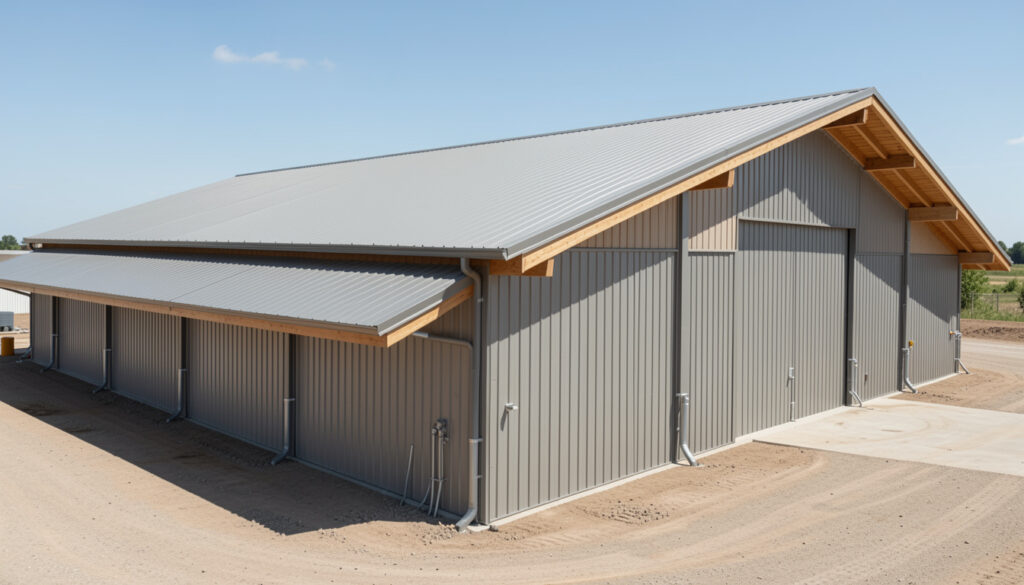
The CMFR-24 metal roof is a Butler roofing system designed for metal building applications where a durable, engineered roof assembly is required. Like other Butler roof systems, the CMFR-24 is more than its visible metal panels. Its performance depends on the interaction between the roof panels, structural framing, attachment components, insulation, flashing, sealants, and drainage system.
For owners of existing Butler buildings, knowing the characteristics of the CMFR-24 system can make it easier to identify the right replacement components and determine the appropriate approach when the roof develops leaks, corrosion, or other damage.
A roof problem should not automatically lead to complete roof replacement. In many situations, the damaged area, surrounding components, and overall condition of the roof can be evaluated to determine whether a localized repair is appropriate.
Key Takeaways
- CMFR-24 is a Butler metal roof system used for metal building applications.
- The roof should be evaluated as a complete assembly rather than as individual panels.
- Correct identification of the existing roof system is essential before ordering replacement parts.
- Roof panels, attachments, flashing, sealants, insulation, and drainage all contribute to roof performance.
- Thermal movement should be considered when repairing or modifying metal roofing.
- Roof penetrations and transitions are common areas where leaks can develop.
- Corrosion should be addressed before it progresses into more extensive panel deterioration.
- Wet insulation may indicate a roof leak or condensation problem.
- Localized damage may be repairable without replacing the entire roof.
- Proper maintenance can help identify developing problems before they become major repairs.
What Is a CMFR-24 Metal Roof?
The CMFR-24 is one of the roof systems associated with Butler metal buildings.
It forms part of the building’s exterior envelope and is designed to protect the interior from weather while working with the structural and thermal components of the building.
The completed roof assembly can include:
- Metal roof panels
- Panel attachment components
- Structural steel
- Insulation
- Vapor retarders
- Flashing
- Sealants
- Closures
- Roof penetrations
- Drainage components
Each component has a specific function.
A failure in one area can sometimes affect other parts of the roof assembly.
Why Correct Roof Identification Matters
Butler buildings have been constructed with several different roof systems.
Examples include:
- Butlerib II
- MR-24
- VSR II
- CMR-24
- CMFR-24
These systems can have different panel profiles, attachment methods, seams, clips, fasteners, and accessories.
If you are ordering a replacement component, identifying the roof system first helps prevent compatibility problems.
A part that looks similar to an existing component is not necessarily the correct replacement.
CMFR-24 Roof Panels
Roof panels form the primary weather-resistant surface of the building.
They are exposed to:
- Sunlight
- Rain
- Wind
- Temperature changes
- Debris
- Moisture
- Environmental contaminants
Over time, these conditions can cause surface deterioration, corrosion, deformation, or other forms of damage.
The severity of the damage determines whether the panel should be repaired or replaced.
Common Causes of Roof Panel Damage
Metal roof panels can be damaged by several factors.
Common causes include:
- Severe storms
- Falling debris
- Improper maintenance
- Foot traffic
- Equipment installation
- Corrosion
- Previous repair work
- Mechanical impact
A small dent may have limited consequences, while a puncture or severely deformed panel can compromise the weather-resistant surface.
Corrosion on CMFR-24 Roofs
Corrosion occurs when metal deteriorates due to environmental exposure.
The protective coating on a roof panel helps protect the underlying metal, but scratches, impact, prolonged moisture, and other conditions can compromise that protection.
Areas that deserve particular attention include:
- Roof edges
- Panel joints
- Fasteners
- Flashing
- Penetrations
- Areas where debris accumulates
- Locations where water remains for extended periods
Early corrosion may be manageable.
Advanced corrosion can require panel replacement.
Roof Coating Damage
The protective finish of a metal roof is an important part of its durability.
Scratches or exposed metal should be evaluated, particularly when they occur in areas that remain exposed to moisture.
Painting over an area without preparing the underlying surface properly may only conceal the problem temporarily.
The repair method should be appropriate for the type and severity of the coating damage.
CMFR-24 Roof Leaks
A roof leak can originate from several locations.
The visible water inside the building may not be directly beneath the actual entry point.
Water can travel along:
- Roof panels
- Structural framing
- Flashing
- Insulation
- Seams
- Other roof components
Common sources of leaks include damaged panels, penetrations, flashing, failed sealants, and drainage problems.
The source should be identified before repairs are performed.
Roof Penetrations
Commercial and industrial buildings commonly have roof penetrations for equipment and building services.
Examples include:
- HVAC systems
- Exhaust fans
- Pipes
- Electrical equipment
- Vents
- Skylights
- Mechanical equipment
Every penetration creates a transition in the roof surface.
These areas should receive careful attention during inspections because deterioration of flashing or sealants can create water-entry points.
Flashing
Flashing helps direct water away from roof transitions and penetrations.
Over time, flashing can become damaged or deteriorated.
Look for:
- Open joints
- Corrosion
- Bent metal
- Loose sections
- Failed sealants
- Improper previous repairs
If flashing has failed, replacing a nearby roof panel alone may not stop the leak.
Sealants
Sealants are used throughout metal building roof assemblies.
They can deteriorate due to:
- UV exposure
- Temperature fluctuations
- Aging
- Physical movement
- Poor adhesion
- Improper installation
Failed sealants can allow water to reach joints and transitions that were intended to remain weather-resistant.
Thermal Movement
Metal expands and contracts as temperatures change.
This movement is a normal characteristic of metal roofing.
A roof exposed to direct sunlight can experience substantial temperature changes throughout the day.
The roof’s attachment system needs to accommodate the movement intended by the original design.
Repairs should avoid introducing unnecessary restrictions or stresses into the roof assembly.
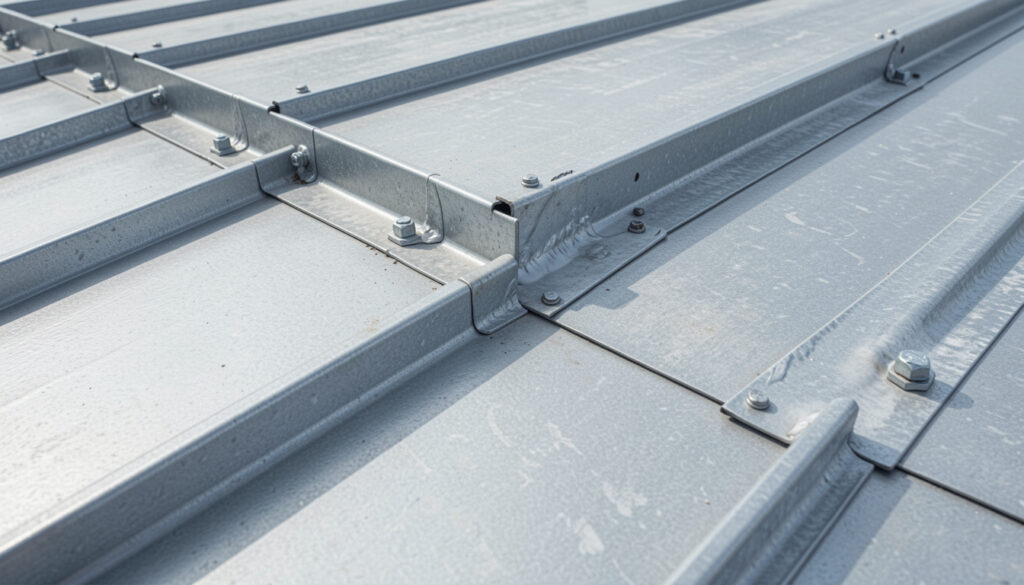
Roof Attachments
The roof attachment system connects the panels to the supporting structure.
Depending on the system configuration, attachment components may include:
- Clips
- Fasteners
- Structural connections
- Washers
- Other hardware
The exact components should be identified based on the CMFR-24 system and the location of the repair.
Using an unrelated component simply because it fits physically can create structural or weatherproofing problems.
Wind and Roof Performance
Wind can place significant uplift forces on metal roof assemblies.
These forces are transferred through the roof panels and their attachment components into the building structure.
The required attachment configuration depends on the building’s engineering, location, geometry, and applicable design requirements.
After a major storm, an inspection should include more than the visibly damaged panels.
CMFR-24 Roof Insulation
Insulation is an important component of the overall roof assembly.
It can help reduce heat transfer between the exterior and interior of the building.
It can also contribute to condensation control when properly coordinated with vapor and air-control components.
The insulation system may include:
- Fiberglass insulation
- Vapor retarders
- Insulation support systems
- Air-control components
The appropriate insulation configuration depends on the building’s design and requirements.
Wet Roof Insulation
Wet insulation can indicate that moisture has entered the roof assembly.
Potential causes include:
- Roof leaks
- Condensation
- Failed flashing
- Damaged penetrations
- Air leakage
- Failed vapor-control components
Installing new insulation without addressing the moisture source can allow the problem to continue.
The cause should be identified first.
Condensation
Condensation occurs when moisture-laden air contacts a surface that is cold enough for water vapor to condense.
Metal roofs can become cold under certain conditions.
The risk of condensation depends on factors such as:
- Interior humidity
- Exterior temperature
- Insulation
- Vapor control
- Air leakage
- Roof assembly design
A properly designed roof assembly can help manage these conditions.
Roof Drainage
Water needs to move efficiently away from the roof.
Drainage components can include:
- Gutters
- Downspouts
- Roof slopes
- Drainage outlets
Blocked or damaged drainage can allow water to accumulate near the roof edge.
Persistent water exposure can contribute to corrosion and deterioration.
Gutters and Roof Edges
Roof-edge problems can sometimes appear as wall or soffit damage.
An overflowing gutter may allow water to run against:
- Soffit panels
- Fascia
- Exterior walls
- Flashing
- Insulation
When investigating moisture around the roof edge, inspect the drainage system as well as the roof panel.
Roof Maintenance
Routine inspection is one of the simplest ways to identify developing roof problems.
A maintenance inspection should look for:
- Damaged panels
- Corrosion
- Failed sealants
- Damaged flashing
- Loose components
- Debris
- Drainage problems
- Roof penetrations
Interior inspections can also reveal water stains and condensation.
Interior Roof Inspection
The underside of the roof can provide useful information about the condition of the roof assembly.
Look for:
- Water stains
- Wet insulation
- Rust
- Condensation
- Damaged structural steel
- Daylight visible through roof openings
Interior observations should be compared with exterior roof conditions to help locate the source of a problem.
Repairing a CMFR-24 Roof
The appropriate repair depends on the extent of the damage.
A localized repair may involve:
- Replacing a damaged panel
- Replacing fasteners
- Repairing sealants
- Replacing flashing
- Repairing a penetration
- Correcting drainage problems
A larger repair may require replacement of multiple components.
Partial Roof Replacement
A complete roof replacement is not always necessary.
If the majority of the roof remains structurally and functionally sound, localized replacement may be possible.
However, the condition of surrounding panels should be evaluated.
A new component should also be compatible with the existing roof assembly.
Full Roof Replacement
A full replacement may become appropriate when the roof has widespread deterioration.
Factors that may influence the decision include:
- Extensive corrosion
- Numerous recurring leaks
- Widespread panel damage
- Structural concerns
- Failed roof assemblies
- Poor remaining service life
- Major building renovations
The decision should be based on the condition of the complete roof rather than one isolated problem.
Roof Modifications
Existing Butler buildings are often modified over their service life.
New equipment may require:
- Roof penetrations
- Supports
- Electrical pathways
- HVAC installations
- Exhaust systems
- Solar mounting
Every modification should be coordinated with the existing CMFR-24 roof.
Poorly detailed modifications can create new leak paths.
Solar Installation
Solar panels can add significant equipment and loading to an existing roof.
Before installation, evaluate:
- Roof condition
- Remaining service life
- Attachment method
- Structural capacity
- Water-tightness
- Panel configuration
The solar attachment should be compatible with the specific roof system.
Roof Service Life
The service life of a metal roof depends on many factors.
These include:
- Installation quality
- Environmental exposure
- Maintenance
- Corrosion
- Weather
- Drainage
- Previous modifications
- Roof material and coating
Age alone does not determine whether a roof needs replacement.
A physical inspection provides a better basis for repair decisions.
Replacement Parts for Existing CMFR-24 Roofs
When ordering replacement components, provide as much information as possible.
Useful information includes:
- Building identification
- Roof system
- Panel dimensions
- Photographs
- Component location
- Existing hardware
- Damage description
This can make it easier to identify the correct replacement component.
Common Problems With CMFR-24 Metal Roofs
Roof Leaks
Water intrusion can originate from panels, flashing, penetrations, sealants, or drainage components.
Corrosion
Long-term exposure to moisture can deteriorate the protective coating and underlying metal.
Damaged Panels
Storms, impact, maintenance work, and other activities can damage roof panels.
Failed Sealants
Aging or damaged sealants can allow water to enter roof joints and transitions.
Damaged Flashing
Bent, corroded, or improperly sealed flashing can create leak paths.
Wet Insulation
Wet insulation can indicate an unresolved leak or condensation problem.
Blocked Drainage
Debris and damaged gutters can prevent water from leaving the roof properly.
Loose Attachment Components
Deteriorated or damaged attachment hardware can affect the roof’s connection to the structure.
Improper Modifications
Unplanned penetrations and equipment installations can compromise the roof assembly.
Repeated Repairs
A roof requiring frequent repairs may need a broader condition assessment rather than another isolated patch.
Things to Know
- CMFR-24 is a Butler metal building roof system.
- The roof should be evaluated as a complete assembly rather than as individual panels.
- Correct roof-system identification is important when ordering replacement components.
- Roof panels, attachments, flashing, sealants, insulation, and drainage all contribute to roof performance.
- Thermal movement is a normal consideration with metal roofing.
- Roof penetrations require appropriate flashing and weather sealing.
- Water stains inside the building can help identify exterior roof problems.
- Wet insulation should be investigated rather than simply covered with new material.
- Blocked drainage can contribute to roof-edge deterioration.
- Localized damage does not automatically mean the entire roof needs replacement.
- Roof modifications should be planned around the existing roof system.
- Photographs and accurate measurements can help identify replacement parts.
Frequently Asked Questions
Q: What is a CMFR-24 metal roof?
CMFR-24 is a Butler metal roofing system used as part of Butler metal building construction.
Q: How can I tell if my building has a CMFR-24 roof?
Roof profile, panel configuration, attachment details, building documentation, and existing roof components can help identify the system.
Photographs and measurements can also be useful.
Q: What causes a CMFR-24 roof to leak?
Leaks can result from damaged roof panels, flashing, penetrations, failed sealants, drainage problems, or deteriorated roof components.
Q: Can a CMFR-24 roof be repaired instead of replaced?
Yes, localized repairs may be appropriate when the surrounding roof remains in suitable condition.
The extent of the damage should be evaluated first.
Q: Does corrosion mean I need a new roof?
Not necessarily.
The depth, location, and extent of corrosion should be evaluated along with the overall condition of the roof.
Q: How important is roof insulation?
Insulation helps reduce heat transfer and can contribute to condensation control as part of the complete roof assembly.
Q: What should I do if my roof insulation is wet?
Identify and correct the source of moisture first.
The affected insulation and vapor-control components should then be evaluated.
Q: Can I install solar panels on a CMFR-24 roof?
Solar installation may be possible, but the mounting method and structural requirements must be evaluated for the specific roof.
The remaining service life of the existing roof should also be considered.
Q: How often should a CMFR-24 roof be inspected?
Regular inspections are recommended, particularly after severe weather or when interior signs of moisture appear.
The appropriate inspection frequency depends on the building and environmental conditions.
Q: Can I replace only one damaged roof panel?
Depending on the roof configuration and extent of damage, localized panel replacement may be possible.
Surrounding panels and attachment components should also be inspected.
Q: Why is water appearing inside the building even though I cannot see a roof hole?
Water can travel along roof panels, structural members, insulation, and other components before entering the building.
The visible water stain may therefore be some distance from the actual leak source.
Q: What information should I provide when ordering CMFR-24 replacement parts?
Provide your Butler building information, roof type, measurements, photographs, location of the damaged component, and a description of the problem.
This information can help identify the appropriate replacement component.
The Bottom Line on CMFR-24 Metal Roofs
The CMFR-24 metal roof is part of an integrated Butler building envelope that includes panels, attachments, insulation, flashing, sealants, and drainage. Understanding how these components work together is important when maintaining or repairing an existing building.
A leak, corroded panel, or damaged roof component does not automatically mean the entire roof needs replacement. A proper evaluation can determine whether the problem is localized or part of a larger deterioration issue.
If you need CMFR-24 roof panels, replacement components, fasteners, flashing, insulation, or other Butler building parts, Request a Quote and provide your building information, measurements, photographs, and project requirements.