

Corner trim is an essential component of a metal building wall system. Installed where two exterior walls meet, it covers the exposed panel edges and creates a finished, weather-resistant transition between wall surfaces.
For Butler metal buildings, corner trim is more than an aesthetic finishing piece. It helps protect vulnerable panel edges from weather exposure, impact, and moisture while providing a clean transition between adjacent wall panels.
When repairing or replacing components on an existing Butler building, the correct corner trim must match the wall panel profile, corner configuration, dimensions, and existing attachment method.
Key Takeaways
- Corner trim covers and protects exposed metal wall panel edges at exterior corners.
- It creates a finished transition where two wall planes meet.
- Properly fitted corner trim helps reduce opportunities for water and air infiltration.
- Corner trim must be compatible with the specific Butler wall panel profile.
- Fasteners and sealants are important parts of the corner assembly.
- Damaged or corroded corner trim can expose vulnerable panel edges.
- Corner trim can be replaced without necessarily replacing the entire wall system.
- Accurate measurements are important when replacing trim on an existing building.
- Corner trim should be inspected during wall repairs, repainting, and panel replacement.
- The best replacement approach considers the entire corner assembly rather than the trim alone.
What Is Corner Trim?
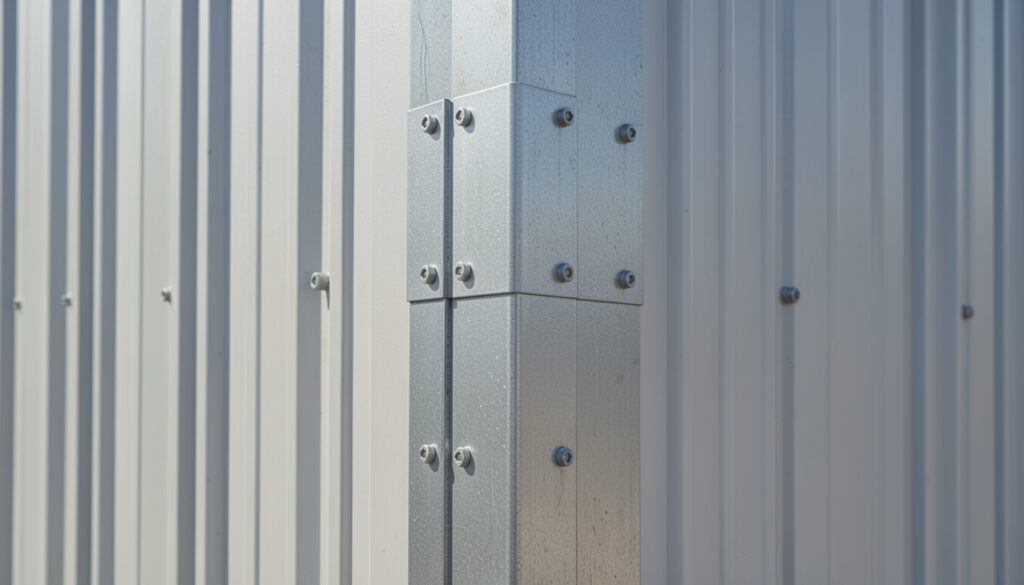
Corner trim is a formed metal component installed over or around the exterior corner where two wall surfaces meet.
Metal wall panels typically terminate at the building corner. Without a dedicated transition component, the panel edges would remain exposed.
Corner trim provides a continuous metal covering over that transition.
Depending on the building configuration, it can:
- Cover exposed panel edges
- Protect the wall corner
- Improve weather resistance
- Create a finished appearance
- Provide a transition between different wall planes
- Help protect the underlying connection from direct weather exposure
The exact shape and dimensions of corner trim depend on the wall panel system and building design.
Why Corner Trim Matters on Metal Buildings
Exterior corners are exposed to weather from multiple directions.
Rain, wind, sunlight, and airborne debris can all affect the corner assembly.
The corner also represents a transition between two wall planes, making it different from a typical uninterrupted section of wall panel.
Without properly fitted trim, the exposed panel edges may be vulnerable to:
- Moisture
- Corrosion
- Physical damage
- Dirt accumulation
- Wind-driven rain
- Air infiltration
Corner trim provides a controlled transition and helps protect this vulnerable area.
How Corner Trim Works With Butler Wall Panels
The profile of the wall panel determines how the corner needs to be detailed.
A ribbed wall panel has raised and recessed areas that continue across the wall surface. When two walls meet, those profiles need to transition cleanly around the corner.
The corner trim is shaped to accommodate that transition.
Butler has used several wall panel systems, including Butlerib II, Shadowall, and Stylwall II configurations.
Because these products have different appearances and geometries, the appropriate trim should be selected according to the specific wall system.
Butler Metal Wall Panels can help identify Butler wall panel systems when determining replacement requirements.
Corner Trim and Weather Protection
One of the primary purposes of corner trim is helping maintain the weather-resistant exterior of the building.
The corner assembly must account for:
- Panel edges
- Trim joints
- Fasteners
- Sealants
- Wall framing
- Interior conditions
A poorly fitted piece of trim can leave gaps where water can enter.
This is particularly important when the building is exposed to strong winds or heavy rainfall.
Wind-driven rain can reach areas that would normally remain relatively dry under ordinary rainfall conditions.
A properly detailed corner helps reduce these vulnerabilities.
Corner Trim and Fasteners
Fasteners mechanically secure the corner trim to the wall assembly.
The correct fastener depends on the substrate, trim material, wall panel configuration, and application.
Fastener problems can include:
- Corrosion
- Loose connections
- Missing fasteners
- Overdriving
- Underdriving
- Damaged sealing washers
A damaged fastener can compromise the connection and potentially create a pathway for water.
When replacing corner trim, the condition of the existing fasteners should therefore be evaluated as well.
Corner Trim and Sealants
Depending on the wall system and installation detail, sealants may be used at joints and transitions around the corner.
Sealants can help close interfaces between connected metal components.
However, sealant should not be used to compensate for incorrectly sized or improperly fitted trim.
The best-performing assembly uses correctly formed components together with the appropriate fastening and sealing methods.
If an existing corner is leaking, inspect the trim, fasteners, panel joints, and sealant rather than assuming that adding more sealant will solve the problem.
Common Corner Trim Problems
Corner trim can deteriorate over time for several reasons.
Corrosion
Moisture exposure and damaged protective coatings can eventually cause corrosion.
Impact Damage
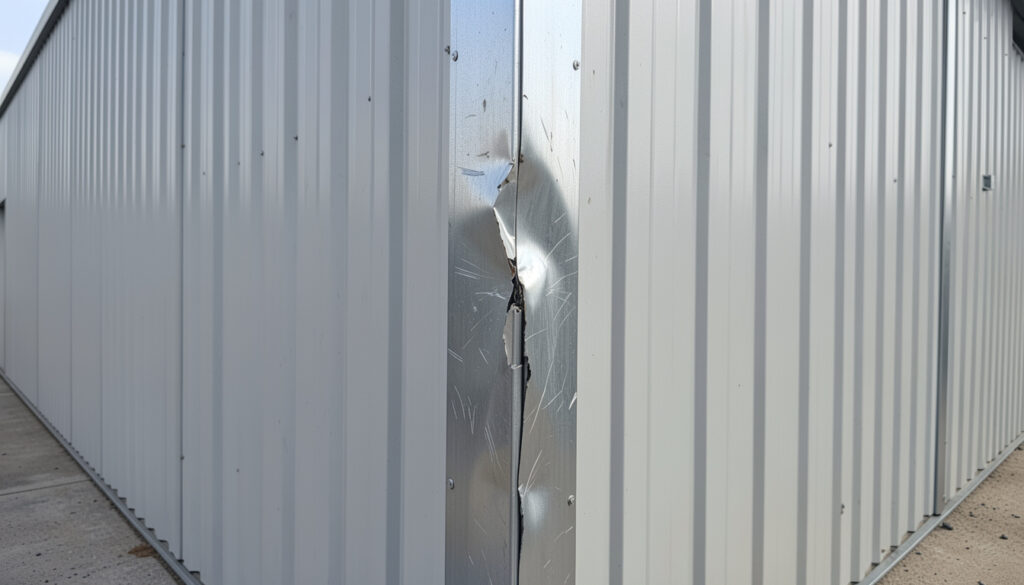
Corners are more vulnerable to accidental impacts from vehicles, forklifts, equipment, and other site activities.
Bent or Deformed Trim
Physical impact can distort the trim and prevent it from maintaining the intended transition.
Loose Fasteners
Fasteners can loosen or deteriorate over time.
Failed Sealant
Sealant can lose flexibility or adhesion after prolonged exposure.
Improper Previous Repairs
Older buildings may contain trim installed during previous repairs that does not properly match the original wall panel profile.
Why Building Corners Are Vulnerable to Impact
The exterior corner is one of the most exposed portions of a building.
Vehicles and equipment moving around a warehouse, manufacturing facility, agricultural building, or commercial structure can accidentally strike the corner.
Even a relatively small impact can:
- Dent the trim
- Bend the wall panel
- Damage the coating
- Loosen fasteners
- Distort the corner geometry
A damaged corner should be inspected before simply covering it with new trim.
If the underlying wall panel or framing has also been damaged, replacing the visible trim alone may not fully address the problem.
Signs Your Butler Building Corner Trim Needs Replacement
Inspect exterior corners for:
- Visible dents
- Bent trim
- Corrosion
- Rust around fasteners
- Missing fasteners
- Loose trim
- Open joints
- Failed sealant
- Gaps between trim and wall panels
- Water staining
- Damaged wall panels behind the trim
- Peeling or damaged protective coating
Not every cosmetic imperfection requires immediate replacement.
However, damage that affects the trim’s ability to protect the wall corner or maintain a weather-resistant transition should be addressed.
Corner Trim During Butler Wall Repairs
Wall repairs often involve more than replacing individual wall panels.
A typical repair may involve:
- Wall panels
- Corner trim
- Base trim
- Fasteners
- Closures
- Sealants
- Flashing
- Insulation
If a wall panel has been damaged near a corner, the corner trim may need to be removed to access the panel properly.
This makes corner trim an important component to consider during wall-panel replacement.
Replacing only the damaged panel without inspecting the associated trim can leave existing problems unresolved.
Corner Trim During Building Repainting
Repainting or recoating an older metal building is another opportunity to inspect the corner trim.
Before applying a new coating, inspect the trim for:
- Corrosion
- Dents
- Loose fasteners
- Failed sealant
- Damaged coatings
- Open joints
Severely deteriorated trim should generally be evaluated for replacement rather than simply being painted over.
A new coating cannot restore metal that has already lost significant material to corrosion.
How to Identify Replacement Corner Trim
Correct identification is particularly important when repairing an older Butler building.
Before ordering replacement trim, collect:
- Butler wall system
- Wall panel profile
- Wall panel dimensions
- Corner configuration
- Existing trim dimensions
- Trim length
- Fastener type
- Building age
- Photographs of the corner
- Measurements of the existing component
A photograph taken from several angles can help show how the corner trim interfaces with the wall panels.
If the original construction documents are available, they can provide additional information about the wall system.
Why Wall Panel Profile Matters
Corner trim needs to accommodate the geometry of the wall panel.
A trim profile designed for one wall panel may not properly fit another.
This can create:
- Gaps
- Misalignment
- Exposed panel edges
- Poor appearance
- Difficult fastening
- Potential water-entry points
For this reason, identifying the wall panel before ordering replacement corner trim is more reliable than selecting a generic piece based only on its overall width.
Corner Trim for Older Butler Buildings
Butler buildings can remain operational for many years.
During their service life, exterior components may experience repeated exposure to:
- Rain
- Wind
- Sunlight
- Temperature changes
- Impact
- Humidity
- Maintenance activities
Corner trim may therefore require replacement even when the main structural framing and wall panels remain serviceable.
Replacing individual trim components can be a practical way to maintain an existing building without undertaking a complete wall replacement.
Corner Trim and Building Appearance
Although its primary purpose is functional, corner trim also has an important visual role.
A properly installed corner creates a straight, clean transition between wall surfaces.
Damaged or mismatched trim can make an otherwise well-maintained building appear neglected.
For commercial buildings, this can affect the appearance of:
- Entrances
- Customer-facing areas
- Warehouses
- Retail facilities
- Offices
- Industrial properties
When replacing corner trim, matching the existing wall color and profile can help maintain a consistent appearance.
Corner Trim and Insulated Metal Panels
Insulated metal panels have different edge and corner details than conventional single-skin metal wall panels.
An IMP corner typically needs to account for:
- Panel thickness
- Insulation core
- Interior and exterior skins
- Thermal continuity
- Joint configuration
- Weather sealing
Therefore, conventional wall-panel corner trim should not automatically be used for an insulated metal panel application.
The specific panel system should be identified before selecting replacement corner components.
Things to Know
- Corner trim should match the wall panel profile and system.
- Exterior corners are especially vulnerable to impact damage.
- Inspect the wall panel and framing behind damaged trim before completing a replacement.
- Fasteners and sealants are part of the corner assembly.
- Do not rely on sealant to correct incorrectly fitted trim.
- Corroded trim may require replacement rather than repainting.
- Different Butler wall systems can require different trim profiles.
- Take photographs and measurements before ordering replacement components.
- Insulated metal panel corners require different detailing from conventional single-skin wall systems.
- Matching the existing color and profile can help maintain the building’s appearance.
Frequently Asked Questions
Q: What is corner trim used for on a metal building?
Corner trim covers and protects the exposed edges where two exterior metal walls meet.
It also creates a finished transition and helps protect the corner from weather exposure.
Q: Does Butler building corner trim prevent leaks?
Properly installed corner trim helps reduce potential water-entry paths at the wall corner.
However, the complete assembly—including wall panels, fasteners, sealants, and adjacent trim—must be properly installed.
Q: Can damaged corner trim be replaced without replacing the wall panels?
Yes, in many situations.
If the underlying wall panels and framing remain serviceable, the damaged corner trim can potentially be replaced separately.
Q: Why is corner trim important after an impact?
An impact can distort both the trim and the wall panel behind it.
The underlying components should be inspected before installing replacement trim to ensure the corner remains properly aligned and weather resistant.
Q: How do I know which corner trim fits my Butler building?
Identify the Butler wall system and panel profile, then measure the existing corner trim and document the corner configuration.
Photographs can also help with component identification.
Q: Can I use generic metal corner trim on a Butler building?
Generic trim may not provide the correct fit or profile for the existing Butler wall system.
A compatible replacement should be selected based on the specific panel configuration and dimensions.
Q: Does corner trim need sealant?
Some corner configurations use sealants at specific joints and interfaces.
The exact sealing requirements depend on the wall system and installation detail.
Q: Can rusted corner trim be painted?
Minor surface corrosion may sometimes be treated and recoated, but heavily deteriorated trim should be evaluated for replacement.
Painting cannot restore metal that has already been significantly compromised by corrosion.
Q: Should corner trim be replaced when replacing wall panels?
It should be inspected whenever wall panels are replaced.
If the existing trim is damaged, incompatible, or difficult to reinstall without compromising the corner detail, replacement may be appropriate.
Q: Is corner trim used on insulated metal panels?
Yes, but insulated metal panel systems use their own specific corner details.
The trim must account for the panel’s thickness, insulated core, exterior skin, and joint configuration.
The Bottom Line on Butler Building Corner Trim
Corner trim protects one of the most exposed areas of a metal building. It covers the transition between adjacent wall panels while helping protect panel edges from weather, moisture, impact, and general deterioration.
For Butler buildings, selecting the correct corner trim starts with identifying the wall panel system and its profile. The trim should then be evaluated together with the fasteners, sealants, closures, and underlying wall components.
If an existing corner has been damaged, replacing the trim may be enough when the underlying wall remains intact. If the corner has sustained significant impact or corrosion, however, the entire assembly should be inspected before repairs are completed.
Need replacement corner trim for your Butler metal building? Request a Quote and provide your Butler wall system, measurements, and photos of the existing corner so the appropriate replacement component can be identified.