

The Butler Long-Tab Banded System is a metal building insulation support system designed to hold insulation in position within roof assemblies. Proper insulation support is important in metal buildings because insulation must remain evenly distributed throughout the roof cavity to provide consistent thermal performance.
The Long-Tab Banded System uses long tabs and banding to support the insulation across the roof structure. By keeping the insulation properly positioned, the system can help minimize sagging, displacement, and unwanted gaps within the insulated assembly.
For Butler building owners replacing an existing roof or upgrading insulation, understanding the role of the banding system can help ensure that the insulation is installed correctly as part of the overall roof assembly.
Key Takeaways
- The Long-Tab Banded System is designed to support insulation in metal building roof assemblies.
- The system helps keep insulation properly positioned between structural members.
- Proper insulation support can reduce sagging and gaps.
- Consistent insulation coverage is important for maintaining thermal performance.
- The system is particularly relevant to metal building roof construction and insulation upgrades.
- Installation should follow the applicable manufacturer’s requirements.
- Insulation support should be considered together with vapor control and the exterior roof system.
- Existing buildings should be inspected before installing a new insulation assembly.
- Wet, damaged, or compressed insulation should be addressed before a retrofit is completed.
- Proper coordination between insulation, banding, framing, and roof panels is essential.
What Is the Long-Tab Banded System?
The Long-Tab Banded System is a method of supporting insulation within a metal building roof assembly.
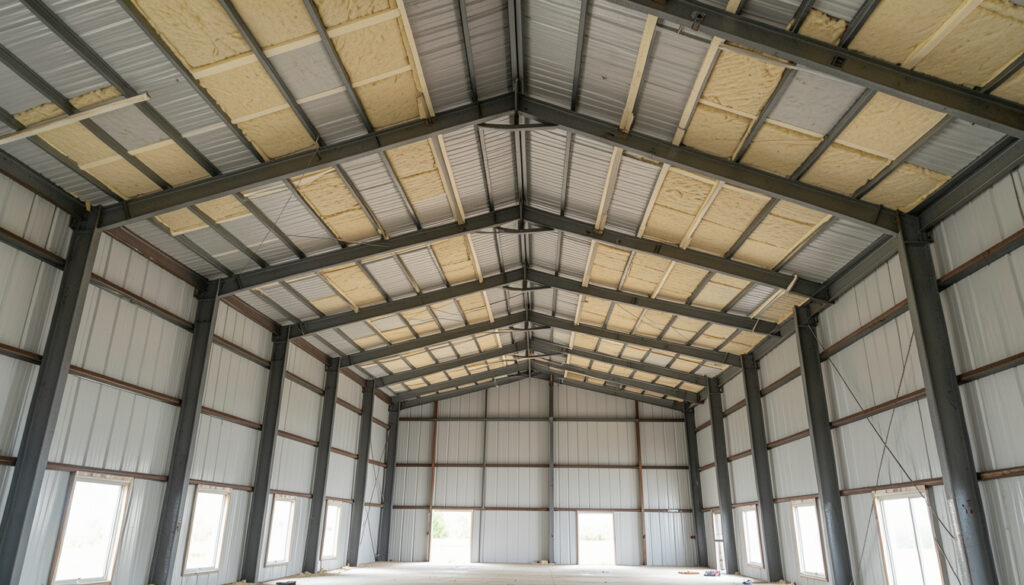
Metal building roofs typically have large areas of structural framing that create cavities where insulation is installed.
Without sufficient support, insulation can move, sag, or become compressed.
The banded system provides a framework that helps hold the insulation in its intended position.
This is particularly important across large roof areas where even small areas of insulation displacement can be repeated across thousands of square feet.
Why Insulation Support Matters
Insulation is designed to provide a specific level of thermal resistance when installed at the intended thickness.
If insulation sags or becomes compressed, the effective thickness can change.
Gaps can also create areas where heat moves more easily through the roof assembly.
An insulation support system helps maintain more consistent coverage throughout the roof cavity.
This can contribute to:
- More consistent thermal performance
- Reduced insulation displacement
- Better coverage
- Improved installation quality
- More stable insulation positioning
How the Long-Tab Banded System Works
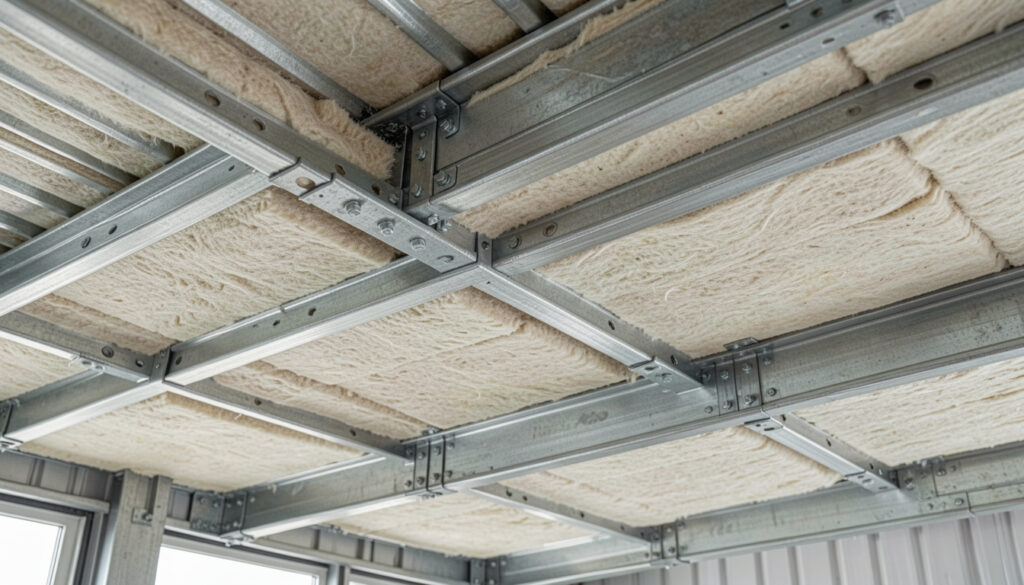
The system uses long tabs and bands to create support for the insulation.
The tabs are positioned on the building structure, while the bands extend across the insulation area.
Together, they provide a supporting framework that keeps the insulation from falling away from the intended roof assembly.
The exact installation arrangement depends on the building design, insulation configuration, and applicable installation instructions.
Long-Tab Banded System and Fiberglass Insulation
Fiberglass insulation is commonly used in metal building roof assemblies.
Its relatively flexible structure makes proper support particularly important.
Without adequate support, insulation can:
- Sag
- Shift
- Become compressed
- Pull away from the roof deck
- Develop gaps
The banded system helps maintain the insulation’s intended position.
The insulation thickness and R-value should be selected according to the building’s thermal requirements.
Maintaining Insulation Thickness
One of the primary objectives of an insulation support system is maintaining the intended insulation thickness.
For example, insulation designed to provide a particular R-value at a specified thickness should not be unnecessarily compressed throughout the assembly.
Maintaining the intended thickness allows the insulation to perform closer to its designed characteristics.
The support system therefore plays an important role in installation quality even though the bands themselves are not insulation.
Long-Tab Banded System and Roof Performance
The roof is one of the largest components of a metal building envelope.
A poorly insulated roof can contribute to:
- Increased heat transfer
- Higher heating and cooling requirements
- Uneven interior temperatures
- Condensation risk
- Reduced occupant comfort
A properly installed insulation system can help address these issues.
The Long-Tab Banded System supports that insulation by keeping it in the correct position.
Roof Cavity Coverage
Large metal building roofs can contain extensive areas between structural members.
Insulation needs to cover these areas consistently.
If sections are missing or displaced, thermal weak points can develop.
A properly installed banding system helps maintain coverage throughout the roof cavity.
This is particularly important for large:
- Warehouses
- Manufacturing buildings
- Agricultural structures
- Distribution centers
- Commercial facilities
Long-Tab Banded System and Vapor Retarders
The insulation support system works alongside the vapor-control layer.
A vapor retarder helps control water-vapor movement through the assembly.
The banding system supports the insulation.
These functions are different but interconnected.
If the vapor retarder is damaged or improperly sealed, adding insulation support alone will not solve the resulting moisture problem.
For more information about moisture control, see our article on Vapor Retarders for Butler Metal Buildings.
Condensation Control
Condensation can develop when warm, humid interior air encounters a cold roof surface.
Insulation helps reduce heat transfer and can help keep interior surfaces warmer.
A vapor-control layer can help limit vapor movement.
Air sealing can reduce the amount of moisture-laden air entering the assembly.
The Long-Tab Banded System supports the insulation that forms part of this overall strategy.
It should not, however, be considered a standalone condensation-control solution.
Importance of Proper Installation
The effectiveness of an insulation support system depends on correct installation.
Installation should account for:
- Structural framing
- Band placement
- Tab positioning
- Insulation thickness
- Vapor-control materials
- Roof penetrations
- Interior liner systems
Poor installation can lead to insulation movement or gaps.
The applicable manufacturer installation instructions should always be followed.
New Construction Applications
The Long-Tab Banded System can be incorporated into a metal building during initial construction.
Because the roof structure is being assembled at the same time, the insulation support system can be coordinated with:
- Purlins
- Roof panels
- Insulation
- Vapor retarders
- Interior liners
- Roof penetrations
Planning these components together can simplify installation.
Retrofit and Insulation Upgrades
Existing Butler buildings may eventually require insulation upgrades.
Reasons can include:
- Increased energy costs
- Changes in building use
- Increased heating or cooling requirements
- Deteriorated insulation
- Condensation
- Roof replacement
- Building renovation
Before installing new insulation, the existing roof should be inspected.
A retrofit should not simply cover a moisture problem without determining its source.
Inspecting Existing Roof Insulation
Before an insulation upgrade, inspect the existing material for:
- Sagging
- Compression
- Tears
- Wet areas
- Discoloration
- Missing sections
- Pest damage
- Mold-supporting conditions
- Corrosion around framing
If moisture is found, determine whether it comes from condensation, roof leakage, or another source.
Roof Leaks and Insulation
A roof leak can saturate insulation and compromise its performance.
Installing new insulation beneath or around a leaking roof does not solve the problem.
The exterior roof system should be inspected for:
- Damaged panels
- Open seams
- Failed sealants
- Damaged flashing
- Loose fasteners
- Penetration problems
The roof should be weather-tight before new insulation is installed.
Long-Tab Banded System and Roof Replacement
Roof replacement provides an opportunity to evaluate the entire roof assembly.
Depending on the project, this may include:
- Existing roof panels
- Structural framing
- Insulation
- Vapor retarder
- Banding system
- Flashing
- Roof penetrations
- Interior liner
Replacing the exterior roof without evaluating the insulation can leave existing thermal and moisture problems unresolved.
Large Roof Areas
One of the main advantages of a properly supported insulation system becomes apparent on large buildings.
A small installation error repeated across a large roof can have a substantial cumulative effect.
Maintaining consistent banding and insulation coverage helps reduce this risk.
Penetrations and Obstacles
Roof assemblies contain numerous penetrations.
These may include:
- HVAC equipment
- Exhaust systems
- Plumbing
- Electrical conduits
- Skylights
- Vents
- Roof curbs
The insulation and banding system must be coordinated around these areas.
Poorly detailed penetrations can create insulation gaps and potential moisture pathways.
Working Around Structural Framing
Metal building roof assemblies contain structural members that naturally interrupt the insulation cavity.
The insulation support system must work around these members while maintaining the intended insulation coverage.
Correct tab and band placement is therefore important.
Improper placement can create areas where insulation becomes compressed or displaced.
Long-Tab Banded System Maintenance
The banding system is generally concealed within the completed roof assembly.
Maintenance therefore typically occurs during roof or insulation inspections and renovation projects.
If the roof assembly is opened, inspect the visible components for:
- Broken bands
- Loose tabs
- Displaced insulation
- Moisture damage
- Corrosion
- Improper previous repairs
Any damaged components should be evaluated before the assembly is closed.
Common Problems With Long-Tab Banded Systems
Incorrect Tab Placement
Tabs positioned incorrectly can affect how the insulation support system functions.
Loose or Damaged Bands
Damaged bands may not adequately support the insulation.
Sagging Insulation
Insufficient support can allow insulation to move away from its intended position.
Compressed Insulation
Improper installation can compress insulation and reduce its effective thickness.
Insulation Gaps
Missing or displaced insulation can create thermal weak points.
Damaged Vapor Retarder
Tears and open seams can compromise moisture control.
Poor Penetration Detailing
Roof penetrations can interrupt insulation and vapor-control continuity.
Wet Insulation
Moisture can reduce insulation performance and contribute to corrosion.
Unrepaired Roof Leaks
Installing new insulation without correcting roof leaks can leave the underlying moisture problem unresolved.
Improper Installation
The system should be installed according to the applicable manufacturer’s instructions.
Things to Know
- The Long-Tab Banded System supports insulation within metal building roof assemblies.
- Long tabs and bands help keep insulation positioned within the roof cavity.
- Proper insulation support can reduce sagging and displacement.
- Maintaining insulation thickness is important for achieving the intended thermal performance.
- The system works as part of a complete roof insulation assembly.
- Vapor retarders and air-control layers perform separate but related moisture-control functions.
- Roof leaks should be corrected before installing new insulation.
- Existing insulation should be inspected before a retrofit.
- Roof penetrations require careful coordination with insulation and vapor-control materials.
- Installation should follow the applicable manufacturer’s requirements.
- Large roof areas require consistent insulation coverage to minimize thermal weak points.
Frequently Asked Questions
Q: What is the Butler Long-Tab Banded System?
It is an insulation support system designed for metal building roof assemblies.
The system uses long tabs and bands to help hold insulation in its intended position.
Q: What is the purpose of the banding?
The banding provides support for the insulation.
It helps reduce movement, sagging, and displacement within the roof cavity.
Q: Does the Long-Tab Banded System provide insulation?
No.
The system supports the insulation but does not replace the insulation material itself.
Q: What type of insulation can be used?
The appropriate insulation depends on the building design and system specifications.
Metal building roof assemblies commonly use fiberglass insulation, but the specific material and thickness should be selected according to project requirements.
Q: Can the system help prevent insulation from sagging?
Yes.
The support bands are designed to hold the insulation in position and reduce sagging.
Q: Can the Long-Tab Banded System be used in an existing Butler building?
It can be considered for retrofit insulation projects.
The existing roof assembly should be inspected first to determine its condition and identify any moisture or structural issues.
Q: Does the banded system prevent condensation?
No, not by itself.
Condensation control depends on the complete building-envelope assembly, including insulation, vapor control, air sealing, interior humidity, and exterior conditions.
Q: What should I inspect before adding insulation?
Inspect the roof panels, framing, existing insulation, vapor-control materials, flashing, penetrations, and sealants.
Any active leaks or moisture problems should be corrected first.
Q: Why is insulation thickness important?
Insulation is generally designed to provide a particular thermal resistance at a specified thickness.
Compression or gaps can affect the performance of the installed assembly.
Q: Can roof penetrations affect the insulation system?
Yes.
HVAC equipment, vents, pipes, electrical components, and other penetrations can interrupt the insulation and vapor-control layers if they are not properly detailed.
Q: Should damaged banding be repaired?
Yes.
If the support system is damaged or improperly installed, it should be evaluated and corrected before the roof assembly is completed.
The Bottom Line on the Long-Tab Banded System
The Butler Long-Tab Banded System provides structural support for insulation within metal building roof assemblies, helping maintain consistent insulation placement and reduce sagging or displacement.
Its effectiveness depends on the quality of the complete roof assembly. Proper insulation thickness, vapor control, air sealing, roof weather protection, and installation practices all contribute to long-term performance.
For an existing Butler building, inspect the roof and insulation before beginning an upgrade. Correct roof leaks, moisture problems, damaged insulation, and deteriorated components before installing a new insulation-support system.
If you need Butler insulation components or want assistance with a metal building insulation project, Request a Quote and provide your building information, measurements, and project requirements.