

Roof insulation is a critical component of a Butler metal building’s overall envelope. It helps reduce heat transfer between the interior and exterior, supports more consistent indoor temperatures, and can help manage condensation within the roof assembly.
For existing Butler buildings, roof insulation can also become an important consideration during repairs, roof replacement, or building upgrades. Insulation may become compressed, damaged, wet, or insufficient for the building’s current requirements over time.
Choosing the right insulation is therefore about more than simply selecting a thickness. The insulation, vapor retarder, roof panels, structural framing, and interior conditions all need to work together as a complete roof assembly.
Key Takeaways
- Roof insulation helps reduce heat transfer through a Butler metal building roof.
- Insulation performance is commonly expressed using R-value.
- Insulation thickness, installation quality, compression, and gaps can affect actual performance.
- Vapor retarders help control water-vapor movement through the roof assembly.
- Proper insulation can contribute to condensation control.
- Existing wet or damaged insulation should be investigated before replacement.
- Roof leaks should be repaired before installing new insulation.
- Insulation upgrades can be considered during roof replacement or building renovations.
- Structural framing and thermal bridging can affect overall roof performance.
- The appropriate insulation system depends on the building’s design, climate, occupancy, and energy requirements.
What Is Metal Building Roof Insulation?
Metal building roof insulation is the thermal insulation installed within the roof assembly of a metal building.
It typically occupies the space between structural roof members and the exterior metal roof system.
The insulation’s primary purpose is to slow the movement of heat through the roof.
During hot weather, it can reduce the rate at which exterior heat enters the building.
During cold weather, it can reduce heat loss from the conditioned interior.
The insulation also works with other components to help manage condensation and moisture.
Why Roof Insulation Matters
A metal roof without an appropriate insulation system can transfer heat relatively quickly.
This can affect:
- Interior temperature
- HVAC requirements
- Energy consumption
- Occupant comfort
- Condensation risk
- Overall building-envelope performance
The effect becomes more significant as the size of the building increases.
A large warehouse, manufacturing facility, or distribution center can have an enormous roof area, making the performance of the roof assembly particularly important.
Understanding R-Value
R-value measures a material’s resistance to heat flow.
In general, a higher R-value indicates greater resistance to heat transfer.
However, the R-value printed on an insulation product does not necessarily represent the exact thermal performance of the completed roof assembly.
The final assembly can also be affected by:
- Compression
- Gaps
- Thermal bridges
- Structural framing
- Fasteners
- Air movement
- Installation quality
For this reason, insulation should be evaluated as part of the complete roof system.
Insulation Thickness and R-Value
Insulation thickness and R-value are related, but they are not identical.
Different insulation products can provide different levels of thermal resistance at the same thickness.
When specifying replacement insulation, consider the required R-value rather than selecting material based only on physical thickness.
The correct thickness depends on the insulation type and its specified thermal properties.
Fiberglass Insulation
Fiberglass is commonly used in metal building insulation systems.
It consists of fine glass fibers designed to trap air and slow heat transfer.
Fiberglass insulation is available in different thicknesses and densities.
For metal building applications, it can be installed as part of a system that includes a facing or vapor retarder.
The correct product should be selected based on the building’s thermal and moisture-control requirements.
Insulation and Vapor Retarders
The vapor retarder is an important part of many metal building insulation assemblies.
Its purpose is to slow water-vapor movement through the roof.
This is different from the function of insulation.
Insulation controls heat transfer.
A vapor retarder controls vapor diffusion.
The two components work together within the roof assembly.
For more information, see our article on Vapor Retarders for Butler Metal Buildings.
Insulation and Condensation
Condensation can occur when warm, humid air encounters a sufficiently cold surface.
Metal roofs can become cold during certain weather conditions.
If moisture-laden interior air reaches the underside of a cold roof panel, water can condense.
A properly designed insulation and vapor-control assembly can help reduce the conditions that contribute to condensation.
However, insulation alone cannot eliminate all condensation risk.
Interior humidity, air leakage, vapor control, and exterior temperatures must also be considered.
Roof Insulation and Air Leakage
Air movement through the building envelope can transport moisture.
This means a roof assembly can experience moisture problems even when it contains substantial insulation.
Gaps around penetrations, joints, or transitions can allow warm interior air to enter colder portions of the assembly.
Proper air sealing is therefore an important part of overall moisture control.
Roof Insulation and Thermal Bridging
Structural steel conducts heat more readily than insulation.
When steel framing passes through an insulated roof assembly, it can create a thermal bridge.
This can reduce the effective thermal performance of the complete roof compared with the nominal performance of the insulation alone.
Proper insulation design and installation can help minimize unnecessary thermal gaps, but structural thermal bridging should still be considered when evaluating the complete assembly.
Two Layers of Roof Insulation
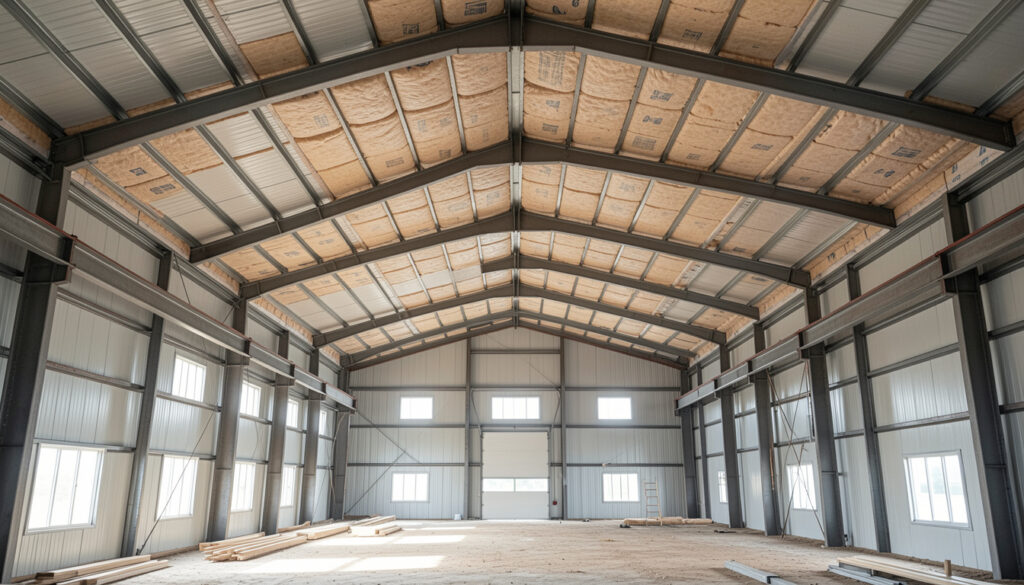
Some metal building insulation systems can accommodate multiple layers of insulation.
Adding a second layer can increase the total insulation level when the roof cavity and support system are properly designed for it.
But simply placing additional insulation into a cavity does not guarantee improved performance.
The insulation must be properly supported and installed without excessive compression or gaps.
The Long-Tab Banded System and OptiLiner are examples of systems designed to support insulation within metal building roof assemblies.
OptiLiner and Roof Insulation
OptiLiner is designed to support light-density fiberglass insulation in metal building roof and wall applications.
The system uses bi-directional banding and can accommodate two layers of insulation with minimal compression.
This type of support can help maintain the intended insulation thickness throughout the roof cavity.
For more information, see Butler OptiLiner.
Long-Tab Banded System
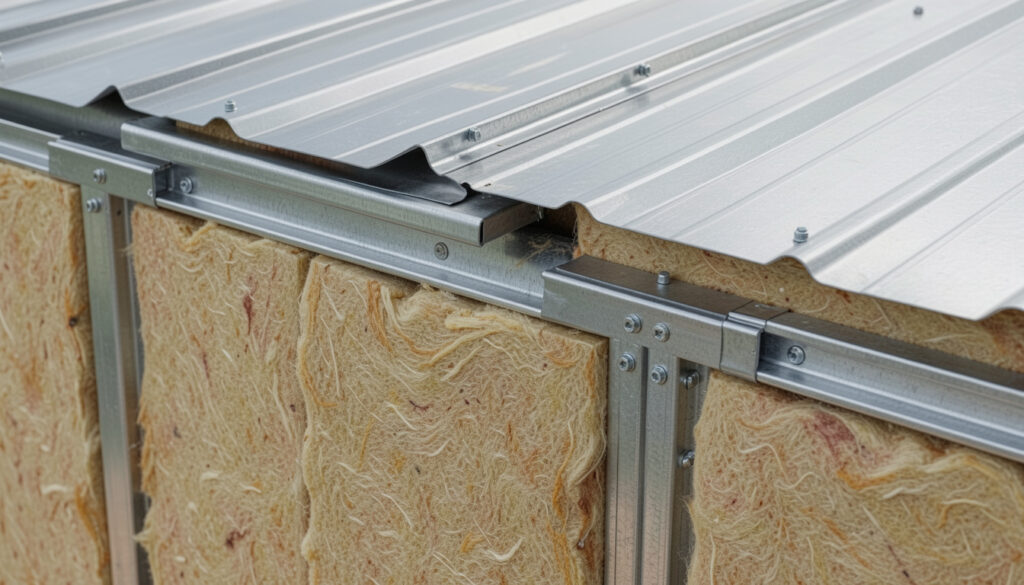
The Long-Tab Banded System provides another method of supporting roof insulation.
Long tabs and bands help hold the insulation in place between structural members.
The objective is to maintain consistent insulation coverage while reducing sagging and displacement.
Proper installation is important because improperly supported insulation can develop gaps or become compressed.
Insulation for MR-24 Roof Systems
Butler’s MR-24 roof system can be paired with appropriate insulation assemblies.
When replacing or upgrading insulation beneath an existing MR-24 roof, the condition of the roof system should be evaluated first.
Look for:
- Roof leaks
- Damaged seams
- Failed sealants
- Penetration issues
- Corrosion
- Damaged flashing
Insulation replacement should not be used to conceal an unresolved roof leak.
Insulation for VSR II Roof Systems
The VSR II roof system can also incorporate insulation as part of its overall assembly.
When upgrading an existing VSR II roof, the insulation should be evaluated alongside the roof panels, framing, vapor retarder, and interior conditions.
A properly coordinated assembly can provide better long-term performance than treating insulation as an independent component.
Replacing Existing Roof Insulation
Roof insulation may eventually need replacement because of:
- Water damage
- Compression
- Age
- Physical damage
- Pest activity
- Building renovations
- Increased insulation requirements
- Roof replacement
Before removing existing insulation, identify the reason it failed.
If water entered through the roof, the leak must be addressed.
If condensation caused the moisture, the building-envelope design should be investigated.
Wet Roof Insulation
Wet insulation should not simply be covered with new material.
Moisture can significantly affect insulation performance and may contribute to corrosion of surrounding steel components.
Possible moisture sources include:
- Roof leaks
- Condensation
- Failed flashing
- Open penetrations
- Damaged vapor retarders
- Air leakage
The source should be identified before new insulation is installed.
Compressed Insulation
Insulation can become compressed during installation, maintenance, or building modifications.
Compression changes the thickness of the insulation and can affect its thermal performance.
Common locations for compression include areas around:
- Structural members
- Fasteners
- Ductwork
- Electrical systems
- Roof penetrations
Installation should maintain the intended insulation thickness as closely as practical.
Gaps in Roof Insulation
Gaps can occur when insulation is:
- Cut incorrectly
- Displaced
- Damaged
- Poorly supported
- Interrupted by equipment
- Removed during maintenance
Even small gaps can create localized thermal weak points.
Consistent coverage across the roof is therefore important.
Insulation Around Roof Penetrations
Metal building roofs commonly contain penetrations for:
- Exhaust fans
- HVAC systems
- Vents
- Pipes
- Electrical systems
- Skylights
- Equipment
These areas require careful insulation detailing.
Insulation should be properly fitted around penetrations without creating unnecessary gaps.
The surrounding flashing and weatherproofing should also be inspected.
Roof Insulation During Replacement
A roof replacement project can provide an opportunity to upgrade insulation.
When the roof assembly is opened or modified, evaluate:
- Existing insulation
- Vapor retarder
- Structural framing
- Roof panels
- Flashing
- Penetrations
- Interior liner
This can be more efficient than addressing insulation separately after the new roof is installed.
Improving an Older Butler Building
Older buildings may have insulation systems that no longer meet current project requirements.
An insulation upgrade can be considered when:
- HVAC costs are increasing
- Interior temperatures fluctuate
- Condensation is occurring
- The building’s use has changed
- The roof is being replaced
- The building is being renovated
The correct upgrade depends on the building’s existing construction and the desired performance level.
Insulation and Building Use
The appropriate roof insulation level depends partly on how the building is used.
A non-conditioned storage building may have different requirements from a fully conditioned manufacturing facility.
Facilities with significant internal heat or moisture generation may also require different building-envelope strategies.
The insulation system should therefore be selected based on actual building conditions rather than simply copying the specification from another facility.
Common Problems With Roof Insulation
Wet Insulation
Moisture can reduce insulation performance and may indicate a roof leak or condensation problem.
Compressed Insulation
Compression can reduce the intended thickness of the insulation.
Missing Insulation
Uninsulated areas create thermal weak points within the roof.
Insulation Gaps
Gaps can increase localized heat transfer and condensation risk.
Sagging Insulation
Poor support can cause insulation to move away from the intended position.
Damaged Vapor Retarder
Tears or open seams can compromise moisture control.
Roof Leaks
Water entering through damaged roof panels, seams, flashing, or penetrations can saturate insulation.
Poor Penetration Detailing
Roof penetrations can create gaps in both insulation and vapor-control layers.
Thermal Bridging
Structural steel can conduct heat through otherwise insulated areas.
Improper Installation
Incorrect installation can reduce the performance of even high-quality insulation.
Things to Know
- Roof insulation helps reduce heat transfer through a metal building roof.
- R-value is a measure of thermal resistance.
- The installed performance of a roof assembly can differ from the insulation’s nominal R-value.
- Compression and gaps can reduce the effectiveness of an insulation installation.
- Vapor retarders help control water-vapor movement.
- Air leakage can transport moisture into colder portions of the roof assembly.
- Condensation can occur when warm, humid air reaches a sufficiently cold surface.
- Wet insulation should be investigated rather than simply covered with new insulation.
- Roof leaks should be repaired before installing replacement insulation.
- Insulation-support systems can help maintain consistent insulation thickness and coverage.
- Roof replacement can provide an opportunity to upgrade insulation.
- The appropriate insulation level depends on the building’s use, climate, design, and energy requirements.
Frequently Asked Questions
Q: What is the purpose of roof insulation in a Butler building?
Roof insulation reduces heat transfer through the roof assembly and can contribute to more consistent interior temperatures and condensation control.
Q: What is R-value?
R-value measures resistance to heat flow.
A higher R-value generally indicates greater resistance to heat transfer.
Q: Does thicker insulation always mean better performance?
Not necessarily.
The insulation must be appropriate for the assembly and installed correctly. Compression, gaps, thermal bridging, and air leakage can affect the actual performance.
Q: Can I add insulation to an existing Butler building?
Yes, depending on the existing roof assembly and available space.
The existing roof, framing, insulation, and vapor-control system should be evaluated before an upgrade.
Q: Should wet roof insulation be replaced?
Wet insulation should be evaluated and may require replacement depending on its condition.
More importantly, the source of the moisture should be identified and corrected first.
Q: Can roof insulation stop condensation?
Insulation can help reduce condensation risk, but it cannot independently eliminate it.
Humidity, air leakage, vapor control, roof temperature, and assembly design also affect condensation.
Q: What causes roof insulation to sag?
Insufficient support, improper installation, aging, moisture, and physical disturbance can contribute to sagging.
A properly designed insulation-support system can help maintain the material’s position.
Q: What is the Long-Tab Banded System?
It is an insulation support system that uses tabs and bands to hold roof insulation in position.
It is designed to help maintain consistent insulation coverage.
Q: What is OptiLiner?
OptiLiner is a banded liner insulation support system designed for metal building roof and wall applications.
It is designed to support light-density fiberglass insulation and can accommodate two layers with minimal compression.
Q: Should the vapor retarder be replaced with the insulation?
Not automatically.
The vapor retarder should be inspected and replaced or repaired when necessary based on the condition and requirements of the complete roof assembly.
Q: Can roof insulation be replaced without replacing the roof?
In some cases, yes.
The feasibility depends on the existing roof configuration, access, insulation-support system, and condition of the roof assembly.
The Bottom Line on Butler Roof Insulation
Roof insulation is a fundamental component of a properly designed Butler metal building envelope. It helps reduce heat transfer, supports more stable interior temperatures, and can contribute to condensation control when combined with appropriate vapor and air-control measures.
For an existing building, the best insulation strategy starts with an inspection. Wet insulation, roof leaks, compression, missing sections, damaged vapor retarders, and thermal gaps should be addressed rather than simply covered by a new layer of material.
If you’re planning a Butler roof insulation replacement, upgrade, or new installation, Request a Quote and provide your building information, measurements, existing roof type, and project requirements.