

Proper ventilation is an important consideration in commercial, industrial, agricultural, and storage buildings. Without an effective way to move air, heat and moisture can accumulate inside the structure, particularly near the roof and upper wall areas.
Round gravity vents provide a passive method of exhausting interior air without relying on an electric motor. They use natural air movement and pressure differences to help ventilate the building.
Butler round gravity vents are designed for use with Butler building systems and can provide a practical ventilation option where continuous mechanical exhaust is not required.
Key Takeaways
- Round gravity vents provide passive ventilation without an electric motor.
- They use natural airflow and pressure differences to exhaust interior air.
- They can help remove warm and humid air from commercial and industrial buildings.
- Gravity vents are useful where simple, low-maintenance ventilation is desired.
- They can complement intake louvers and other ventilation components.
- Proper intake openings are necessary for effective airflow.
- Vent size and quantity should be based on the building’s ventilation requirements.
- Round gravity vents are different from powered exhaust fans and turbine vents.
- Proper flashing and sealing are essential when installing vents through a metal roof or wall.
- They can be used in warehouses, workshops, agricultural buildings, and industrial facilities.
- Passive ventilation is not appropriate as the sole exhaust method for every industrial process.
- Existing vent dimensions should be verified before ordering a replacement.
What Is a Round Gravity Vent?
A round gravity vent is a passive ventilation device designed to allow air to move naturally through a building.
Unlike a powered exhaust fan, it does not use an electric motor to force air through the opening.
Instead, the vent takes advantage of natural pressure differences and the tendency of warm air to rise.
As warm interior air moves upward, it can escape through an appropriately positioned gravity vent while replacement air enters through lower openings.
This creates a natural ventilation cycle without continuous electrical operation.
How Gravity Ventilation Works
The principle behind gravity ventilation is relatively simple.
Warm air is less dense than cool air, so it naturally rises.
When a building has a high-level exhaust opening and appropriate lower-level intake openings, warm air can move upward and escape.
Outside air then enters through the lower openings to replace the exhausted air.
The process can be influenced by:
- Indoor temperature
- Outdoor temperature
- Wind
- Building height
- Building volume
- Vent size
- Intake opening size
- Internal heat sources
Because these factors vary, the actual airflow provided by a gravity vent will vary from one building to another.
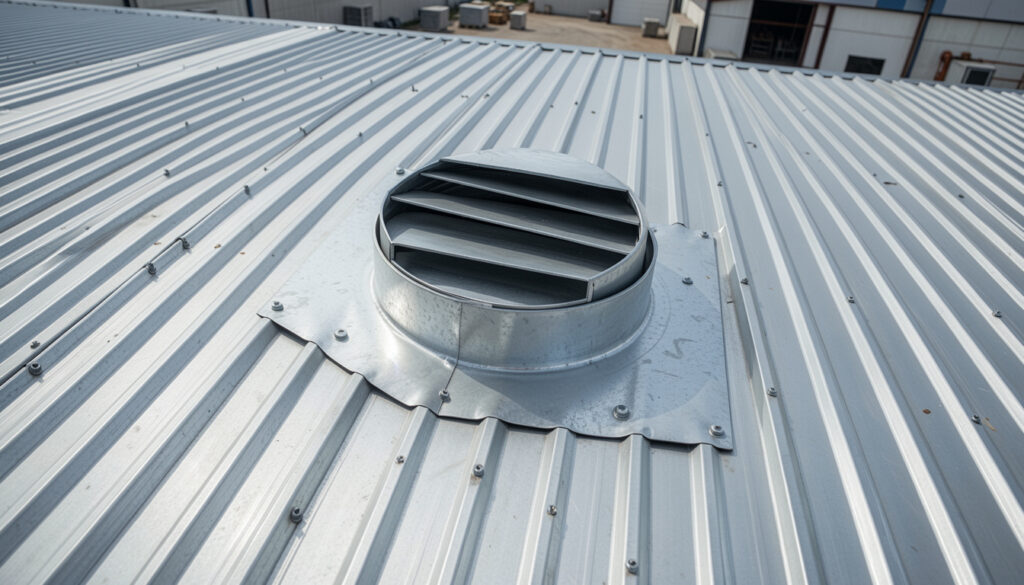
Why Passive Ventilation Matters
Passive ventilation can provide an alternative to continuously powered exhaust equipment.
A building that relies exclusively on mechanical exhaust may require electricity whenever ventilation is needed.
A gravity vent, by contrast, can operate whenever environmental conditions create sufficient natural airflow.
This can make passive ventilation useful for buildings where:
- Electrical consumption needs to be minimized
- Continuous powered exhaust is unnecessary
- Interior heat loads are moderate
- Natural ventilation is appropriate
- A simple ventilation system is preferred
However, passive ventilation should always be evaluated against the building’s actual airflow requirements.
Round Gravity Vents for Metal Buildings
Metal buildings are commonly used for large spaces such as warehouses, workshops, manufacturing facilities, and agricultural storage.
These structures can have substantial interior air volumes.
When heat accumulates inside the building, particularly near the roof, ventilation becomes increasingly important.
Round gravity vents can provide an exhaust path for that air.
The effectiveness of the system depends on the location and size of the vents and whether adequate replacement air can enter the building.
The Importance of Intake Air
An exhaust vent cannot effectively remove large quantities of air if there is no way for replacement air to enter.
For example, installing a gravity vent in a tightly sealed building without adequate intake openings may result in limited airflow.
Intake air can come through:
- Wall louvers
- Eave vents
- Doors
- Windows
- Dedicated intake openings
The intake and exhaust sides of the ventilation system should be considered together.
Gravity Vents and Heat Buildup
Heat generated by sunlight, machinery, equipment, lighting, and occupants can accumulate inside a large building.
A high-level gravity vent can help release some of that warm air.
This can be particularly useful in buildings with:
- High ceilings
- Large open spaces
- Significant solar exposure
- Moderate internal heat loads
- Limited mechanical ventilation
Gravity ventilation does not eliminate heat gain, but it can improve natural air movement when conditions are favorable.
Gravity Vents and Moisture
Moisture can accumulate inside buildings from a variety of sources.
Examples include:
- Humid outdoor air
- Occupants
- Industrial processes
- Washing activities
- Agricultural operations
- Condensation
A ventilation system can help remove humid interior air.
However, gravity vents should not be treated as the only method of condensation control.
Depending on the building, proper insulation, vapor retarders, air sealing, and humidity management may also be necessary.
Gravity Vents for Warehouses
Warehouses can benefit from passive ventilation when their primary concern is general heat and air movement rather than high-volume contaminant exhaust.
Potential applications include:
- General storage
- Equipment storage
- Distribution facilities
- Agricultural storage
- Vehicle storage
A gravity vent can help release warm air while allowing the building to maintain a relatively simple ventilation strategy.
For warehouses with HVAC systems, the ventilation design should also consider the impact of uncontrolled outdoor air on heating and cooling loads.
Gravity Vents for Workshops
Workshops can generate heat from equipment, vehicles, tools, lighting, and occupants.
A passive gravity vent can help remove warm air from the building.
However, workshops that use solvents, paints, welding equipment, fuel, or other hazardous materials may require dedicated mechanical ventilation.
The ventilation system should be designed according to the specific hazards present.
Gravity Vents for Agricultural Buildings
Agricultural structures often require ventilation because of heat and humidity.
Gravity vents can provide a simple passive exhaust option for suitable applications.
Potential uses include:
- Equipment storage
- Agricultural workshops
- Farm storage buildings
- General-purpose agricultural structures
Buildings containing livestock require more specialized ventilation planning because animal health depends on adequate temperature, humidity, and air-quality control.
Gravity Vents for Industrial Buildings
Industrial buildings can have widely varying ventilation requirements.
For general heat dissipation, gravity ventilation may be appropriate.
For facilities that generate:
- Welding fumes
- Chemical vapors
- Combustion gases
- Dust
- Hazardous airborne contaminants
a dedicated engineered exhaust system may be necessary.
Passive gravity vents should not be used as a substitute for required contaminant-control ventilation.
Gravity Vents vs. Powered Exhaust Fans
The biggest difference between gravity vents and powered exhaust fans is how airflow is generated.
Gravity vents rely on natural airflow and pressure differences.
Powered exhaust fans use electric motors to actively move air.
Powered fans generally provide more predictable airflow and are better suited to applications with defined air-exchange requirements.
Gravity vents are simpler and do not require electrical power.
The appropriate choice depends on the building’s ventilation requirements.
Gravity Vents vs. Turbine Vents
Round gravity vents and roof turbine vents both provide passive ventilation, but their designs are different.
A turbine vent contains rotating blades that use wind energy to assist with exhaust airflow.
A gravity vent has no rotating turbine assembly and relies primarily on natural pressure differences and thermal buoyancy.
Turbine vents are generally installed on roofs, while round gravity vents can be used as dedicated wall or roof ventilation components depending on the configuration.
Gravity Vents vs. Ridge Vents
A ridge vent is installed along the roof ridge and provides a long, distributed exhaust opening.
A round gravity vent provides ventilation through an individual circular opening.
Ridge ventilation is useful when continuous roof-ridge exhaust is desired.
Round gravity vents may be preferable where individual ventilation points are more appropriate for the building design.
Vent Placement
The location of a gravity vent directly affects its performance.
Since warm air naturally rises, high-level locations can be advantageous for exhaust ventilation.
However, the best location depends on the building’s:
- Roof configuration
- Wall height
- Internal partitions
- Heat sources
- Air intake locations
- HVAC equipment
- Building orientation
Vent placement should be coordinated with the overall airflow path rather than selected solely based on convenience.
Multiple Gravity Vents
Large buildings may require multiple gravity vents.
Installing multiple vents can distribute exhaust openings across a larger area.
However, the number of vents should be determined by the building’s ventilation requirements.
Simply adding more vents does not guarantee better ventilation if there is insufficient replacement air.
Weather Protection
Any vent installed through a metal building envelope creates a potential point of water entry.
The installation must therefore include appropriate:
- Flashing
- Sealants
- Fasteners
- Weather barriers
- Panel transitions
The vent itself may be designed to resist weather, but poor installation can still result in leaks.
The surrounding metal panels should be inspected whenever a ventilation component is replaced.
Maintaining a Weather-Tight Installation
A ventilation opening needs to perform two functions simultaneously:
- Allow air to move.
- Prevent unwanted water from entering.
This makes the perimeter of the vent particularly important.
During inspections, check for:
- Cracked sealants
- Loose fasteners
- Rust
- Gaps
- Damaged flashing
- Distorted metal panels
- Water stains
Addressing small problems early can prevent more extensive roof or wall damage.
Bird and Pest Protection
Ventilation openings can potentially become entry points for birds, insects, and other pests.
Appropriate screening can help prevent unwanted entry while still allowing airflow.
Screens should be inspected periodically.
A damaged or blocked screen can either compromise building protection or restrict the performance of the ventilation system.
Gravity Vent Maintenance
Passive ventilation components generally require less maintenance than powered equipment because they do not contain electric motors.
However, they still require periodic inspection.
Inspect:
- Vent housing
- Screens
- Flashing
- Fasteners
- Sealants
- Surrounding roof or wall panels
- Interior components
Look for corrosion, physical damage, blockage, and water intrusion.
Replacing an Existing Gravity Vent
Older gravity vents may eventually require replacement because of:
- Corrosion
- Physical damage
- Failed flashing
- Damaged screens
- Deteriorated sealants
- Loose fasteners
- Structural deterioration
When replacing an existing vent, matching the original configuration is important.
A replacement vent with different dimensions may require modifications to the existing opening.
Measuring an Existing Gravity Vent
Before ordering a replacement, record the existing vent’s:
- Overall diameter
- Throat or opening size
- Overall height
- Flange dimensions
- Fastener locations
- Roof or wall panel profile
- Installation location
- Existing screen configuration
Photographs from both the exterior and interior can also help identify the appropriate replacement.
Gravity Vent Installation
Installation should be performed carefully to maintain the integrity of the building envelope.
The installer needs to account for:
- Existing panel profile
- Opening dimensions
- Vent orientation
- Flashing
- Sealants
- Fastener type
- Drainage
- Structural framing
Incorrect installation can cause both ventilation problems and water leaks.
Gravity Vents in Conditioned Buildings
Conditioned buildings require additional consideration.
A passive ventilation opening introduces outdoor air into the building indirectly through pressure-driven airflow.
During hot or cold weather, this can increase the load on the HVAC system.
For heavily conditioned facilities, the ventilation strategy should therefore be evaluated as part of the building’s energy design.
Gravity Ventilation and Energy Efficiency
One potential advantage of passive ventilation is that it does not require an electric motor.
However, the absence of electrical consumption does not automatically mean that a gravity vent will reduce total building energy use.
If uncontrolled outdoor air increases heating or cooling loads, the overall effect may vary.
The best results come from designing passive ventilation around the building’s actual operating conditions.
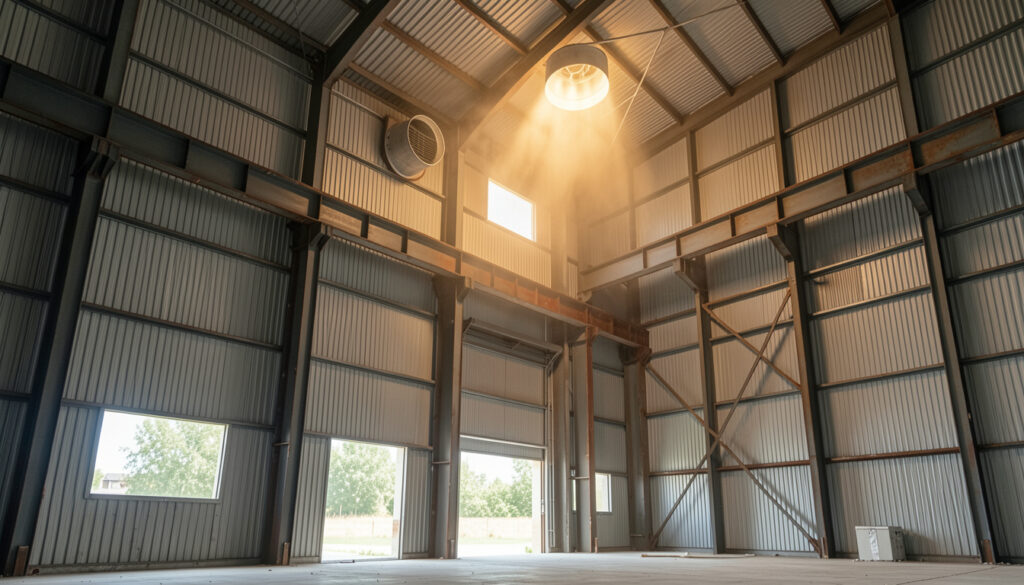
Common Problems With Round Gravity Vents
Blocked Vent
Dust, debris, nesting material, or other obstructions can restrict airflow.
Damaged Screen
A damaged screen can allow birds, insects, or debris to enter the building.
Water Leakage
Failed flashing, deteriorated sealants, or loose fasteners can allow water to enter around the vent.
Corrosion
Long-term exposure to moisture and outdoor conditions can deteriorate metal components.
Poor Airflow
Inadequate intake openings or incorrect vent sizing can limit ventilation performance.
Damaged Housing
Impact or severe weather can deform the vent housing and affect its performance.
Deteriorated Sealants
Old sealants can crack or lose adhesion around the vent perimeter.
Loose Fasteners
Loose fasteners can allow movement, vibration, and water intrusion.
Signs Your Gravity Vent Needs Replacement
A gravity vent should be inspected when you notice:
- Visible corrosion
- Damaged screens
- Bent or deformed components
- Water around the installation
- Deteriorated flashing
- Cracked sealants
- Loose fasteners
- Restricted airflow
- Significant physical deterioration
A professional inspection can determine whether the vent itself requires replacement or whether the surrounding building envelope is causing the problem.
Things to Know
- Round gravity vents provide passive ventilation without an electric motor.
- They rely primarily on natural pressure differences and thermal buoyancy.
- They can help exhaust warm and humid interior air.
- Adequate intake openings are necessary for effective airflow.
- Vent placement should be coordinated with the building’s overall ventilation design.
- Multiple vents may be necessary for larger buildings.
- Proper flashing and sealing are essential to prevent water intrusion.
- Vent screens should be inspected for blockage and damage.
- Gravity ventilation is not a substitute for engineered mechanical exhaust where hazardous contaminants are generated.
- Conditioned buildings require additional consideration because uncontrolled ventilation can affect HVAC loads.
- Existing vent dimensions should be documented before ordering a replacement.
- Roof and wall penetrations should be inspected regularly for signs of leakage or deterioration.
Frequently Asked Questions
Q: What is a round gravity vent?
A round gravity vent is a passive ventilation component that allows air to move naturally through a circular opening without requiring an electric motor.
Q: How does a gravity vent work?
Warm air rises naturally and can escape through a high-level gravity vent while replacement air enters through lower openings.
Q: Do round gravity vents require electricity?
No.
They rely on natural airflow and pressure differences rather than powered fans.
Q: Can gravity vents reduce heat inside a metal building?
They can help exhaust accumulated warm air when building conditions provide sufficient natural airflow.
The actual performance depends on building size, vent capacity, temperature differences, wind, and intake openings.
Q: Can gravity vents help with condensation?
They can help remove humid interior air, but ventilation alone does not eliminate condensation risk.
Proper insulation, vapor control, air sealing, and humidity management may also be necessary.
Q: Are gravity vents better than turbine vents?
Neither is universally better.
Turbine vents use wind-driven rotation to assist exhaust airflow, while gravity vents rely primarily on natural pressure differences and thermal buoyancy.
Q: Can gravity vents replace powered exhaust fans?
Not in every application.
Powered exhaust fans are generally more appropriate when a building requires controlled or high-volume airflow.
Q: Where should a gravity vent be installed?
High-level locations are generally advantageous because warm air naturally rises, but the exact placement depends on the building’s airflow design and roof or wall configuration.
Q: How many gravity vents does a metal building need?
The required quantity depends on the building’s size, ventilation requirements, vent capacity, heat load, and available intake openings.
Q: How do I replace an existing round gravity vent?
Measure the existing opening and vent dimensions, document the surrounding roof or wall profile, and provide photographs of the existing installation when requesting a replacement.
The Bottom Line on Butler Round Gravity Vents
Butler round gravity vents provide a simple passive approach to ventilation for suitable commercial, industrial, agricultural, and storage buildings.
By using natural pressure differences and thermal buoyancy instead of electric motors, they can help exhaust warm, humid, and stale air while requiring relatively little mechanical complexity.
The most important consideration is the entire airflow path. A gravity vent will perform best when it is properly sized and positioned and when the building has sufficient lower-level intake openings to provide replacement air.
For replacement projects, verify the existing vent diameter, opening dimensions, flange configuration, installation location, roof or wall profile, and screen configuration before ordering. Proper flashing and sealing are equally important to preserve the weather-tight condition of the building.
Need a replacement Butler round gravity vent? Request a Quote and provide your existing vent dimensions, building roof or wall profile, and photos of the installation.