

Ventilation is an important part of maintaining a functional metal building. Large commercial, industrial, agricultural, and warehouse structures can accumulate hot air, moisture, and stale air, particularly when there is not enough natural airflow through the building.
Ridge vents provide a passive ventilation path at the highest point of the roof, allowing warm interior air to escape while replacement air enters through lower building openings.
Butler ridge vents are designed for integration with Butler metal building roof systems and are available in different throat sizes and configurations. Current product information lists standard 9-inch and 12-inch throat vents in 10-foot sections, with additional throat sizes available for larger or custom applications.
Key Takeaways
- Ridge vents provide passive ventilation through the highest point of a metal building roof.
- They help exhaust hot, stale, and contaminated air from the building.
- Fresh replacement air enters through lower building openings.
- Butler ridge vents are available with or without dampers.
- Standard 9-inch and 12-inch throat sizes are available in 10-foot sections.
- Other throat sizes range from 4 inches to 48 inches.
- Ridge vents can be configured for continuous roof-ridge installations.
- Bird screens help prevent unwanted entry through the ventilation opening.
- Butler ridge vents use a weather-resistant aerodynamic design.
- Proper roof pitch and configuration should be specified when ordering.
- Ridge ventilation works best when adequate intake openings are available.
- Ridge vents can complement wall louvers, turbine vents, and other ventilation systems.
What Is a Ridge Vent?
A ridge vent is a ventilation assembly installed along the ridge of a sloped roof.
The ridge is naturally one of the highest points inside a metal building, making it an ideal location for exhausting warm air.
As interior air heats up, it rises toward the roof. A properly designed ridge vent gives that air an outlet.
At the same time, outside air can enter through lower-level openings, creating a natural airflow path through the building.
This principle is commonly referred to as stack-effect or buoyancy-driven ventilation.
Ridge vents can be especially effective in large buildings where heat naturally accumulates near the roof.
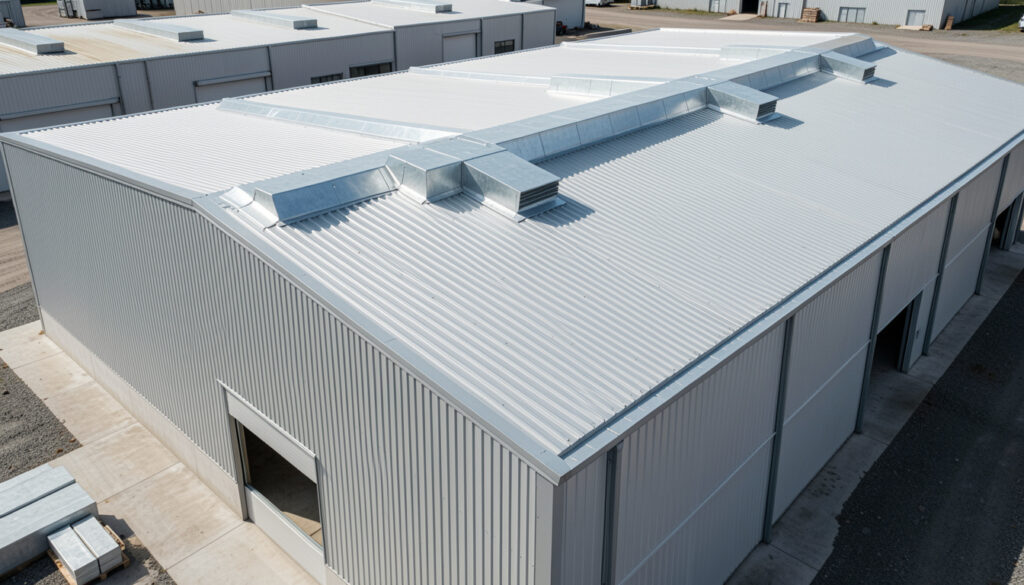
How Butler Ridge Vents Work
A ridge vent provides an exhaust opening at the highest point of the building.
When interior air becomes warmer than the outside air, it naturally rises.
The warm air moves toward the roof ridge and exits through the vent.
Replacement air enters through lower-level openings such as wall louvers, doors, windows, or dedicated intake vents.
This creates a continuous airflow path:
Lower-level intake → interior airflow → rising warm air → ridge exhaust
The effectiveness of this system depends on building design, temperature differences, wind conditions, intake openings, roof configuration, and the size and quantity of the ridge ventilation.
Why Roof Ridge Ventilation Matters
Without adequate ventilation, heat and moisture can become trapped inside a building.
This can contribute to:
- Excessive interior temperatures
- Condensation
- Humidity buildup
- Poor air circulation
- Uncomfortable working conditions
- Moisture-related deterioration
- Reduced equipment performance
Proper ventilation does not solve every building-envelope problem, but it can play an important role in managing interior air movement.
Continuous Ridge Ventilation
One major advantage of a ridge vent is that it can provide ventilation along a substantial portion of the roof ridge.
Rather than concentrating exhaust at a single point, a continuous ridge ventilation system can distribute the exhaust opening across the roof.
This can be useful for large buildings with:
- Long roof ridges
- Large interior volumes
- High ceilings
- Significant heat loads
- Industrial equipment
- Large open floor areas
Butler offers continuous ridge vent configurations as well as individual units.
Butler Ridge Vent Sizes
Current Butler ridge vent information identifies 9-inch and 12-inch throat sizes in 10-foot sections as standard options. Additional sizes include:
- 4 inches
- 9 inches
- 12 inches
- 15 inches
- 18 inches
- 24 inches
- 30 inches
- 36 inches
- 42 inches
- 48 inches
Custom lengths and throat sizes can also be available depending on project requirements.
The appropriate throat size should be selected based on the building’s ventilation requirements rather than simply choosing the largest available option.
Ridge Vents With Dampers
Butler ridge vents can be supplied with or without dampers.
Dampers provide greater control over the ventilation opening.
They can be opened to allow airflow or closed when ventilation through the ridge is not desired.
For dampered units, pull chains are identified as a standard operating method, with other operator configurations available for installations involving multiple units.
Damper operation can be useful when building owners need more control over seasonal ventilation.
When Are Ridge Vent Dampers Useful?
A damper can provide flexibility when the building’s ventilation requirements change.
For example, a facility may benefit from greater ventilation during hot weather but require a more controlled ventilation strategy during colder conditions.
The ability to adjust the opening can also be useful in buildings where environmental conditions or operating requirements vary throughout the year.
The correct damper configuration should be determined based on the building’s use and ventilation strategy.
Ridge Vents and Natural Airflow
Ridge ventilation relies heavily on natural airflow.
Warm air rises toward the roof, while wind movement can create pressure differences across the building.
These forces help move air through the ventilation system.
Unlike powered exhaust fans, a passive ridge vent does not require an electric motor to create airflow.
This makes ridge vents an attractive option for buildings where natural ventilation is appropriate.
The Importance of Intake Openings
A ridge vent cannot function effectively if there is no adequate source of replacement air.
Consider a building with a large ridge exhaust opening but almost no openings near the lower walls.
As air leaves the building, there is limited air available to replace it.
This can restrict the overall airflow rate.
For this reason, ridge ventilation should be designed together with intake ventilation.
Possible intake points include:
- Wall louvers
- Eave openings
- Windows
- Doors
- Dedicated intake vents
Ridge Vents for Warehouses
Warehouses often have large interior volumes and high roof elevations.
Heat can accumulate in the upper portion of the building while the occupied area below remains relatively stagnant.
A ridge vent provides an outlet for that accumulated warm air.
Potential warehouse applications include:
- Distribution centers
- Storage facilities
- Equipment warehouses
- Agricultural storage
- Industrial warehouses
The ventilation strategy should account for the warehouse’s racking, partitions, HVAC system, and operating conditions.
Ridge Vents for Manufacturing Buildings
Manufacturing facilities can produce substantial heat through equipment and industrial processes.
A ridge vent can help exhaust warm air from the upper portion of the building.
However, passive ventilation should not automatically be used where production processes generate hazardous fumes, gases, dust, or other contaminants.
Those applications may require engineered mechanical exhaust systems designed specifically for the hazard involved.
Ridge Vents for Agricultural Buildings
Agricultural buildings frequently require effective ventilation because of heat and humidity.
Ridge vents can provide a passive exhaust path for warm air.
Applications may include:
- Equipment storage
- Agricultural warehouses
- Workshops
- Farm buildings
- General-purpose agricultural structures
Buildings used for livestock have more specialized ventilation requirements and should be evaluated according to the animals, occupancy, temperature, humidity, and air-quality requirements.
Ridge Vents and Condensation
Condensation occurs when warm, humid air encounters a sufficiently cold surface.
Metal buildings can be particularly susceptible to condensation because metal roof and structural components can quickly respond to outdoor temperature changes.
Ridge ventilation can help remove humid interior air when outdoor conditions support ventilation.
However, ventilation is only one part of condensation control.
The building may also require appropriate:
- Insulation
- Vapor retarders
- Air sealing
- Moisture control
- HVAC operation
Ridge Vents and Heat Buildup
Heat naturally moves upward.
In a tall metal building, a significant volume of hot air can collect near the roof.
A ridge vent creates an outlet at that high point.
This can improve natural air movement and help reduce heat accumulation under suitable environmental conditions.
It does not eliminate solar heat gain or replace mechanical cooling, but it can complement the building’s overall ventilation strategy.
Ridge Vents vs. Turbine Vents
Both systems can exhaust air through the roof, but they operate differently.
A ridge vent is generally installed along the roof ridge and provides a distributed exhaust opening.
A turbine vent uses a rotating assembly to assist with air movement.
Ridge vents are particularly useful when continuous ventilation along a roof ridge is desired.
Turbine vents can be useful when individual roof exhaust points are more appropriate.
The building’s roof configuration and ventilation requirements should determine which system is appropriate.
Ridge Vents vs. Powered Exhaust Fans
Powered exhaust fans use electric motors to actively move air.
Ridge vents use natural airflow.
Powered fans generally provide more predictable airflow because their operation does not depend entirely on wind or thermal conditions.
Ridge vents, however, do not require electrical power and can operate passively.
Some buildings may benefit from a combination of passive intake and exhaust ventilation with mechanical ventilation where required.
Butler Roof System Compatibility
Proper integration with the existing roof system is critical.
A ridge vent must work with the roof’s:
- Panel profile
- Roof pitch
- Ridge configuration
- Flashing
- Sealants
- Fasteners
- Structural layout
Butler ridge vents are designed for use with Butler building systems and can be configured according to the roof’s requirements.
When replacing an existing ridge vent, the roof system should be identified before ordering.
Roof Pitch Considerations
Roof pitch affects the way the ridge vent integrates with the roof.
Current Butler information indicates that standard ridge ventilators ship with a 1:12 end cap and can be field modified for roof pitches up to 6:12. Custom ventilators are available for roof pitches greater than 6:12.
This makes the roof pitch an important specification to provide when requesting a replacement or new ridge vent.
Weather Protection
A ridge vent creates an opening through the roof system, so weather resistance is critical.
Butler ridge vents use an aerodynamic design intended to help exclude weather while maintaining the ventilation opening.
The vent also incorporates a bird screen to protect the opening from unwanted entry.
Correct installation remains essential to maintaining the roof’s weather-tight condition.
Bird Screens
Birds and other animals can attempt to enter roof ventilation openings.
Butler ridge vents are protected by bird screen mesh made from galvanized hardware cloth.
The screen helps prevent unwanted entry while allowing air to move through the ventilation system.
Like other ventilation screens, it should be periodically inspected for damage or blockage.
Ridge Vent Construction
Current Butler product information describes the ridge vent construction as using a 26-gauge exterior, combined with internal components made from 24-, 20-, and 18-gauge die-formed sheet metal and machined parts.
This construction is intended to provide durability for commercial and industrial applications.
The exact material configuration can vary depending on the selected vent design and project requirements.
Ridge Vent Finish Options
The standard finish is listed as Galvalume, while other colors, including Kynar finishes, can be available upon request.
Matching the finish to the existing roof can provide a cleaner appearance, particularly when replacing an existing ventilation assembly.
When ordering a replacement, provide the existing roof color and finish whenever possible.
Drainage Around the Ridge Vent
Water management is an important part of roof ventilation.
Current Butler ridge vent information identifies continuous drainage slots along the bottom of both wind bands to help manage water.
Proper drainage helps prevent water from becoming trapped around the ventilation assembly.
The surrounding roof and flashing should still be inspected regularly for signs of deterioration or leakage.
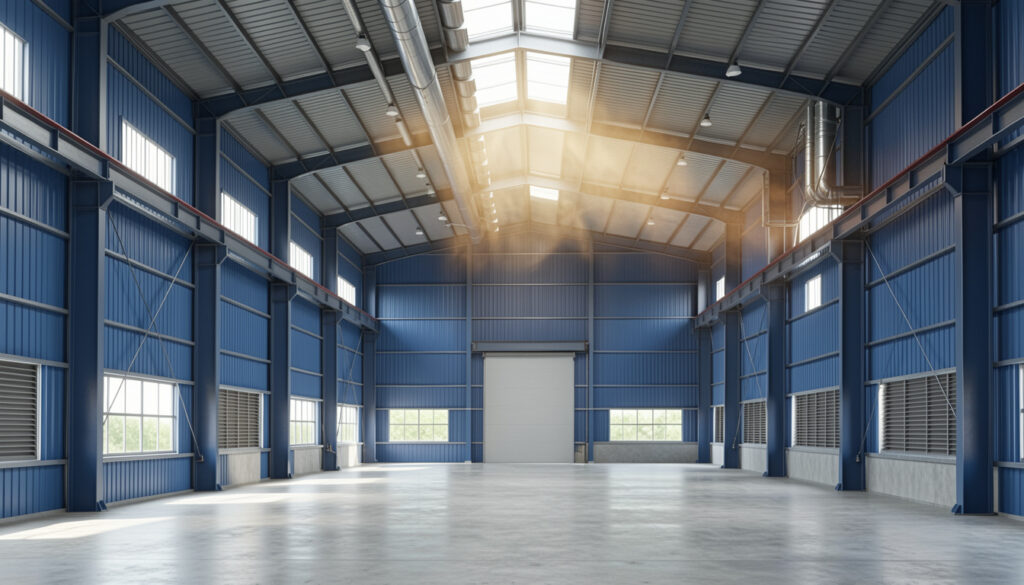
Ridge Vents for Existing Butler Buildings
Older Butler buildings may eventually require replacement ventilation components.
A ridge vent can deteriorate because of:
- Weather exposure
- Corrosion
- Damaged bird screens
- Failed components
- Physical impact
- Roof modifications
- Poor previous repairs
Replacing the ventilation assembly can restore airflow while also providing an opportunity to address deteriorated flashing and surrounding roof components.
Measuring an Existing Ridge Vent
Before ordering a replacement ridge vent, collect as much information as possible.
Important measurements include:
- Throat size
- Section length
- Roof pitch
- Ridge length
- End-cap configuration
- Damper configuration
- Roof panel profile
- Existing finish
- Existing ventilation arrangement
Photographs are also useful.
A clear photograph of the roof ridge, vent assembly, surrounding panels, and interior side of the installation can help identify the correct replacement configuration.
Ridge Vent Maintenance
Regular inspection can help identify problems before they result in major roof damage.
Inspect:
- Vent exterior
- Bird screens
- Dampers
- Pull chains
- Flashing
- Fasteners
- Sealants
- Roof panels
- Drainage areas
Look for corrosion, loose components, damaged screens, restricted openings, and evidence of water intrusion.
Common Problems With Ridge Vents
Blocked Ventilation Opening
Dirt, debris, nesting material, or damaged components can restrict airflow through the ridge vent.
Damaged Bird Screen
A damaged screen can allow birds, insects, or other unwanted materials into the ventilation assembly.
Water Leakage
Improper flashing, damaged sealants, loose fasteners, or deteriorated roof components can allow water to enter around the ridge vent.
Damaged Dampers
A damaged or seized damper can prevent the vent from opening or closing properly.
Poor Airflow
Insufficient intake openings can limit the amount of air that can move through the ridge vent.
Corrosion
Long-term exposure to moisture can deteriorate metal components.
Incorrect Roof Pitch Configuration
A ridge vent that is not properly matched to the roof pitch can create installation and weather-sealing problems.
Deteriorated Sealants
Aged sealants can lose flexibility and allow water to penetrate around roof transitions.
Signs Your Ridge Vent Needs Replacement
Consider having the ridge vent inspected when you notice:
- Visible corrosion
- Persistent roof leaks
- Damaged bird screens
- Broken or seized dampers
- Loose components
- Restricted airflow
- Deteriorated flashing
- Damaged end caps
- Physical deformation
- Significant deterioration around the ridge
A professional inspection can determine whether the vent itself needs replacement or whether the surrounding roof components are responsible for the problem.
Things to Know
- Butler ridge vents provide passive ventilation at the highest point of the roof.
- Standard 9-inch and 12-inch throat sizes are available in 10-foot sections.
- Additional throat sizes from 4 inches to 48 inches are available.
- Ridge vents can be supplied with or without dampers.
- Bird screens help prevent unwanted entry into the ventilation opening.
- Galvalume is the standard finish, with additional finish options available.
- Roof pitch should be specified when ordering.
- Standard units can accommodate roof pitches up to 6:12 with field modification; custom units are available for steeper pitches.
- Adequate intake openings are necessary for effective natural ventilation.
- Ridge vents should be integrated carefully with the existing roof system.
- Proper flashing, sealing, and drainage are essential to prevent water intrusion.
- Ridge vents are not a replacement for engineered mechanical exhaust when hazardous contaminants are present.
Frequently Asked Questions
Q: What is a ridge vent?
A ridge vent is a roof-mounted ventilation assembly installed along or near the highest point of a sloped roof to allow warm interior air to escape.
Q: How does a Butler ridge vent work?
Warm air naturally rises toward the roof ridge and exits through the ridge vent while replacement air enters through lower building openings.
Q: What sizes are Butler ridge vents available in?
Standard Butler ridge vents include 9-inch and 12-inch throat sizes in 10-foot sections, with additional sizes from 4 inches through 48 inches available for other applications.
Q: Do Butler ridge vents have dampers?
Yes.
Butler ridge vents can be supplied with or without dampers.
Q: What is the purpose of a ridge vent damper?
A damper allows the ventilation opening to be adjusted or closed when building conditions require more control over airflow.
Q: Do ridge vents require electricity?
No.
Ridge vents are designed for passive ventilation and do not require an electric motor.
Q: Can a ridge vent reduce heat inside a metal building?
It can help exhaust hot air that accumulates near the roof and improve natural airflow.
The actual effect depends on building design, temperature differences, wind conditions, and available intake openings.
Q: Can ridge vents prevent condensation?
They can help manage interior moisture by improving ventilation, but they are not a standalone condensation-control system.
Proper insulation, vapor control, air sealing, and humidity management may also be necessary.
Q: What roof pitch can Butler ridge vents accommodate?
Current Butler information indicates that standard ventilators can be field modified for roof pitches up to 6:12, while custom ventilators are available for roof pitches greater than 6:12.
Q: Are Butler ridge vents protected against birds?
Yes.
Butler ridge vents use bird screen mesh made from galvanized hardware cloth.
Q: What should I provide when ordering a replacement ridge vent?
Provide the roof system, roof pitch, ridge length, existing throat size, damper configuration, roof profile, finish, and photographs of the existing installation.
Q: Can ridge vents be used with other ventilation systems?
Yes.
A ridge vent can be combined with appropriate intake openings, wall louvers, turbine vents, or mechanical ventilation depending on the building’s requirements.
The Bottom Line on Butler Ridge Vents
Butler ridge vents provide a practical passive ventilation solution for commercial, industrial, agricultural, and warehouse metal buildings.
By placing the exhaust opening at the highest point of the roof, ridge ventilation takes advantage of natural air movement to help remove hot, stale, and humid air while replacement air enters through lower building openings.
Butler ridge vents are available in multiple configurations, including 9-inch and 12-inch standard throat sizes in 10-foot sections, additional throat sizes, and options with or without dampers. They also incorporate bird screens and weather-conscious construction for demanding building environments.
For replacement projects, the most important information to verify includes the existing roof system, roof pitch, ridge length, throat size, damper configuration, and roof profile. Correct sizing and installation are critical for both ventilation performance and weather resistance.
Need a replacement or new Butler ridge vent? Request a Quote and provide your existing ridge vent dimensions, roof pitch, and photos of the installation.