

The Butlerib II metal roof is a through-fastened roofing system designed to provide a practical combination of durability, installation precision, structural performance, and cost efficiency. Butler describes it as a versatile and durable roof solution that integrates with its structural, wall, and insulation systems.
Unlike Butler’s MR-24 and VSR-II standing-seam systems, Butlerib II uses a through-fastened panel design. Its 1½-inch trapezoidal rib profile provides panel strength and assists with roof drainage, while factory-punched panels are designed to align with factory-punched purlins for more precise installation.
For owners and facility managers maintaining an existing Butler building, understanding these details is important when dealing with roof leaks, damaged panels, loose or failed fasteners, corrosion, insulation issues, or replacement parts.
A Butlerib II roof should be treated as an integrated roof system rather than simply a layer of corrugated metal. The panels, fasteners, purlins, flashing, sealants, insulation, and drainage components all contribute to the roof’s overall performance.
What Makes Butlerib II Different?
The Butlerib II roof system is built around a relatively straightforward concept: strong ribbed metal panels are attached directly through the roof panel to the supporting structure using mechanical fasteners.
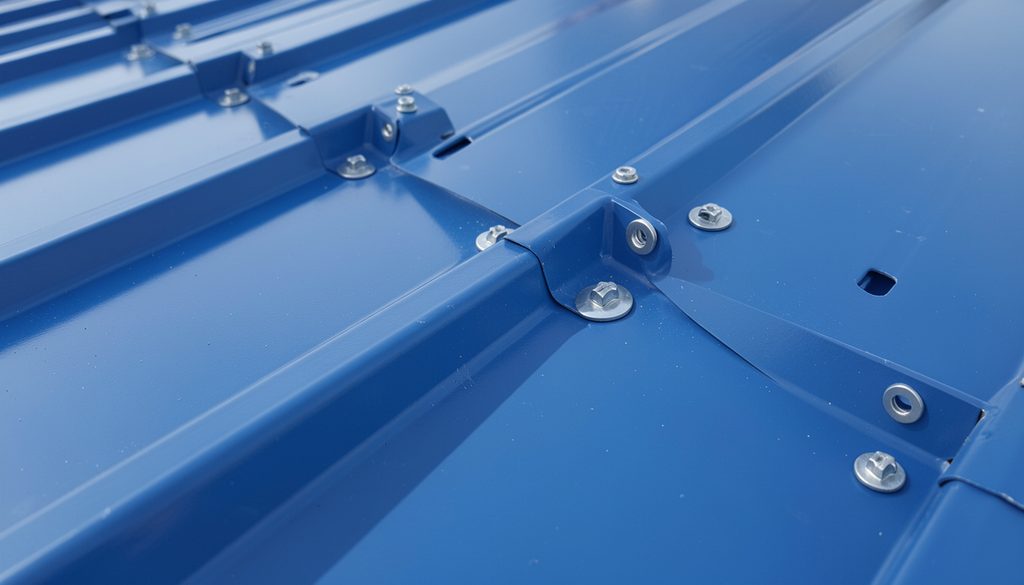
The current Butler specifications identify the system as a through-fastened roof panel system using Lock-Rivet fasteners, with available ScruBolt and Lock-Rivet fastening options. The roof panel has a 1½-inch trapezoidal rib profile engineered for strength and drainage.
Several features work together to make the system practical for metal building construction:
- 1½-inch trapezoidal ribs
- Factory-punched panel alignment
- Through-fastened attachment
- Lock-Rivet fasteners
- Slotted panel holes
- Butler-Cote finishes
- Integration with Butler structural systems
- Tested wind-uplift performance
This approach differs significantly from a concealed-fastener standing-seam system.
The 1½-Inch Trapezoidal Rib
The most recognizable feature of Butlerib II is its rib profile.
The current system uses a 1½-inch trapezoidal rib. Butler states that the profile strengthens panel performance and improves roof drainage.
The raised ribs help give the panel its structural shape while also creating channels that help move rainwater toward the roof drainage system.
The rib geometry also contributes to the recognizable appearance of a Butlerib II building.
Factory-Punched Panels
Precision is important when installing a metal roof.
The current Butlerib II system uses factory-punched panels designed to align with factory-punched purlins. Butler states that this precision reduces field adjustments and supports faster, more accurate installation.
This can be particularly valuable on large commercial and industrial buildings where hundreds or thousands of panel connections may be involved.
Factory preparation helps maintain consistency across the roof assembly.
Through-Fastened Construction
Butlerib II differs from the MR-24 and VSR-II systems because the roof panels are through-fastened.
That means the fastener passes through the roof panel and connects it to the supporting structure.
The current Butlerib II specification identifies Lock-Rivet fasteners as part of the system and also lists available ScruBolt fasteners.
Because fasteners are directly exposed to the roof environment, their condition is an important part of routine maintenance.
Why Fasteners Matter
A metal panel can remain visually intact while its fasteners begin to deteriorate.
Fasteners can experience:
- Corrosion
- Loosening
- Seal deterioration
- Damage from installation
- Washer deterioration
- Improper replacement
- Movement-related stress
A leak around a fastener does not necessarily mean the panel itself has failed.
The fastener, washer, surrounding metal, and supporting structure should all be evaluated.
Lock-Rivet Fasteners
The current Butlerib II roof system uses Lock-Rivet fasteners, which Butler identifies as supporting long-term panel security and pullout performance.
Fastener selection matters because the roof relies on thousands of individual connections to transfer loads and maintain the panel assembly.
Using an incompatible replacement fastener can potentially affect:
- Pullout performance
- Weather resistance
- Panel attachment
- Corrosion resistance
- Long-term maintenance
For replacement work, the existing roof configuration should be identified before selecting hardware.
Slotted Holes and Thermal Movement
Metal expands and contracts as temperatures change.
This movement is particularly important on large roofs.
The current Butlerib II system uses slotted panel holes to allow expansion and contraction. Butler specifically identifies the slotted holes as a feature supporting controlled thermal movement and long-term performance.
This is an important detail when installing or replacing panels.
The attachment system needs to allow the roof to move as intended.
Improperly restricting movement can place unnecessary stress on panels and fasteners.
Roof Slope and Drainage
The ribbed profile helps direct water toward the roof’s drainage system.
Older Butler specifications identify a minimum roof slope of ½ inch in 12 inches for the Butlerib II roof system.
Actual roof design should always be verified against the building’s original engineering and applicable requirements.
Drainage becomes especially important when debris, modifications, or damaged components interfere with the intended flow of water.
Butlerib II Roof and Weather Protection
A metal roof’s primary job is to keep the building envelope protected from weather.
Butler’s current Butlerib II system is tested to UL Class 90, is FM approved, and is Miami-Dade certified.
These ratings describe tested system performance and should not be interpreted as meaning every installation automatically carries the same performance characteristics. Specific assemblies and installation requirements matter.
Butler-Cote Finish
The current Butlerib II roof system uses Butler-Cote finish options. Butler describes the finish system as providing durable surface protection and contributing to long-term performance.
The finish is exposed to:
- Sunlight
- Rain
- Temperature changes
- Wind
- Dirt
- Atmospheric pollutants
- Physical impact
Over time, the coating can experience fading, chalking, scratches, or localized damage.
Regular inspection can help identify problems before they progress into metal corrosion.
Corrosion on Butlerib II Roof Panels
Corrosion is one of the most important conditions to watch for on an older metal roof.
Potentially vulnerable areas include:
- Fasteners
- Panel laps
- Roof edges
- Flashing
- Penetrations
- Gutters
- Areas where debris collects
- Areas where water remains
Surface discoloration does not automatically mean the panel needs replacement.
The depth and extent of corrosion should be evaluated before determining the appropriate repair.
Roof Leaks
A Butlerib II roof can develop leaks for several different reasons.
Common sources include:
- Deteriorated fasteners
- Failed fastener washers
- Damaged panels
- Panel laps
- Flashing
- Roof penetrations
- Failed sealants
- Corrosion
- Drainage problems
- Improper modifications
A water stain inside the building does not necessarily identify the exact exterior leak location.
Water can travel along the underside of the panel or through other parts of the roof assembly before becoming visible.
Fastener-Related Leaks
Fasteners are one of the first places to investigate when a through-fastened roof develops localized leaks.
A fastener can leak because of:
- Deterioration
- Loose attachment
- Damaged sealing washer
- Incorrect installation
- Corrosion
- Movement
- Improper replacement
Simply adding sealant over an old fastener may not be an appropriate long-term solution if the underlying attachment has deteriorated.
Panel Laps
Where panels overlap, the joint needs to remain weather resistant.
Problems can develop when:
- Sealants deteriorate
- Panels shift
- Fasteners loosen
- Corrosion develops
- Debris accumulates
- Previous repairs were improperly performed
When investigating a leak, panel laps should be inspected along with the surrounding fasteners and flashing.
Flashing Is Part of the Roof System
Flashing directs water around transitions and roof openings.
Potential problem areas include:
- Roof-to-wall transitions
- Eave areas
- Gable ends
- Ridge details
- Equipment penetrations
- Skylights
- Roof edges
A leaking flashing detail can sometimes be mistaken for a damaged roof panel.
Before replacing a large section of roofing, the adjacent flashing should be inspected.
Roof Penetrations
Commercial and industrial buildings often have equipment that passes through the roof.
Examples include:
- HVAC systems
- Exhaust fans
- Pipes
- Vents
- Skylights
- Electrical equipment
- Mechanical systems
Each penetration interrupts the roof surface and introduces additional flashing and sealing requirements.
When a leak appears around equipment, inspect the entire penetration rather than assuming the nearest panel is defective.
Maintenance Access
Through-fastened metal roofs can withstand normal service conditions, but unnecessary foot traffic can still damage roofing components.
Workers performing maintenance should avoid:
- Stepping directly on vulnerable flashing
- Deforming ribs
- Damaging fasteners
- Dragging equipment across panels
- Creating unnecessary scratches
- Walking on deteriorated areas
Maintenance activity should be planned around the roof’s structural and safety requirements.
Insulation and the Building Envelope
The roof panel is only one layer of the building envelope.
Butlerib II can integrate with Butler insulation systems and other building components.
Proper insulation can help manage:
- Heat transfer
- Interior temperature
- Energy consumption
- Condensation risk
- Building comfort
The roof should therefore be evaluated as part of the complete envelope rather than as an isolated metal surface.
Wet Insulation
If insulation becomes wet, determine where the moisture originated.
Possible causes include:
- Roof leaks
- Failed flashing
- Condensation
- Air leakage
- Damaged vapor-control components
Replacing wet insulation without fixing the moisture source can result in repeated problems.
Condensation Problems
Not every water problem originates from outside the building.
Condensation can occur when humid interior air reaches a sufficiently cold surface.
The risk depends on:
- Interior humidity
- Outdoor temperature
- Insulation
- Air movement
- Vapor control
- Building use
- HVAC operation
When investigating moisture, determine whether the building is experiencing a roof leak or an interior condensation problem.
Roof Drainage and Debris
A roof should be able to move water away from the building efficiently.
Debris can interfere with this process.
Common sources include:
- Leaves
- Branches
- Dirt
- Construction debris
- Accumulated organic material
Pay particular attention to gutters, roof edges, valleys, drains, and areas around rooftop equipment.
Persistent water accumulation can accelerate corrosion and deterioration.
Storm Damage
Severe weather can damage Butlerib II panels and fasteners.
After a major storm, inspect for:
- Dented panels
- Torn metal
- Displaced flashing
- Damaged fasteners
- Loose components
- Punctures
- Debris impact
- Water intrusion
A roof can experience functional damage without having an obvious hole visible from the ground.
Wind Performance
The current Butlerib II system carries UL Class 90 wind-uplift testing, FM approval, and Miami-Dade certification.
However, the performance of an installed roof depends on the specific assembly and installation.
Butler’s specifications also note that installation modifications or substitutions can invalidate FM approval for specified assemblies.
This reinforces the importance of using compatible components when repairing an existing system.
Replacing a Butlerib II Roof Panel
Panel replacement may be appropriate when damage is localized.
Before ordering a replacement panel, identify:
- Panel profile
- Panel dimensions
- Material
- Gauge
- Rib configuration
- Finish
- Fastener arrangement
- Existing roof age
- Supporting structure
A panel that looks similar may not necessarily be the correct replacement.
The existing system should be verified first.
Replacing Roof Fasteners
Fastener replacement is another area where compatibility matters.
The replacement should account for:
- Fastener type
- Length
- Diameter
- Material
- Washer
- Corrosion resistance
- Pullout requirements
- Existing structural support
Using a generic fastener simply because it fits the hole can create future problems.
Can a Butlerib II Roof Be Repaired?
Yes, depending on the condition of the roof.
Localized repairs may address:
- Individual damaged panels
- Failed fasteners
- Flashing
- Sealants
- Minor corrosion
- Damaged roof accessories
- Drainage problems
The condition of the surrounding roof should always be considered.
If multiple areas are failing, a broader roof assessment may be more appropriate.
When Does a Full Roof Replacement Make Sense?
Full replacement becomes more reasonable when deterioration is widespread.
Factors can include:
- Extensive corrosion
- Numerous recurring leaks
- Widespread panel damage
- Large numbers of failed fasteners
- Deteriorated flashing
- Extensive previous repairs
- Poor remaining service life
- Significant structural or building-envelope changes
A localized leak does not automatically justify replacing the entire roof.
The decision should be based on the overall condition of the roof system.
Butlerib II and Building Renovations
Existing Butler buildings often change over time.
New equipment, additions, HVAC systems, skylights, and other modifications can alter the original roof configuration.
Every new penetration creates another location that needs proper flashing and weatherproofing.
If a building has undergone numerous modifications, investigate those areas when diagnosing recurring leaks.
Solar Panels on Butlerib II
Solar installation can potentially be performed on metal buildings, but the existing roof needs to be evaluated first.
Important considerations include:
- Roof condition
- Remaining service life
- Structural capacity
- Attachment method
- Waterproofing
- Panel layout
- Maintenance access
If the roof is already approaching the end of its service life, installing a large solar array may require additional planning before proceeding.
Identifying an Existing Butlerib II Roof
If you need to confirm whether a building has a Butlerib II roof, inspect several characteristics rather than relying on one feature.
Look for:
- 1½-inch trapezoidal ribs
- Through-fastened construction
- Factory-punched panel characteristics
- Fastener configuration
- Roof-edge details
- Panel dimensions
- Butler building documentation
The current Butlerib II roof system specifically identifies the 1½-inch trapezoidal rib, factory-punched alignment, Lock-Rivet fasteners, and slotted holes as key system characteristics.
Photographs can also help identify the system.
Useful photos include:
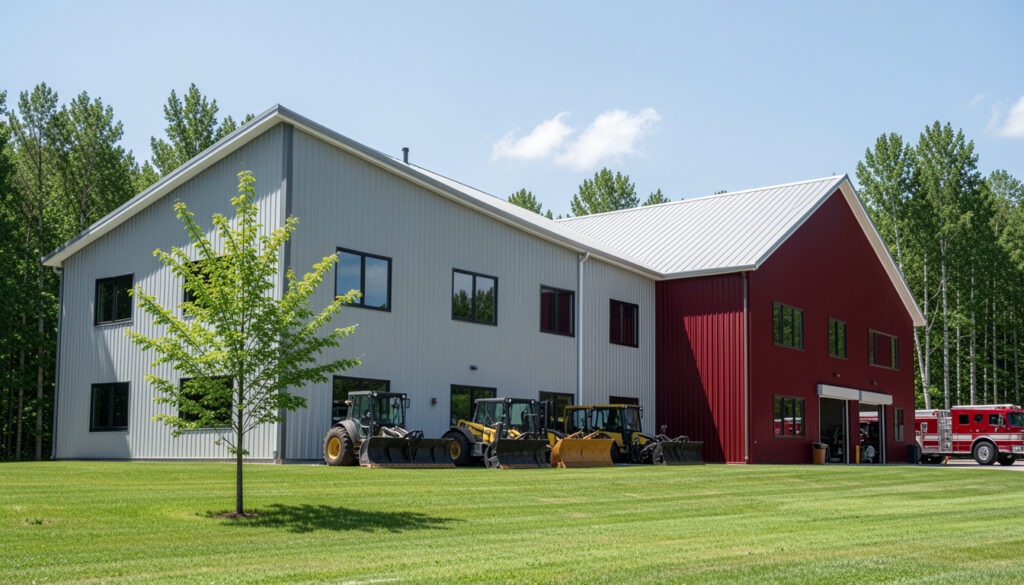
- Full roof from the ground
- Close-up of the ribs
- Fasteners
- Panel laps
- Eaves
- Gable ends
- Flashing
- Damaged areas
Common Problems With Butlerib II Metal Roofs
Leaking Fasteners
Deteriorated fasteners, washers, or improper replacement hardware can become localized sources of water intrusion.
Corroded Fasteners
Fasteners exposed to weather can deteriorate over time, particularly where protective components have failed.
Damaged Roof Panels
Storms, impact, maintenance activity, and building modifications can dent, puncture, or deform panels.
Failed Panel Laps
Sealant deterioration or movement at panel overlaps can create potential leak paths.
Corrosion
Damaged finishes, moisture accumulation, and persistent drainage problems can contribute to panel corrosion.
Failed Flashing
Roof edges, penetrations, transitions, and equipment curbs can develop flashing problems.
Drainage Issues
Blocked gutters, debris, and poorly maintained drainage areas can allow water to accumulate.
Failed Sealants
Aging sealants around joints and penetrations can lose their ability to resist water intrusion.
Thermal Movement Problems
Improper fastening or modifications can restrict the roof’s intended expansion and contraction.
Improper Repairs
Using incompatible panels, fasteners, or sealants can create additional problems instead of resolving the original issue.
Wet Insulation
Moist insulation may indicate a roof leak, condensation problem, or another building-envelope issue.
Things to Know
- Butlerib II is a through-fastened metal roof system designed to integrate with Butler structural, wall, and insulation systems.
- The current roof system uses a 1½-inch trapezoidal rib profile.
- Factory-punched panels are designed for precise alignment with factory-punched purlins.
- The current system uses Lock-Rivet fasteners, with ScruBolt and Lock-Rivet options identified by Butler.
- Slotted panel holes allow for thermal expansion and contraction.
- Butlerib II uses Butler-Cote finish options.
- The current system has UL Class 90, FM approval, and Miami-Dade certification.
- Butler identifies an optional 10-year weathertightness warranty for the current system.
- Fasteners, flashing, panel laps, penetrations, and drainage should all be inspected when investigating leaks.
- Replacement panels and fasteners should be matched to the existing roof configuration.
- Improper modifications or substitutions can affect tested system performance.
- A localized roof problem does not necessarily require complete roof replacement.
Frequently Asked Questions
What is a Butlerib II metal roof?
Butlerib II is a through-fastened ribbed metal roofing system designed for durability, installation precision, and integration with Butler building systems.
What does the Butlerib II roof panel look like?
The current panel has a 1½-inch trapezoidal rib profile that creates a repeating raised pattern across the roof.
Is Butlerib II a standing-seam roof?
No.
Unlike Butler’s MR-24 and VSR-II systems, Butlerib II is a through-fastened roof system.
What type of fasteners does Butlerib II use?
The current system identifies Lock-Rivet fasteners, with ScruBolt and Lock-Rivet options listed by Butler.
Why are the holes in Butlerib II panels slotted?
The slotted holes allow the metal panels to accommodate expansion and contraction caused by temperature changes.
What causes Butlerib II roof leaks?
Common causes include deteriorated fasteners, failed washers, panel laps, damaged panels, flashing problems, penetrations, failed sealants, corrosion, and drainage issues.
Can a Butlerib II panel be replaced?
Yes, when the damage is localized and the surrounding roof remains suitable for repair.
The replacement panel should match the existing system’s profile, material, dimensions, finish, and attachment requirements.
Can I use a generic metal panel as a Butlerib II replacement?
It should not be assumed to be compatible.
The rib profile, dimensions, fastener arrangement, material, and other characteristics need to match the existing system.
How do I identify Butlerib II?
Look for its 1½-inch trapezoidal rib profile, through-fastened construction, and other system-specific details such as factory-punched alignment and fastener configuration.
Does Butlerib II allow for thermal expansion?
Yes.
The system uses slotted panel holes to accommodate expansion and contraction.
Is Butlerib II suitable for commercial buildings?
Yes.
Butlerib II is designed to integrate with Butler building systems and is used across commercial, industrial, agricultural, educational, and other building applications.
Does Butlerib II have a wind rating?
The current system is identified with UL Class 90 wind-uplift testing, along with FM approval and Miami-Dade certification.
Can solar panels be installed on Butlerib II?
Potentially, but the existing roof condition, structural capacity, attachment method, waterproofing, and remaining service life should be evaluated before installation.
Should I replace the entire roof if Butlerib II has a leak?
Not necessarily.
A localized leak may be repairable. The appropriate solution depends on the condition of the affected panel, fasteners, flashing, insulation, and surrounding roof.
How do I maintain a Butlerib II roof?
Regular inspections should focus on fasteners, panel laps, corrosion, flashing, penetrations, drainage, sealants, and storm damage.
What information should I provide when ordering Butlerib II replacement parts?
Provide photographs, panel measurements, roof details, building information, the location of the damaged component, and a description of the problem.
Close-up photographs of the ribs, fasteners, panel laps, and damaged area are especially useful.
The Bottom Line
Butlerib II takes a straightforward approach to metal roofing: a strong ribbed panel, precise factory preparation, secure through-fastening, and controlled thermal movement. Its 1½-inch trapezoidal rib, factory-punched alignment, Lock-Rivet fastening, and slotted holes are designed to work together as a complete roof system.
For an existing Butler building, maintaining that performance means paying attention to the details that are easiest to overlook—especially fasteners, panel laps, flashing, drainage, corrosion, and roof penetrations.
When a Butlerib II roof develops a problem, the right repair starts with identifying the actual source of the failure and confirming the exact roof configuration. A replacement panel or fastener that merely looks similar may not provide the same performance as the original component.
If you need Butlerib II roof panels, fasteners, flashing, insulation, or other Butler building replacement components, provide your building information, photographs, measurements, and details about the damaged component so the appropriate replacement can be identified.