

Butlerib II roof panel clips are important components within the Butlerib II metal roofing system. They help connect the roof panel assembly to the building’s structural components while allowing the roof system to function as an engineered assembly.
When a Butlerib II roof requires repair or replacement, it is easy to focus only on the visible metal panels. However, the components underneath and around those panels—including fasteners, clips, closures, sealants, and structural connections—also play an important role in the roof’s performance.
Butlerib II is an exposed-fastened roof system with a 1½-inch deep corrugation profile. Butler’s system documentation also identifies factory-punched structural components and Butler Scrubolt fasteners as part of the system.
Understanding the purpose of the panel-support components can help building owners and contractors make better decisions when repairing an existing Butler building or replacing damaged roof components.
Key Takeaways
- Roof panel clips and attachment components help secure the Butlerib II roof assembly to the building structure.
- Butlerib II uses a 1½-inch deep corrugation profile.
- Factory-punched components support accurate alignment during installation.
- The system is designed to accommodate thermal expansion and contraction.
- Butler Scrubolt fasteners are part of the Butlerib II roof system.
- Damaged or missing attachment components should not be ignored during roof repairs.
- Replacement components should be matched to the specific Butler roof system.
- Roof panel attachment should be coordinated with sealants, closures, and other weatherproofing components.
- Incorrect fasteners or attachment methods can compromise roof performance.
- Existing roofs should be inspected before replacement components are ordered.
What Are Butlerib II Roof Panel Clips?
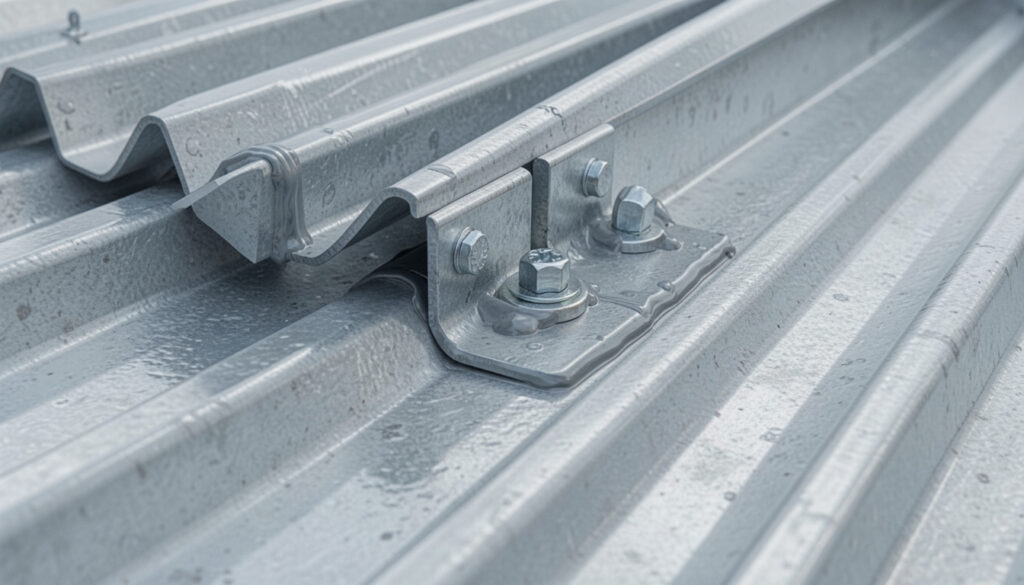
Roof panel clips or attachment components are used to secure portions of a metal roof assembly to its supporting structure.
Their exact configuration depends on the roof system and the location of the attachment.
In a Butlerib II roof, these components work together with the roof panels, structural framing, fasteners, sealants, and other accessories to create the finished roof assembly.
A roof panel should therefore not be viewed as an isolated component.
The performance of the completed roof depends on how all of these components work together.
Understanding the Butlerib II Roof System
Butlerib II is a through-fastened rib-type metal roof system.
The roof panels have deep 1½-inch corrugations that contribute to the panel’s strength and profile. The system also incorporates factory-slotted holes intended to accommodate thermal expansion and contraction.
This is important because metal expands and contracts as temperatures change.
A roof system needs to account for this movement rather than unnecessarily restraining the panels.
Why Roof Panel Attachment Matters
The roof attachment system has several important responsibilities.
It needs to help keep panels properly positioned while transferring applicable loads to the supporting structure.
It also needs to work with the roof’s weatherproofing system.
An attachment problem can potentially contribute to:
- Panel movement
- Loose connections
- Water intrusion
- Fastener failure
- Panel deformation
- Wind-related damage
For this reason, roof attachment components deserve attention whenever a Butlerib II roof is repaired or modified.
Thermal Expansion and Contraction
Metal changes dimensions as its temperature changes.
A roof can become significantly hotter during direct sunlight than it is during cooler nighttime conditions.
The Butlerib II system incorporates factory-slotted holes to allow for thermal expansion and contraction of the panels.
This movement needs to be accommodated by the complete roof assembly.
Using the wrong attachment method or improperly restricting movement can introduce unnecessary stress into the panels and connections.
Butler Scrubolt Fasteners
Fasteners are another critical part of the Butlerib II roof system.
Butler’s documentation identifies the Butler Scrubolt as a high-strength fastener used for panel attachment. The manufacturer states that the fastener provides substantially greater pullout strength than typical industry-standard self-drilling screws.
This illustrates why simply substituting a generic fastener is not always appropriate.
The attachment hardware should be matched to the roof system and application.
Why Generic Replacement Hardware Can Be a Problem
A roof component may look simple enough to replace with a similar-looking hardware item.
However, appearance alone does not establish compatibility.
Differences can exist in:
- Dimensions
- Material
- Coating
- Strength
- Thread design
- Fastener type
- Load capacity
- Corrosion resistance
For a structural roof component, these differences matter.
Replacement hardware should therefore be identified according to the specific Butler roof system.
Factory-Punched Components
Butlerib II incorporates factory-punched structural components and roof panels.
Factory punching helps provide consistent hole locations and can simplify field installation.
It also reduces the need for field drilling in critical locations.
Butler’s system documentation specifically emphasizes factory-punched components as part of its installation method.
Roof Panel Alignment
Proper panel alignment is important for an exposed-fastener roof.
Panels need to be positioned correctly relative to:
- Adjacent panels
- Structural framing
- Eave
- Ridge
- End laps
- Roof penetrations
- Trim
Misalignment can create problems with both appearance and weather resistance.
Factory-punched components can help maintain consistent positioning during installation.
Roof Panel Clips and Wind Loads
Roof attachments are subjected to forces generated by wind.
Wind can create uplift forces that attempt to pull roof panels away from the supporting structure.
The attachment system needs to transfer the applicable loads into the building structure.
The required attachment configuration depends on the building’s engineering, location, roof geometry, and applicable design requirements.
This is one reason why roof attachment components should not be selected solely based on appearance.
Roof Panel Clips and Weather Tightness
Attachment points can potentially become paths for water intrusion if they are improperly installed or damaged.
The roof assembly therefore relies on more than mechanical attachment.
Sealants, closures, panel overlaps, and flashing all contribute to weather resistance.
Butlerib II incorporates a sealant groove intended to improve weather sealing at the panel connection.
Roof Closures
Closures are designed to fill openings created by the corrugated profile of a metal roof.
They are commonly used around areas such as:
- Eaves
- Ridges
- Transitions
- Roof edges
Butler Metal Building Parts describes profile-matched closures as components that help reduce water intrusion, airflow, debris infiltration, and pest entry.
A roof attachment repair should therefore be evaluated together with the surrounding closure and sealing components.
Sealants and Roof Attachments
Sealants help maintain weather resistance around roof joints and transitions.
Over time, sealants can:
- Dry out
- Crack
- Separate
- Lose adhesion
- Become damaged
If roof attachment components are being replaced, inspect the surrounding sealant as well.
Replacing the hardware while leaving a failed weather seal can leave the underlying problem unresolved.
Inspecting an Existing Butlerib II Roof
Before ordering replacement components, inspect the roof carefully.
Look for:
- Loose fasteners
- Missing hardware
- Damaged panels
- Rust
- Corrosion
- Cracked sealant
- Failed closures
- Panel movement
- Deformed ribs
- Water stains
- Damaged flashing
Documenting the affected area with photographs can make it easier to identify the correct replacement components.
Identifying the Correct Roof System
One of the most important steps in ordering replacement parts is identifying the roof system.
Butler buildings can use different roof systems, including:
- Butlerib II
- MR-24
- VSR II
- CMR-24
These systems are not interchangeable simply because they are all Butler metal roofs.
Butler Metal Building Parts identifies Butlerib II as an exposed-fastened roof system, while MR-24 and VSR II use different standing-seam configurations.
Correct system identification should happen before ordering replacement components.
Identifying the Correct Roof Profile
The panel profile is another important consideration.
Butlerib II uses a 1½-inch deep corrugation profile.
When ordering replacement parts, compare the existing roof profile with the replacement component.
A component designed for another rib profile may not provide the correct fit.
Replacing Damaged Roof Components
A damaged roof attachment should be evaluated rather than simply covered with additional sealant.
Depending on the condition, repair work may involve:
- Replacing damaged hardware
- Replacing damaged fasteners
- Replacing roof panels
- Repairing sealants
- Replacing closures
- Correcting panel alignment
The extent of the repair depends on the underlying cause and the condition of the surrounding roof assembly.
When Roof Panel Damage Is More Extensive
Sometimes a damaged attachment is only one symptom of a larger problem.
For example, a loose connection may be associated with:
- A damaged roof panel
- Corrosion
- Structural movement
- Repeated thermal movement
- Wind damage
- Improper previous repairs
In these cases, replacing one component may not be enough.
The surrounding roof assembly should be inspected.
Roof Panel Replacement
Butlerib II roof panels are designed for replacement and maintenance.
Butler Metal Building Parts describes the panel as having standardized geometry and factory-punched precision intended to support straightforward replacement.
When replacing a panel, inspect the associated attachment hardware at the same time.
A new panel installed with deteriorated hardware can leave the roof vulnerable to future problems.
Roof Repair and Existing Fasteners
Older fasteners can deteriorate over time due to weather exposure and corrosion.
Warning signs include:
- Rust around the fastener
- Loose heads
- Damaged washers
- Missing fasteners
- Sealant deterioration
- Enlarged holes
If these conditions are present, the roof should be evaluated before additional repair work is performed.
Corrosion Around Attachment Points
Corrosion can occur when water remains around metal connections.
It may be caused by:
- Failed sealants
- Damaged coatings
- Galvanic interaction
- Standing water
- Long-term weather exposure
- Improper repairs
Corrosion around a roof attachment should be investigated rather than simply painted over.
Roof Attachment and Maintenance
Routine roof inspections can identify attachment problems before they develop into larger repairs.
During an inspection, look for visible changes such as:
- Loose fasteners
- Panel uplift
- Damaged ribs
- Open seams
- Failed sealants
- Missing closures
- Rust
Early identification can help reduce the scope of future repair work.
Roof Panel Clips and Solar Installations
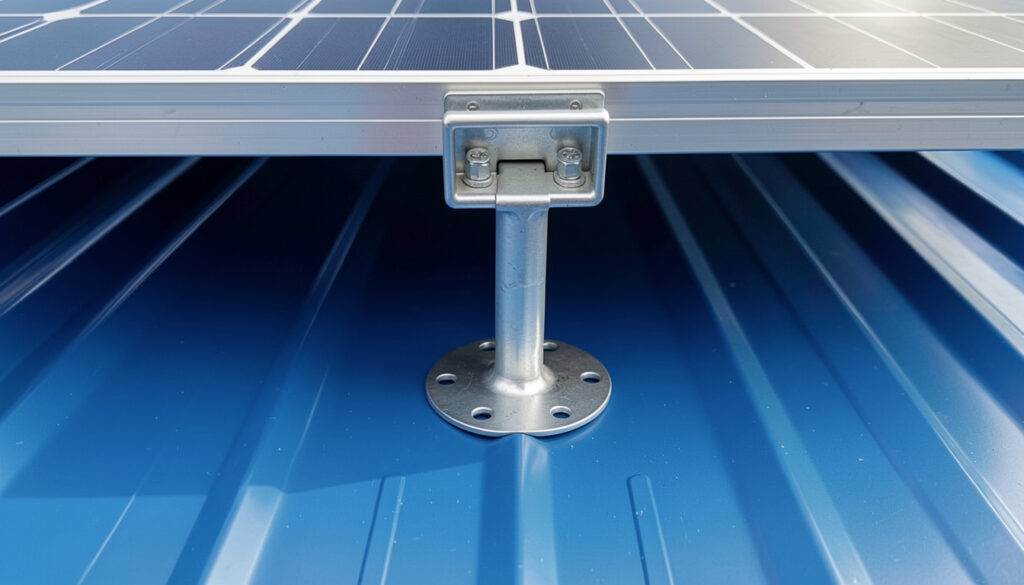
Butlerib II roofs can also be used with compatible solar attachment solutions.
Butler Metal Building Parts currently identifies S-5 RibBracket III and PVKIT solutions for Butlerib II and other exposed-fastened roof profiles.
Solar mounting should be treated separately from the roof’s original panel attachment system.
The mounting hardware needs to be selected for the specific roof profile and solar application.
Don’t Drill Unnecessary Roof Holes
Additional penetrations can create opportunities for water intrusion.
Solar, HVAC, electrical, and other modifications should use an attachment method appropriate for the roof system.
For solar applications specifically, compatible S-5 solutions are designed to attach to applicable metal roof profiles without relying on unnecessary roof penetrations.
Common Problems With Butlerib II Roof Panel Clips
Loose Attachment Hardware
Loose hardware can allow unwanted panel movement and should be evaluated promptly.
Missing Fasteners
Missing attachment hardware can compromise the intended connection between the roof panel and supporting structure.
Incorrect Replacement Hardware
Generic hardware may not provide the correct dimensions, strength, or compatibility.
Corrosion
Corroded hardware can lose material strength and compromise the connection.
Damaged Washers
Damaged sealing washers can create potential water-entry points.
Failed Sealant
Deteriorated sealant can allow water to reach attachment points and panel joints.
Misaligned Panels
Poor alignment can affect both appearance and weather resistance.
Damaged Roof Ribs
Bent or damaged ribs can prevent components from fitting correctly.
Improper Field Drilling
Unnecessary drilling can create additional penetrations and potential leak points.
Wrong Roof System
Ordering components for MR-24 or VSR II when the building has Butlerib II can result in an incompatible part.
Things to Know
- Butlerib II is an exposed-fastened rib-type metal roof system.
- The roof panel has a 1½-inch deep corrugation profile.
- Factory-punched components support consistent installation and alignment.
- Factory-slotted holes accommodate thermal expansion and contraction.
- Butler Scrubolt fasteners are part of the Butlerib II system.
- Roof attachment components should be matched to the correct Butler roof system.
- Sealants and closures work alongside mechanical attachments to improve weather resistance.
- Damaged or corroded attachment hardware should be inspected rather than concealed.
- Roof panel replacement is an opportunity to inspect surrounding attachment components.
- Solar mounting requires compatible hardware designed for the specific roof profile.
- Avoid unnecessary roof penetrations during modifications.
Frequently Asked Questions
Q: What are Butlerib II roof panel clips?
They are components used as part of the roof panel attachment system to connect and support the roof assembly.
The exact component configuration depends on the location and specific Butlerib II roof construction.
Q: What type of roof is Butlerib II?
Butlerib II is an exposed-fastened rib-type metal roof system.
Its roof panels have a 1½-inch deep corrugation profile.
Q: Why does Butlerib II use slotted holes?
The factory-slotted holes allow the roof panels to accommodate thermal expansion and contraction.
Q: What fasteners are used with Butlerib II?
Butler’s system documentation identifies Butler Scrubolt fasteners for panel attachment.
The appropriate replacement fastener should be verified for the specific application.
Q: Can I use generic screws to replace Butler roof fasteners?
Do not assume that a generic screw is an equivalent replacement.
Attachment hardware should be selected based on the roof system, structural requirements, dimensions, and applicable specifications.
Q: How do I know which replacement clip or attachment component I need?
First identify the Butler roof system, panel profile, location of the component, and existing hardware.
Photographs and measurements can also help identify the correct replacement.
Q: Can Butlerib II roof panels be replaced individually?
Yes, damaged or aging Butlerib II panels can be replaced.
The surrounding attachment hardware, sealants, and closures should also be inspected during the repair.
Q: Why are roof clips and fasteners important?
They help transfer loads between the roof panel assembly and supporting structure while maintaining the intended roof configuration.
Their condition can therefore affect roof performance.
Q: Can loose roof hardware cause leaks?
It can contribute to roof problems, particularly when the connection or surrounding weather seal has been compromised.
The source of the leak should be properly identified rather than assuming the fastener is the only problem.
Q: Can Butlerib II roofs be used for solar panels?
Yes, compatible solar mounting solutions are available for Butlerib II and similar exposed-fastened roof profiles.
The solar attachment must be selected for the specific roof profile and project requirements.
Q: Should I replace the attachment hardware when replacing a roof panel?
It depends on the condition of the existing hardware.
If fasteners, washers, clips, or related components show corrosion, damage, or deterioration, they should be evaluated for replacement.
Q: How can I order the correct Butlerib II roof components?
Provide the building and roof information, photographs, measurements, and the components you need.
This helps determine the appropriate replacement parts for the existing Butler system.
The Bottom Line on Butlerib II Roof Panel Clips
The attachment components used with a Butlerib II roof are small compared with the roof panels themselves, but they play an important role in keeping the roof assembly properly connected and weather-resistant.
Butlerib II’s 1½-inch corrugated profile, factory-punched components, slotted holes for thermal movement, and Butler Scrubolt fasteners are part of an engineered roof system rather than isolated hardware choices.
When repairing an existing Butlerib II roof, identify the exact roof system before ordering replacement components. Inspect the surrounding panels, fasteners, sealants, closures, and structural connections rather than replacing only the visibly damaged piece.
If you need Butlerib II roof panel clips, fasteners, replacement panels, or other Butler roof components, Request a Quote and provide your building information, roof type, measurements, and photographs of the existing components.