

Insulated metal panels (IMPs) are factory-engineered sandwich panels that combine an exterior metal skin, a rigid foam core, and an interior metal facing into one continuous unit. Traditional metal building insulation, by contrast, uses separate components typically fiberglass batts or rigid board products installed after the structural shell is in place.
Key Takeaways
- IMPs deliver thermal performance and air sealing in a single factory-built panel, while traditional systems rely on multiple field-installed layers.
- Traditional insulation carries lower upfront material costs, but IMPs often reduce total installed cost through faster labor and fewer trades on site.
- Thermal bridging is a significant weakness of traditional metal building insulation; IMPs largely eliminate this problem by design.
- Commercial buildings account for 35.6% of IMP market demand, signaling strong industry confidence in the technology for high-performance structures.
- Both systems can meet current energy codes, but IMPs make code compliance easier and more consistent across the building envelope.
- The right choice depends on your budget structure, project timeline, and long-term operational cost priorities.
Why the Insulation Method You Choose Has Real Consequences
Buildings are energy-intensive by nature. The International Energy Agency reported that buildings represented 30% of global energy demand in 2025, consuming over 450 exajoules of final energy during 2024. In metal structures specifically, insulation performance has an outsized effect on heating and cooling costs because metal is a strong thermal conductor.
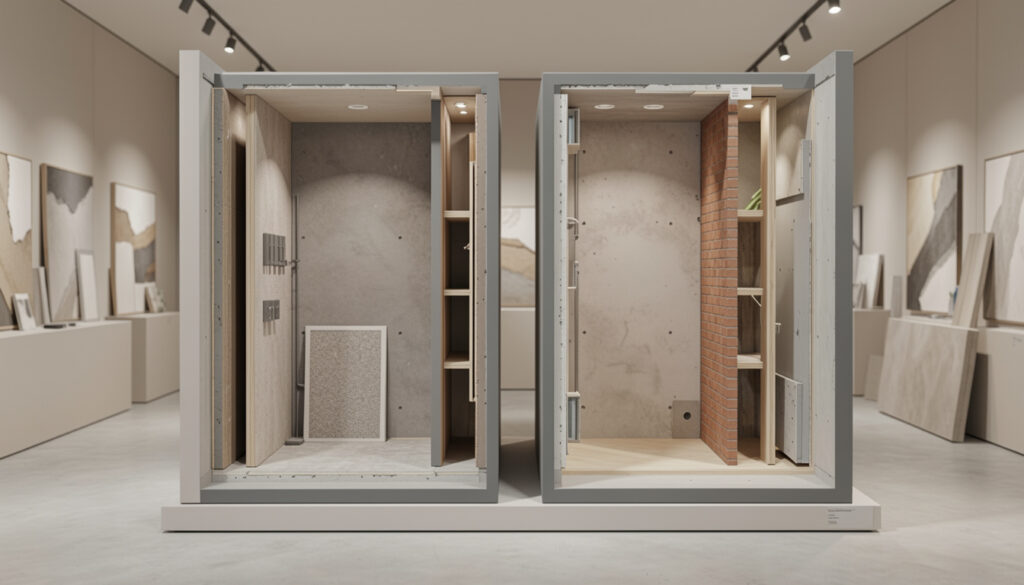
Traditional fiberglass batt insulation installed between metal framing members is vulnerable to thermal bridging. The metal framing itself conducts heat around the insulation, reducing the effective R-value below the rated value of the batt. A wall rated at R-19 can perform significantly below that in practice because of bridging at every framing member. This is a well-documented limitation in the building science community, not a fringe concern.
IMPs address this directly. Because the insulating foam core is continuous across the panel face with no penetrating metal, thermal bridging is minimized by design. Polyurethane foam, which captures 52.2% of IMP insulation material market share according to Market.US (2025), provides high R-value per inch and acts as an integrated air barrier simultaneously.
How Installation and Labor Costs Compare
Traditional metal building insulation systems typically cost less per square foot for materials. Fiberglass batts are widely available, and the installation process is familiar to most contractors. For budget-constrained projects where initial cost is the overriding concern, this remains a legitimate advantage.
IMPs, however, can compress the construction schedule meaningfully. Because each panel arrives pre-engineered with insulation already bonded, you eliminate a separate insulation trade and reduce weather-related delays during the building envelope phase. For time-sensitive commercial or cold-storage projects, the schedule savings can offset the higher unit cost.
Here is a side-by-side breakdown of the key trade-offs:
| Factor | Insulated Metal Panels | Traditional Metal Building Insulation |
|---|---|---|
| Upfront material cost | Higher | Lower |
| Installation complexity | Moderate, fewer trades | Higher, separate install step |
| Thermal bridging risk | Low | High without additional measures |
| Air barrier integration | Yes, built-in | Requires additional membrane |
| Long-term energy efficiency | Strong | Variable, depends on installation quality |
| Typical lifespan | 60+ years (McElroy Metal, 2026) | Varies by product and exposure |
| Aesthetic finish options | Many panel profiles and colors | Typically concealed by interior finish |
Which Projects Favor Each System?
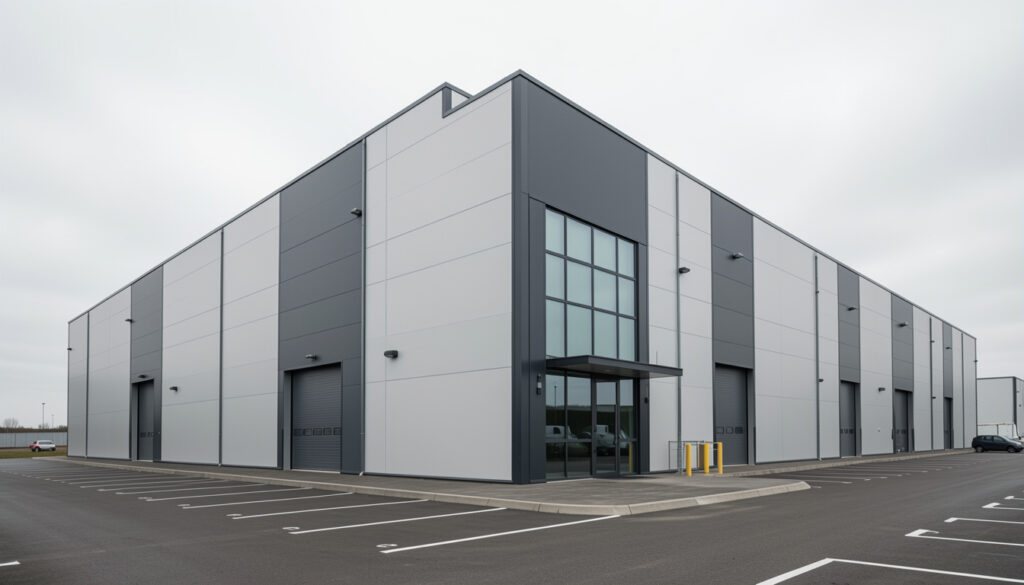
Commercial buildings lead IMP adoption at 35.6% of total market share, with new construction accounting for 60.2% of that demand, according to Market.US (2025). Cold storage facilities, food processing plants, data centers, and high-end commercial facades are environments where continuous insulation and airtightness justify the IMP premium.
Traditional systems remain competitive in:
- Agricultural and industrial buildings with minimal thermal performance requirements
- Retrofit projects where panel replacement is not practical
- Low-budget structures where long-term energy cost analysis is not a priority
- Projects with irregular wall geometries that make panel systems difficult to detail
The global IMP market was valued at $9.4 billion in 2024 and is projected to reach $10.03 billion in 2025 at a 6.7% CAGR through 2033, per SkyQuest (2026). That sustained growth reflects real project-level decisions by owners and developers who are choosing integrated panel systems over field-assembled alternatives.
Things to Know
- Vapor management differs between systems. IMPs integrate the vapor retarder within the panel; traditional systems require careful detailing of a separate membrane to avoid condensation problems.
- Not all IMPs carry the same fire ratings. Verify that your selected panel meets local code requirements, particularly for occupancies with strict fire separation rules.
- Field cutting of IMPs requires care to protect the foam core from moisture intrusion at edges and penetrations.
- Traditional insulation performance degrades over time if the material settles, gets wet, or is compressed during installation.
Frequently Asked Questions
Q: Are insulated metal panels worth the extra upfront cost?
For most commercial and industrial applications, yes, when you factor in labor savings and long-term energy performance.
The faster installation timeline reduces contractor hours, and the continuous insulation reduces operational heating and cooling costs over the building’s life. The math shifts when budget constraints are severe or thermal performance is not a priority.
Q: Can traditional metal building insulation meet current energy codes?
Yes, but it typically requires additional layers or thermal break strategies to achieve compliance consistently.
Many energy codes now require continuous insulation in commercial buildings. Meeting that requirement with fiberglass batts alone is difficult without supplemental rigid board insulation, which adds cost and complexity.
Q: How long do insulated metal panels last?
Metal panel systems are documented to last 60 or more years with minimal maintenance, according to McElroy Metal (2026).
The steel facings resist impact, weather, and UV exposure well. The foam core is protected from the elements by both faces, which limits degradation over time compared to exposed insulation materials.
Q: Can IMPs be used in retrofit projects?
Yes, though retrofit applications require careful planning around existing structure dimensions and attachment points.
New construction is where IMPs are most cost-effective, accounting for 60.2% of market demand. Retrofit projects can work, particularly when re-cladding an aging facade, but require an experienced contractor to manage detailing at openings and transitions.
Q: What is the most common insulation core in commercial IMPs?
Polyurethane foam is the dominant core material, holding 52.2% of the IMP insulation material market share per Market.US (2025).
Polyisocyanurate (polyiso) and mineral wool cores are also available. Each offers different R-value per inch, fire performance, and cost profiles depending on project needs.