

The interior wall system of a metal building has to withstand a different set of conditions than the exterior. Forklifts, equipment, stored materials, maintenance work, and everyday building activity can expose insulation and structural components to damage if they are left unprotected.
The MOD 36 Liner Panel is a factory-formed metal interior panel designed to create a finished wall surface while protecting blanket insulation behind the panel. It can be installed at partial height according to girt spacing or extended to the full height of the wall.
Its symmetrical rib profile provides a clean appearance while adding rigidity to the panel. The system is designed for commercial and industrial Butler buildings where interior durability, insulation protection, and ease of maintenance are important.
Key Takeaways
- MOD 36 liner panels create a finished interior wall surface for Butler metal buildings.
- The panels are installed on the inside of wall girts and can protect blanket insulation.
- MOD 36 can be installed at partial height or extend to the full wall height.
- The panel has approximately a ½-inch-deep corrugation that provides both visual definition and added strength.
- Available gauges and finishes allow the system to be matched to different building requirements.
- Factory-punched panels and structural members can support faster, more accurate installation.
- Predesigned transition materials help connect MOD 36 with doors, windows, wall systems, and other building components.
- Butler-Cote finishes provide a durable surface designed for long-term color retention.
- MOD 36 is suitable for warehouses, industrial buildings, commercial facilities, and retrofit projects.
- Individual panels can be replaced when sections become damaged or worn.
- Proper measurements are important when ordering replacement panels for an existing Butler building.
What Is a MOD 36 Liner Panel?
A MOD 36 liner panel is an interior metal panel installed within a Butler building’s wall assembly.
Rather than leaving the insulation and structural framing exposed, the liner creates a finished interior surface.
The system serves two primary purposes: interior protection and appearance.
It can help protect blanket insulation from everyday activity while giving the building a cleaner, more finished interior appearance.
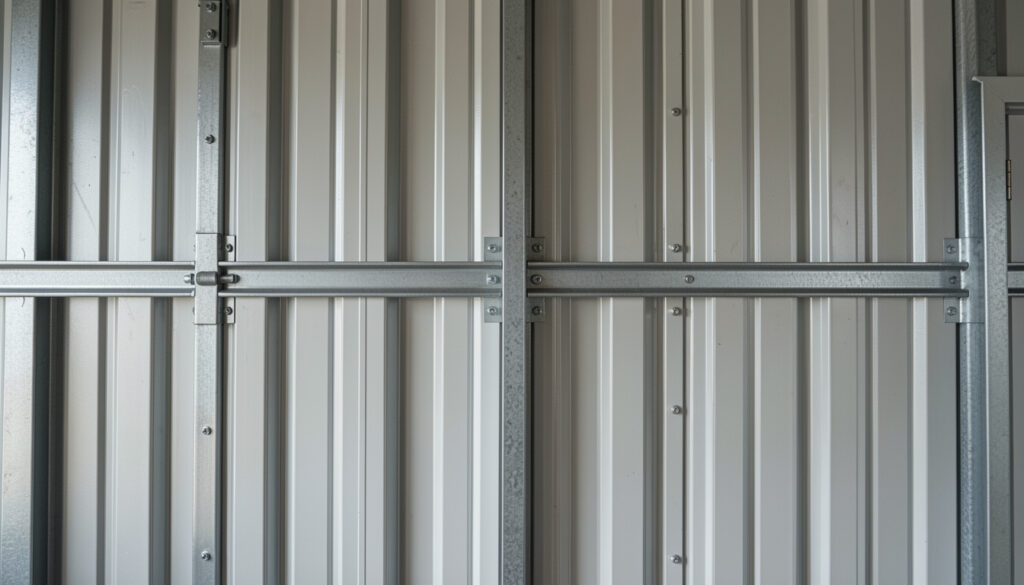
The MOD 36 liner is designed to attach to the inside of wall girts and can be installed as either a partial-height or full-height liner system.
How the MOD 36 Liner System Works
The basic wall assembly can be thought of as several layers working together.
The exterior wall panel protects the building from weather. Insulation provides thermal resistance. Structural framing supports the wall assembly. The MOD 36 liner then creates the interior-facing surface.
A simplified assembly is:
Exterior wall panel → insulation → structural framing → MOD 36 liner panel → interior space
The exact assembly varies according to the Butler building system, insulation method, and project requirements.
The liner should therefore be considered part of the complete building envelope rather than an isolated interior finish.
Why Use a Metal Interior Liner?
Leaving insulation exposed inside a commercial or industrial building can create several practical problems.
Insulation can be damaged by equipment, punctured during maintenance, or contaminated by dust and other materials.
A metal liner creates a protective barrier between the occupied space and the insulation.
It can also improve the visual appearance of the building by concealing:
- Blanket insulation
- Wall girts
- Fasteners
- Portions of the structural framing
- Other exposed wall components
For buildings where the interior is frequently occupied or visible, this can make a substantial difference.
MOD 36 Panel Profile
The MOD 36 liner features a symmetrical rib profile with approximately ½-inch-deep corrugations. The corrugations provide a clean, consistent appearance while adding strength to the panel.
The relatively shallow profile gives MOD 36 a more understated appearance than deeper-ribbed liner systems.
This makes it appropriate for projects where the owner wants the durability of a metal liner without an overly pronounced interior profile.
Protecting Blanket Insulation
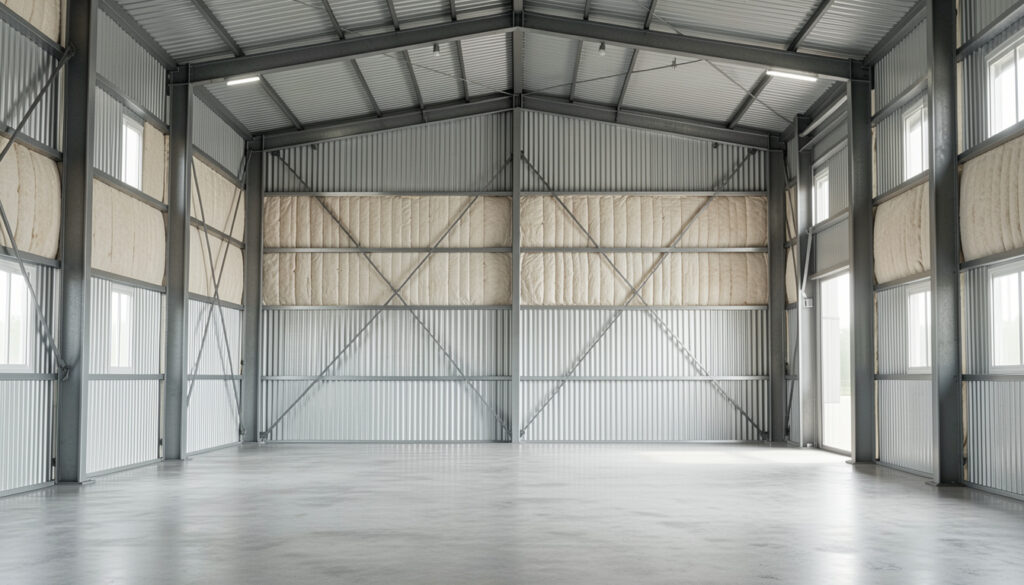
One of the most important functions of an interior liner is protecting the insulation.
Blanket insulation can be effective at improving the thermal performance of a metal building, but leaving it exposed to an active interior environment can increase the possibility of physical damage.
MOD 36 provides a rigid metal surface over the insulation.
This can help protect against:
- Accidental impact
- Material handling
- Equipment contact
- Routine maintenance activity
- General interior wear
The liner does not replace the insulation. Instead, the two components work together as part of the building’s wall assembly.
Partial-Height MOD 36 Installation
Not every building needs a liner extending from floor to ceiling.
Partial-height installation can be useful when the primary objective is protecting the lower portion of the wall.
For example, a warehouse with frequent forklift traffic may concentrate liner protection in areas where equipment and stored materials are most likely to contact the wall.
Partial-height installation can also reduce material requirements while still protecting the most vulnerable portion of the interior wall.
The appropriate height depends on the building’s use and the existing girt layout.
Full-Height MOD 36 Installation
Full-height installation provides a continuous finished interior surface.
This can be appropriate for:
- Commercial facilities
- Manufacturing buildings
- Warehouses
- Service facilities
- Equipment buildings
- Utility buildings
- High-traffic industrial spaces
A full-height liner can provide a more consistent interior appearance and additional protection for the underlying insulation.
MOD 36 for Warehouses
Warehouses can be particularly demanding environments for interior wall systems.
Forklifts, pallet racks, carts, stored materials, and shipping operations can expose walls to regular contact.
A metal liner provides a durable surface that can withstand everyday use better than exposed insulation.
MOD 36 can also create a cleaner interior appearance in facilities where employees, customers, vendors, or inspectors regularly enter the building.
MOD 36 for Industrial Facilities
Industrial buildings often require interior surfaces that can withstand demanding operating conditions.
Manufacturing equipment, maintenance operations, and material handling can create substantial wear.
A MOD 36 liner can help protect the insulation and provide a durable interior surface.
However, specialized industrial environments should be evaluated separately.
Facilities involving chemicals, extreme temperatures, corrosive atmospheres, or specialized sanitation requirements may require specific material and coating considerations.
MOD 36 for Commercial Buildings
Interior liners are not limited to warehouses and manufacturing facilities.
MOD 36 can also be used where a durable industrial aesthetic is appropriate.
Potential applications include:
- Commercial warehouses
- Retail facilities
- Service buildings
- Equipment facilities
- Maintenance buildings
- Utility structures
The symmetrical rib profile provides a relatively clean architectural appearance while retaining the practical benefits of a steel liner.
MOD 36 Gauge Options
MOD 36 is available in multiple gauges depending on the configuration and finish selected.
The manufacturer’s product information lists 28 and 22 gauge options in polyester white or Galvalume finishes, with 24 and 26 gauge options available in Butler standard wall-covering colors.
The current product page also identifies multiple gauge options for the system.
The appropriate gauge should be selected based on the project’s structural, durability, appearance, and budget requirements.
For replacement work, matching the existing panel gauge can be particularly important.
Butler-Cote Finish
MOD 36 panels are available with the Butler-Cote premium finish.
Butler describes the coating as using 70% Kynar 500 or Hylar 5000 resin and states that the finish is designed to resist fading and chalking. The product information identifies a 25-year warranty against chalking and fading and an expected service life of 45 years.
For interior applications, the coating contributes to both appearance and long-term durability.
The available color options can also help coordinate the liner with the rest of the building’s interior and exterior finish selections.
Cleaning and Maintenance
A major advantage of a metal liner system is its relatively straightforward maintenance.
Unlike exposed fiberglass insulation, a finished metal liner provides a solid surface that can be cleaned and inspected.
Routine maintenance may include:
- Removing dust and debris
- Cleaning accumulated dirt
- Inspecting panel surfaces
- Checking fasteners
- Looking for corrosion
- Inspecting seams and transitions
- Checking areas around doors and equipment
Cleaning products should always be compatible with the selected coating.
Abrasive cleaners or aggressive chemicals can damage the finish.
Factory-Punched Components
MOD 36 panels and their supporting structural members can be factory-punched to support precise alignment and faster installation.
Factory punching can reduce field modification and help maintain consistent panel positioning.
This can be particularly useful on larger projects where numerous panels need to align with the building’s structural system.
For replacement work, however, the existing building should still be measured carefully.
Older Butler buildings may have field conditions that differ from current construction specifications.
Transition Materials
Interior liner panels need to transition around other building components.
Common transition points include:
- Doors
- Windows
- Corners
- Wall systems
- Base conditions
- Other interior finishes
Butler’s MOD 36 system uses predesigned and factory-fabricated transition materials intended to simplify these connections. The company states that these components are available in Butler-Cote finish colors.
Proper transitions help create a cleaner appearance and reduce unnecessary field modification.
MOD 36 Around Doors and Windows
Doors and windows interrupt the continuous wall surface, so the liner must be detailed around these openings.
Poorly planned transitions can leave:
- Exposed insulation
- Unfinished panel edges
- Gaps
- Difficult-to-maintain areas
A properly detailed liner system provides a finished transition around the opening.
When replacing panels in an existing building, photograph and measure these areas before ordering materials.
MOD 36 at Interior Corners
Interior corners are another important part of liner installation.
The panel system should transition cleanly from one wall to the next without leaving exposed insulation or unfinished edges.
Corner and transition components can help create a consistent interior finish.
The exact detail will depend on the building’s geometry and existing wall system.
MOD 36 Base Conditions
The bottom of an interior liner is exposed to a different set of conditions than the upper wall.
Cleaning activities, water, equipment, and material handling can affect the base of the wall.
Proper base detailing should therefore account for:
- Floor elevation
- Moisture exposure
- Cleaning requirements
- Base trim
- Insulation
- Panel termination
The specific detail should be coordinated with the existing Butler building system.
MOD 36 and Interior Moisture
A liner panel can protect insulation from the occupied interior, but it is not by itself a complete moisture-control system.
Condensation and moisture problems can involve several components of the building envelope.
These may include:
- Insulation
- Vapor retarders
- Air barriers
- Exterior panels
- Flashing
- Sealants
- HVAC systems
- Interior humidity
A building experiencing persistent condensation should be evaluated as a complete assembly rather than simply replacing the interior liner.
MOD 36 vs. Butlerib II Liner Panel
MOD 36 and Butlerib II are both Butler interior liner systems, but their profiles are different.
MOD 36 uses a symmetrical rib profile with approximately ½-inch-deep corrugations, while Butlerib II uses a substantially deeper rib profile.
| Factor | MOD 36 Liner Panel | Butlerib II Liner Panel |
|---|---|---|
| Primary application | Interior liner | Interior liner |
| Rib profile | Symmetrical, approximately ½-inch deep | Deeper ribbed profile |
| Interior appearance | Clean, understated | More pronounced ribbed appearance |
| Insulation protection | Yes | Yes |
| Partial-height installation | Yes | Yes |
| Full-height installation | Yes | Yes |
| Replacement use | Yes | Yes |
| Finish options | Multiple finish configurations | Multiple finish configurations |
The appropriate system depends on the existing building, desired appearance, and project requirements.
For a replacement project, compatibility with the existing panel profile should take priority over simply choosing the visually preferred panel.
MOD 36 vs. Exposed Insulation
An exposed insulation system and an interior metal liner serve different purposes.
| Factor | MOD 36 Liner | Exposed Insulation |
|---|---|---|
| Finished appearance | Yes | Limited |
| Physical protection | Stronger | More vulnerable |
| Cleanability | Easier | More difficult |
| Insulation protection | Yes | No additional liner protection |
| Interior durability | High | Lower |
| Maintenance | Straightforward | More difficult |
For buildings with high interior traffic, a liner can provide significant practical benefits.
MOD 36 for Retrofit Projects
Existing Butler buildings may eventually require interior liner replacement because of damage, age, moisture exposure, or building renovations.
MOD 36 can be used in retrofit situations when the existing structure and panel configuration are compatible.
Before ordering replacement panels, verify:
- Panel width
- Panel length
- Rib profile
- Gauge
- Finish
- Girt spacing
- Fastener locations
- Wall height
- Base condition
- Corner details
- Door and window openings
These measurements help prevent ordering a visually similar panel that does not properly fit the existing system.
Common Problems With MOD 36 Liner Panels
Dented Panels
Forklifts, equipment, carts, and stored materials can strike interior panels and create dents.
Scratched Finish
Repeated contact, abrasive materials, or improper cleaning can damage the panel coating.
Loose Fasteners
Fasteners may loosen because of vibration, impact, or installation issues.
Corrosion
Moisture exposure and damaged coatings can contribute to corrosion over time.
Damaged Panel Edges
Impact or improper handling can deform panel edges and complicate replacement.
Poor Panel Alignment
Incorrect measurements or field modifications can result in inconsistent panel alignment.
Damaged Transition Trim
Doors, windows, corners, and base areas can experience impact and wear that damages surrounding trim.
Exposed Insulation
Damaged or missing liner sections can expose the insulation behind the panel.
Moisture Problems
Water intrusion or persistent condensation can affect the liner, insulation, and surrounding wall assembly.
Signs Your MOD 36 Liner Needs Replacement
A damaged liner does not always require replacement of the entire interior wall.
However, individual panels should be inspected when you notice:
- Significant dents
- Severe scratches
- Corrosion
- Missing fasteners
- Loose panels
- Damaged ribs
- Bent panel edges
- Damaged trim
- Exposed insulation
- Water staining
- Persistent moisture
Replacing damaged sections early can help prevent the problem from spreading to surrounding components.
Things to Know
- MOD 36 is an interior liner panel designed to protect blanket insulation and provide a finished wall surface.
- The panel can be installed at partial height or extended to the full height of the wall.
- Its symmetrical rib profile is approximately ½ inch deep.
- Multiple gauges and finish configurations are available.
- Factory-punched panels and structural members can support faster and more accurate installation.
- Predesigned transition materials can simplify connections around doors, windows, and other building components.
- Butler-Cote finishes are designed for long-term resistance to fading and chalking.
- MOD 36 can be used for both new construction and compatible replacement applications.
- Existing panel dimensions and structural conditions should be verified before ordering replacement material.
- The liner is part of the interior wall assembly and should not be treated as a replacement for insulation or moisture-control components.
- Severe impact should be inspected for possible damage behind the liner.
Frequently Asked Questions
Q: What is a MOD 36 liner panel?
A MOD 36 liner panel is a factory-formed metal interior wall panel used to create a finished surface and protect blanket insulation inside a Butler metal building.
Q: Where is MOD 36 installed?
MOD 36 is installed on the interior side of wall girts and can extend from partial height to the full height of the wall.
Q: How deep are the MOD 36 corrugations?
The MOD 36 profile has approximately ½-inch-deep corrugations.
Q: Can MOD 36 protect insulation?
Yes.
One of the primary purposes of the liner is to provide a durable interior surface that protects the blanket insulation behind it.
Q: Can MOD 36 be installed only on the lower portion of a wall?
Yes.
The system can be installed at partial height based on the building’s girt spacing and protection requirements.
Q: Is MOD 36 available in different gauges?
Yes.
The manufacturer’s specifications identify 28, 26, 24, and 22 gauge configurations depending on the selected finish and application.
Q: Is MOD 36 suitable for warehouses?
Yes.
Its durable metal surface can provide additional protection in warehouses where forklifts, equipment, and stored materials can expose interior walls to regular wear.
Q: Can MOD 36 be used to replace damaged liner panels?
Yes, when the replacement panel is compatible with the existing Butler building system.
Existing dimensions, profile, gauge, fastener locations, and structural conditions should be verified before ordering.
Q: How does MOD 36 compare with Butlerib II liner panels?
Both provide interior protection, but they use different rib profiles.
MOD 36 has a symmetrical approximately ½-inch-deep profile, while Butlerib II uses a deeper ribbed profile.
Q: Does MOD 36 require a separate finish?
No.
MOD 36 is available with finished steel options, including Butler-Cote configurations designed for durability and long-term appearance.
Q: Can MOD 36 be used around doors and windows?
Yes.
Predesigned transition materials are available to coordinate the liner system with doors, windows, other wall systems, and conventional building materials.
The Bottom Line on MOD 36 Liner Panels
MOD 36 liner panels provide a practical combination of interior protection, durability, and finished appearance for Butler metal buildings.
The symmetrical ½-inch-deep rib profile, multiple gauge options, factory-punched installation capabilities, transition materials, and durable finish options make MOD 36 suitable for many commercial and industrial applications.
For replacement projects, the most important consideration is compatibility with the existing Butler building. Panel profile, dimensions, gauge, girt spacing, fastener locations, finish, and surrounding trim should all be verified before ordering.
If you are replacing damaged liner panels or upgrading an existing Butler building interior, Request a Quote and provide the existing panel measurements and photographs of the installation. This information can help determine the appropriate MOD 36 liner configuration for your building.