

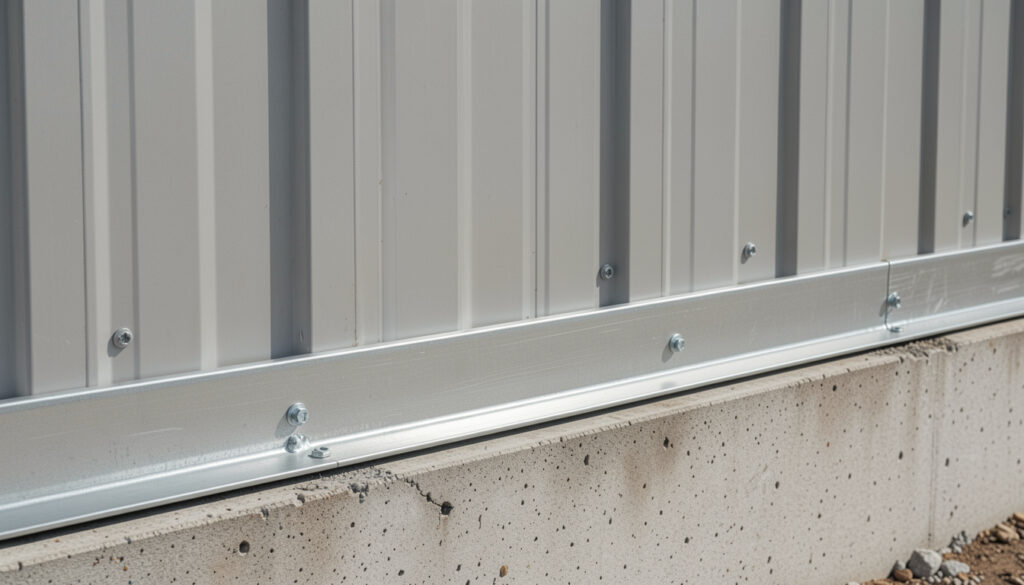
Base trim is installed along the bottom edge of exterior metal wall panels. It provides a transition between the wall system and the building foundation, slab, or base condition while helping protect the lower portion of the wall from moisture and physical damage.
For Butler metal buildings, properly fitted base trim helps maintain the appearance and weather resistance of the wall system. It is particularly important around areas where water, dirt, equipment, and foot traffic can affect the bottom portion of the wall.
Key Takeaways
- Base trim protects the lower edge of exterior metal wall panels.
- It helps create a finished transition between the wall and building base.
- Proper installation can reduce exposure to moisture and debris.
- Base trim should match the Butler wall panel profile and base configuration.
- Damage can occur from corrosion, impact, water exposure, or deteriorated fasteners.
- Base trim should be inspected during wall-panel replacement and building maintenance.
- Accurate measurements are important when ordering replacement trim.
- Base trim works together with fasteners, sealants, wall panels, and other trim components.
What Is Base Trim?
Base trim is a formed metal component installed at the bottom of a metal wall system.
The lower edge of a wall panel is particularly vulnerable because it is close to the ground and exposed to:
- Rainwater
- Splashback
- Dirt
- Snow or standing water
- Equipment
- Landscaping
- Cleaning activities
Base trim helps protect this edge while providing a cleaner transition between the wall and the building’s base.
Why Base Trim Matters
The bottom of a wall panel is exposed to more moisture and physical contact than much of the upper wall.
Rainwater can splash from the ground onto the panel, while equipment and maintenance activities can cause accidental impacts.
A properly installed base trim helps protect this vulnerable transition and can contribute to the overall durability of the wall system.
It also gives the lower edge of the building a consistent finished appearance.
Base Trim and Butler Wall Panels
The correct base trim depends on the wall panel system.
Butler buildings can use different wall configurations, including Butlerib II, Shadowall, and Stylwall II.
Each panel profile can have different dimensions and attachment details.
For that reason, replacement base trim should be matched to the existing wall system rather than selected solely by overall dimensions.
Butler Metal Wall Panels can help identify the major Butler wall systems when determining the appropriate replacement components.
Base Trim and Moisture Protection
Water management is one of the primary considerations at the bottom of a metal wall.
Base trim helps create a controlled transition between the wall panel and the building base.
However, base trim is only one part of the assembly. Proper drainage, foundation detailing, sealants, fasteners, and panel installation all contribute to keeping water away from vulnerable areas.
If water is consistently accumulating against the bottom of the wall, replacing the trim alone may not solve the underlying problem.
Common Problems With Base Trim
Corrosion
Continuous exposure to moisture can cause corrosion, particularly where the protective coating has been damaged.
Impact Damage
Forklifts, vehicles, lawn equipment, and other machinery can strike the lower wall and deform the trim.
Loose Fasteners
Fasteners may loosen or deteriorate over time, allowing sections of trim to separate from the wall.
Water Damage
Persistent water exposure can affect the trim and surrounding wall components.
Deteriorated Sealant
Sealants used around certain base conditions can lose adhesion or flexibility over time.
When Should Base Trim Be Replaced?
Inspect base trim when you notice:
- Visible rust or corrosion
- Bent or crushed sections
- Missing fasteners
- Loose trim
- Open joints
- Damaged coating
- Persistent moisture around the wall base
- Water staining
- Damage from vehicles or equipment
If the underlying wall panel remains intact, replacing damaged base trim may be sufficient.
If the wall panel or structural components are also damaged, the entire area should be evaluated before repairs are completed.
Base Trim During Wall Panel Replacement
Replacing wall panels provides an opportunity to inspect the base condition.
Before installing new panels, check the:
- Existing base trim
- Fasteners
- Sealants
- Foundation interface
- Wall panel edges
- Drainage conditions
If the existing base trim is severely damaged or does not properly match the replacement panel, replacing it at the same time can provide a more consistent installation.
How to Identify Replacement Base Trim
For an existing Butler building, gather:
- Butler wall system
- Wall panel profile
- Panel dimensions
- Existing base trim dimensions
- Building age
- Fastener type
- Base configuration
- Photographs of the wall bottom
Measurements and clear photographs can make it easier to identify the appropriate replacement component, especially on older buildings where original documentation may not be available.
Things to Know
- Base trim should match the wall panel profile.
- Do not ignore corrosion at the bottom of wall panels.
- Inspect the foundation and drainage conditions when investigating moisture problems.
- Check fasteners and sealants when replacing damaged trim.
- Impact damage may extend beyond the visible trim.
- Different Butler wall systems may require different base trim profiles.
- Accurate measurements and photographs are useful when ordering replacement components.
Frequently Asked Questions
Q: What is base trim used for on a metal building?
Base trim protects and finishes the bottom edge of exterior metal wall panels where they meet the building base.
Q: Can damaged base trim cause water problems?
Yes. Damaged or improperly fitted base trim can contribute to moisture entering or accumulating around the wall base.
However, drainage and foundation conditions should also be inspected.
Q: Can I replace base trim without replacing the wall panels?
In many cases, yes.
If the wall panels and supporting structure remain in good condition, damaged base trim can often be replaced separately.
Q: What causes metal building base trim to rust?
Moisture exposure, damaged coatings, standing water, and environmental conditions can contribute to corrosion.
Q: How do I know which base trim fits my Butler building?
Identify the Butler wall system and panel profile, then measure the existing base trim and document the installation with photographs.
Q: Should base trim be replaced when replacing wall panels?
It should be inspected during wall-panel replacement.
If the existing trim is damaged or incompatible with the new panels, replacement may be appropriate.
The Bottom Line on Butler Building Base Trim
Base trim protects the lower edge of a metal wall system while providing a finished transition between the wall and building base. Because this area is frequently exposed to moisture, dirt, impact, and physical wear, damaged base trim should not be overlooked during building maintenance.
For Butler buildings, the replacement component should match the existing wall panel profile and base configuration. Inspect the surrounding wall, fasteners, sealants, and drainage conditions as part of the repair.
Need replacement base trim for your Butler metal building? Request a Quote and provide your Butler wall system, measurements, and photos of the existing base condition.