

Moduleze II soffit panels are an important component of the Butler metal building envelope, providing a finished underside to roof overhangs while helping create a clean transition between the roof and exterior walls.
Although soffit panels are not exposed to the same conditions as the primary roof panels, they still have an important role in the building’s overall appearance, weather protection, and ventilation strategy.
For owners of existing Butler buildings, damaged or deteriorated soffit panels can become noticeable during exterior inspections, roof repairs, or building renovations. Replacing individual panels may also require attention to surrounding trim, fasteners, ventilation openings, and adjacent roof components.
Understanding how the Moduleze II soffit system works can help when planning replacement parts or repairs.
Key Takeaways
- Moduleze II is a soffit panel system designed for Butler metal buildings.
- Soffit panels finish the underside of roof overhangs and eave areas.
- Properly installed soffits contribute to a clean and finished exterior appearance.
- Soffit systems can be incorporated into a building’s ventilation strategy.
- Damaged panels should be inspected along with surrounding trim and attachment components.
- Water intrusion around soffits can originate from the roof, wall, flashing, or eave area.
- Replacement panels should match the existing Moduleze II system.
- Ventilation openings should not be unintentionally blocked during repairs.
- Soffit repairs can often be coordinated with roof and eave maintenance.
- Accurate measurements and photographs can help identify replacement components.
What Is a Soffit Panel?
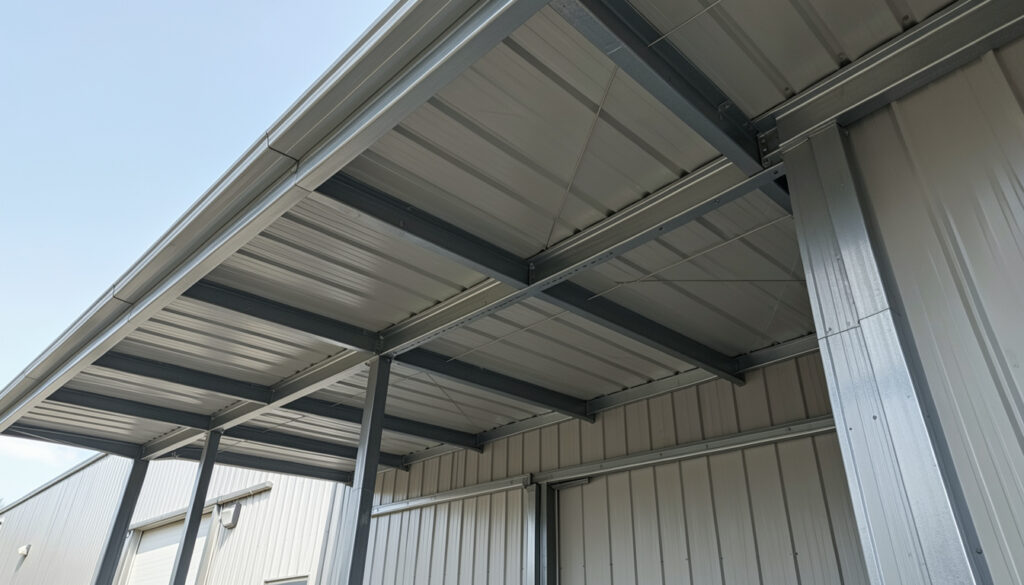
A soffit panel is the material installed underneath a roof overhang.
On a metal building, the soffit provides a finished surface between the exterior wall and the roof edge.
Without a soffit, structural framing, insulation, or other components may remain visible beneath the overhang.
The soffit creates a more finished appearance while also forming part of the building envelope at the eave.
What Is Moduleze II?
Moduleze II is a Butler soffit system designed to provide a finished, modular soffit surface for Butler metal building applications.
Its panelized construction allows the soffit to be assembled from individual sections rather than treating the entire underside of the roof overhang as one continuous piece.
This modular approach can be useful when individual sections become damaged and require replacement.
Where Is the Moduleze II Soffit Located?
Moduleze II soffit panels are installed in the underside of roof overhangs, generally around the eave perimeter of a metal building.
Depending on the building design, soffit areas can be found around:
- Main roof eaves
- Building entrances
- Canopies
- Overhangs
- Exterior wall transitions
The exact configuration depends on the original Butler building design.
Why Soffit Panels Matter
Soffits serve several purposes.
First, they conceal the underside of the roof overhang and structural components.
Second, they contribute to the finished appearance of the building.
Third, depending on the design, soffits can provide or accommodate ventilation openings.
Fourth, the soffit forms part of the transition between the roof and exterior wall systems.
This means a damaged soffit should not always be treated as a purely cosmetic problem.
Moduleze II and Building Appearance
The soffit is highly visible from ground level.
Damage such as dents, corrosion, staining, missing panels, or misalignment can therefore make an otherwise well-maintained building look neglected.
A properly matched replacement panel can restore the appearance without requiring replacement of an entire soffit area.
Soffit Ventilation
Soffit areas can be part of a building’s ventilation strategy.
Ventilated soffits can provide openings that allow air to move through portions of the roof assembly.
The exact ventilation design depends on the building’s roof construction and ventilation requirements.
When replacing a Moduleze II panel, it is important not to unintentionally block an opening that was designed for ventilation.
Why Roof Ventilation Matters
Air movement within an appropriate roof assembly can help manage heat and moisture.
Ventilation strategies can vary depending on:
- Roof design
- Building use
- Climate
- Insulation
- Vapor control
- Roof geometry
- Existing ventilation equipment
A soffit repair should therefore preserve the intended ventilation configuration rather than simply closing every opening.
Soffits and Roof Insulation
Soffits can meet the roof insulation system near the eave.
This transition needs to be properly coordinated.
Poorly fitted insulation can leave gaps near the eave.
Conversely, insulation that is installed incorrectly can obstruct ventilation pathways.
The insulation, soffit, roof panels, and ventilation system should therefore be considered together.
Soffits and Vapor Retarders
The roof insulation system may also include a vapor retarder.
At the eave, the vapor-control layer needs to transition appropriately with the rest of the roof assembly.
Damaged or improperly installed components can create opportunities for moisture movement.
A soffit replacement project is therefore a good opportunity to inspect the adjacent insulation and vapor-control components.
Soffit Panels and Weather Protection
Soffit panels are underneath the roof edge, but they can still be exposed to weather.
Wind-driven rain can reach soffit areas.
Water can also enter because of problems elsewhere in the roof assembly.
Potential sources include:
- Damaged roof panels
- Failed flashing
- Open seams
- Damaged gutters
- Improper transitions
- Failed sealants
If a soffit shows persistent water staining, replacing the panel without addressing the source may only provide a temporary cosmetic fix.
Water Staining on Soffits
Brown, dark, or discolored areas on a soffit can indicate moisture exposure.
However, staining alone does not establish the source of the water.
Inspect the area above the soffit for:
- Roof leaks
- Eave flashing problems
- Gutter overflow
- Downspout issues
- Open joints
- Damaged sealant
- Condensation
The source should be identified before the replacement panel is installed.
Damaged Moduleze II Panels
Soffit panels can become damaged through:
- Wind
- Impact
- Maintenance activities
- Corrosion
- Water exposure
- Improper previous repairs
- Age
- Equipment installation
The extent of the damage determines whether an individual panel can be replaced or whether surrounding components should also be addressed.
Replacing an Individual Soffit Panel
One advantage of a panelized soffit system is that damage may be limited to a relatively small area.
Before ordering a replacement, document:
- Panel dimensions
- Panel profile
- Existing finish
- Panel location
- Adjacent trim
- Fastener locations
- Ventilation openings
Photographs from both the ground and close range can also help identify the existing configuration.
Matching Replacement Panels
A replacement soffit panel should match the existing system as closely as possible.
Consider:
- Profile
- Dimensions
- Material
- Finish
- Color
- Ventilation configuration
- Attachment method
A visually similar panel from another system may not fit correctly.
Soffit Panel Measurements
Accurate measurements are particularly important when replacing a panel.
Measure the accessible portion of the panel and compare it with neighboring panels.
If the panel is damaged, use adjacent undamaged sections to establish the original dimensions where possible.
Do not rely solely on measurements taken from a severely deformed panel.
Soffit Trim
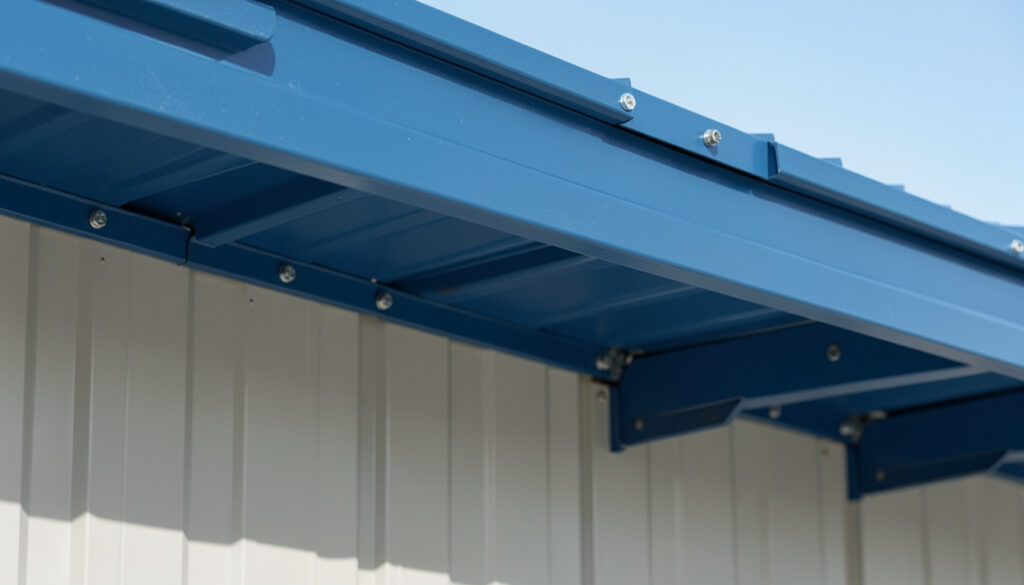
Soffit panels typically interface with trim components around the roof edge and building wall.
Trim can include:
- Eave trim
- Wall transition trim
- Fascia
- Corners
- End closures
If the trim is bent or corroded, installing a new soffit panel may not completely solve the problem.
Soffit Fasteners
Fasteners secure the soffit panels and associated trim.
Over time, exposed fasteners can experience:
- Corrosion
- Seal failure
- Loosening
- Washer deterioration
When replacing a soffit panel, inspect the existing attachment hardware.
Using appropriate replacement fasteners can help maintain the integrity of the finished assembly.
Corrosion in Soffit Areas
Soffits can develop corrosion when moisture remains trapped against metal surfaces.
Potential contributing factors include:
- Persistent leaks
- Condensation
- Poor drainage
- Damaged coatings
- Salt exposure
- Inadequate ventilation
Corrosion should be evaluated to determine whether it is localized or indicative of a broader moisture problem.
Soffits Near Gutters
Soffits are often located directly below roof eaves and therefore near gutters.
A blocked or overflowing gutter can expose the soffit to excessive water.
Water may run behind or across the soffit and cause staining or corrosion.
When a soffit is damaged near a gutter, inspect the gutter and downspout system as part of the repair.
Soffits and Roof Edge Maintenance
The roof edge contains several components that work together.
These can include:
- Roof panels
- Flashing
- Gutters
- Soffits
- Fascia
- Insulation
- Closures
- Sealants
Repairing one component without considering the surrounding system can leave an underlying problem unresolved.
Soffit Panels During Roof Replacement
A roof replacement project is an opportunity to inspect the existing soffit.
During roof work, check for:
- Damaged panels
- Corrosion
- Loose trim
- Missing fasteners
- Water staining
- Blocked ventilation
- Damaged insulation
Replacing deteriorated soffit components at the same time can prevent the need to reopen completed roof work later.
Soffits and Building Renovations
Exterior renovations can also affect soffit panels.
New equipment, lighting, electrical conduits, signs, or other modifications may require penetrations through or around the soffit.
These modifications should be planned carefully.
Improperly installed penetrations can compromise the finished appearance and may create pathways for water or pests.
Soffit Lighting
Exterior lighting is frequently installed near building eaves.
When lights or electrical equipment are attached to a soffit, the installation should avoid unnecessary damage to the panel.
Any penetrations should be properly detailed.
If a lighting fixture is removed later, the resulting opening should also be properly repaired.
Pest Entry Through Soffits
Openings around damaged or missing soffit components can potentially allow insects, birds, or small animals to enter portions of the building envelope.
Closures and properly fitted panels can help limit these openings.
If pest activity is discovered around a soffit, inspect the entire eave area rather than simply replacing the visibly damaged panel.
Wind Damage
Strong winds can damage soffit panels, especially around exposed building corners and roof edges.
Potential damage includes:
- Bent panels
- Dislodged panels
- Loose fasteners
- Damaged trim
- Open joints
After a significant wind event, inspect the soffit along with the primary roof and wall systems.
Soffit Maintenance
Routine exterior inspections can help identify minor problems before they become larger repairs.
Look for:
- Loose panels
- Staining
- Corrosion
- Open joints
- Damaged trim
- Missing fasteners
- Pest openings
- Blocked ventilation
A visual inspection from ground level can identify many problems, although closer inspection may be required for concealed or elevated components.
Common Problems With Moduleze II Soffit Panels
Damaged Panels
Impact, wind, maintenance work, or age can damage individual soffit panels.
Corrosion
Persistent moisture can cause corrosion of soffit panels and surrounding components.
Water Staining
Staining may indicate a roof, gutter, flashing, or condensation problem above the soffit.
Loose Panels
Loose panels can result from damaged fasteners, wind, or previous installation problems.
Missing Panels
A missing soffit panel can leave the building envelope and underlying components exposed.
Blocked Ventilation
Improper repairs or insulation installation can obstruct intended ventilation openings.
Damaged Trim
Bent or corroded trim can prevent replacement panels from fitting correctly.
Failed Fasteners
Corroded or loose fasteners can compromise the panel attachment.
Pest Openings
Gaps around damaged panels or trim can provide entry points for insects or animals.
Incorrect Replacement Panels
Panels from another system may not match the existing Moduleze II profile or dimensions.
Things to Know
- Moduleze II soffit panels provide a finished underside to Butler building roof overhangs.
- Soffits can form part of the transition between the roof and exterior wall.
- Soffit areas may incorporate ventilation openings depending on the building design.
- Replacement panels should match the existing profile and system.
- Water staining should be investigated before replacing a damaged soffit panel.
- Gutters and roof-edge flashing should be inspected when soffit damage occurs near the eave.
- Insulation should not unintentionally block designed ventilation pathways.
- Fasteners and trim should be inspected during soffit replacement.
- Corrosion may indicate a continuing moisture problem.
- Roof replacement provides an opportunity to inspect and repair soffit components.
- Exterior modifications should be properly detailed around soffit panels.
- Accurate measurements and photographs can help identify the correct replacement components.
Frequently Asked Questions
Q: What is a Moduleze II soffit panel?
Moduleze II is a soffit panel system used to finish the underside of roof overhangs on Butler metal buildings.
Q: What does a soffit panel do?
It provides a finished surface beneath the roof overhang and can also form part of the building’s ventilation and exterior-envelope design.
Q: Can a damaged Moduleze II panel be replaced individually?
In many cases, an individual damaged panel can be replaced without replacing the entire soffit area.
The surrounding panels, trim, and attachment components should be inspected first.
Q: Why is my soffit panel stained?
Staining can be caused by roof leaks, gutter overflow, failed flashing, condensation, or other moisture sources.
The source should be identified before installing a replacement panel.
Q: Can soffit panels help ventilate a metal building?
Depending on the building’s original design, soffit areas can contain ventilation openings that contribute to roof or attic ventilation.
Q: Can insulation block soffit ventilation?
It can if the insulation is installed incorrectly or extends into a designed ventilation pathway.
The insulation and ventilation system should be coordinated.
Q: What causes soffit panels to corrode?
Long-term moisture exposure, leaks, condensation, damaged coatings, and environmental conditions can contribute to corrosion.
Q: How do I know which Moduleze II replacement panel I need?
Provide the panel dimensions, profile, location, finish, and photographs of the existing soffit.
Information about the Butler building and original construction can also help.
Q: Can I paint a damaged Moduleze II soffit panel instead of replacing it?
Painting may improve appearance when the panel is structurally sound and the damage is limited to its finish.
Bent, perforated, severely corroded, or otherwise compromised panels may require replacement.
Q: Should I replace soffit panels when replacing my roof?
Not necessarily, but the soffit should be inspected during roof replacement.
Replacing deteriorated soffit components while the roof edge is already accessible can be practical.
Q: Can exterior lights be installed through a soffit panel?
Lighting can be installed around soffit areas, but penetrations and attachment points should be properly detailed to avoid damaging the panel or creating water and pest-entry paths.
Q: What information should I provide when ordering a replacement soffit panel?
Provide your Butler building information, panel measurements, photographs, location of the panel, and details about the damage.
This can help identify the appropriate replacement component.
The Bottom Line on Moduleze II Soffit Panels
Moduleze II soffit panels provide more than a finished appearance beneath a Butler building’s roof overhang. They can also form part of the building’s eave, ventilation, and exterior-envelope configuration.
When a soffit panel becomes damaged, the repair should consider the surrounding roof edge, flashing, gutters, trim, insulation, ventilation openings, and attachment hardware. Replacing only the visible panel may not address the underlying cause if moisture or structural problems are involved.
If you need a replacement Moduleze II soffit panel or other Butler building components, Request a Quote and provide your building information, measurements, photographs, and the specific components you need.