

Large commercial and industrial buildings can require significant artificial lighting during the day, particularly in areas with limited windows. For warehouses, manufacturing facilities, agricultural buildings, and other metal structures, light transmitting roof panels provide a practical way to introduce natural daylight through the roof.
Butler Light Transmitting Panels are designed specifically for use with Butlerib II metal roofs. They are made from high-strength translucent fiberglass and formed to match the Butlerib roof profile, allowing daylight to enter the building while maintaining compatibility with the surrounding roof system.
Unlike conventional skylights that typically use a framed curb assembly, light transmitting roof panels replace selected metal roof panels with translucent panels. This allows natural light to be distributed directly through portions of the roof.
Key Takeaways
- Butler Light Transmitting Panels are designed for Butlerib II metal roofs.
- The panels are manufactured from translucent fiberglass.
- Their form-fitting profile is designed to match the Butlerib II roof configuration.
- The standard panels are 3 feet wide by 10 feet long.
- Natural daylight can reduce dependence on artificial lighting during daylight hours.
- UV protection is available as an option.
- The panels have an approximately 10-year average lifespan, according to the current product information.
- Safety screens or other acceptable fall-through protection should be incorporated where required.
- Light transmitting panels are different from conventional framed roof skylights.
- Proper installation is essential to maintain the roof’s weather-tight performance.
What Are Light Transmitting Roof Panels?
Light transmitting roof panels are translucent roof panels that allow sunlight to pass through the building envelope.
Instead of using an opaque metal panel, selected portions of the roof use a translucent material.
The result is natural illumination inside the building without requiring additional windows in the walls.
For Butler buildings, these panels are designed around the Butlerib II roof profile, helping them integrate with the existing roof panel system.
This makes them particularly useful for large structures where installing enough wall windows to provide equivalent daylight would be impractical.
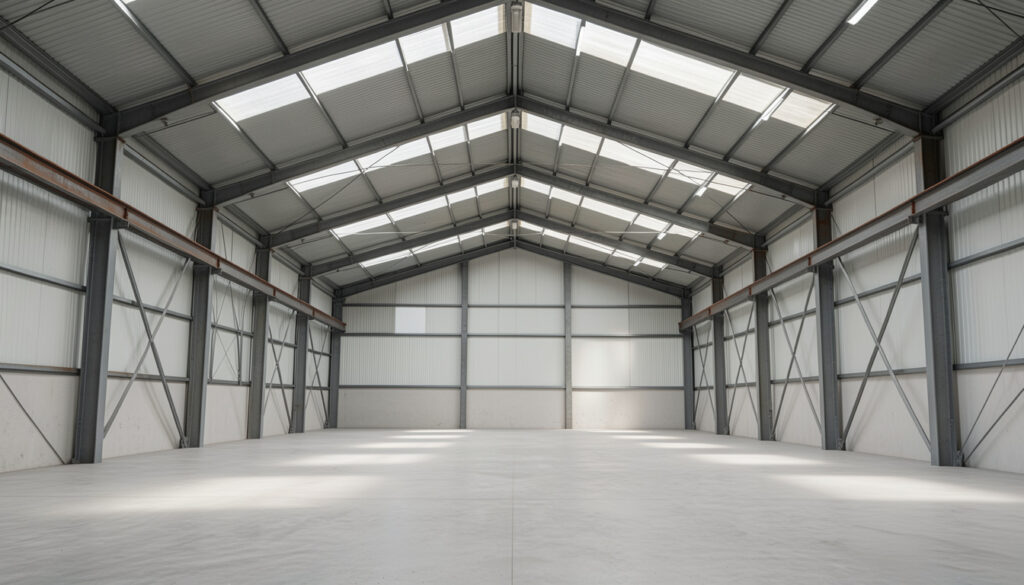
How Butler Light Transmitting Panels Work
The concept is straightforward.
Selected Butlerib II metal roof panels are replaced or incorporated with translucent light transmitting panels.
When sunlight reaches the roof, the fiberglass material allows a portion of that light to pass into the building.
During daylight hours, this can supplement the building’s artificial lighting system.
The amount of light entering the building depends on factors such as:
- Panel quantity
- Panel placement
- Roof orientation
- Sun position
- Weather conditions
- Interior ceiling height
- Interior finishes
- Panel condition
For this reason, light transmitting panels should be considered as part of the building’s overall daylighting strategy rather than as a guaranteed replacement for all artificial lighting.
Designed for Butlerib II Metal Roofs
One of the most important characteristics of the product is that it is designed for Butlerib II metal roofs.
The panels are form-fitted to the Butler Rib profile.
This helps maintain compatibility with the surrounding roof panels and simplifies integration into the roof system.
When replacing existing panels, it is important to verify the exact roof profile before ordering.
A light transmitting panel designed for one metal roof profile should not automatically be assumed to fit another.
High-Strength Fiberglass Construction
The current Butler product information identifies the light transmitting panels as being manufactured from high-strength fiberglass.
Fiberglass-reinforced plastic is commonly used in translucent building panels because it can provide both structural durability and light transmission.
The translucent material allows sunlight to enter while maintaining a physical roof covering.
Like any roof material, however, fiberglass panels should be inspected periodically for damage, weathering, cracking, and deterioration.
Natural Daylighting
The primary purpose of a light transmitting roof panel is to introduce natural light into the building.
Daylighting can be particularly useful in buildings with large floor areas where wall windows cannot provide sufficient interior illumination.
Potential applications include:
- Warehouses
- Manufacturing facilities
- Agricultural buildings
- Workshops
- Storage buildings
- Distribution facilities
- Commercial structures
Natural light can also improve visibility in areas that would otherwise require artificial lighting throughout the day.
Reducing Artificial Lighting
A building that receives sufficient daylight may require fewer artificial lights during portions of the day.
This can reduce the amount of electricity consumed by lighting equipment.
The current Butler product information specifically identifies reduced electrical lighting consumption and lighting costs as benefits of the light transmitting panels.
Actual savings depend on the building’s lighting controls, operating schedule, electricity rates, interior layout, and amount of daylight available.
Daylighting vs. Skylights
Light transmitting roof panels and roof skylights both bring daylight into a building, but they are not identical products.
A conventional skylight typically uses a dedicated framed assembly that creates an opening in the roof.
A light transmitting roof panel instead functions as part of the roof panel field.
Butler offers both products as separate daylighting solutions. Its current product information identifies roof skylights as custom-fit units for Butler roof profiles, while the light transmitting panels are specifically designed for Butlerib II roofs.
The appropriate option depends on the building design and desired daylighting strategy.
Standard Panel Dimensions
The current Butler light transmitting roof panel offering lists a standard size of 3 feet wide by 10 feet long.
Standardized dimensions can make planning easier when determining how many panels should be incorporated into a roof.
However, existing-building replacement work should always begin with verification of the installed roof profile and panel dimensions.
UV Protection
Light transmitting roof panels can be exposed to significant ultraviolet radiation throughout their service life.
The current product offering identifies UV protection as an available option.
UV protection can be particularly relevant for buildings where long-term panel appearance and material performance are important.
When ordering replacement panels, confirm whether the existing system includes UV protection and whether the replacement should match that configuration.
Expected Service Life
The current product information identifies an approximately 10-year average lifespan for the Butler Light Transmitting Panels.
Actual service life can vary based on:
- Climate
- UV exposure
- Weather
- Roof conditions
- Installation quality
- Cleaning practices
- Physical impact
- Material selection
A panel that becomes heavily weathered or damaged may transmit less light even before it develops an obvious structural problem.
Fall-Through Protection
Because light transmitting panels are installed within the roof plane, fall-through protection is an important safety consideration.
The current Butler product information recommends safety screens or other acceptable safety controls that prevent fall-through and states that these can be installed underneath or above the panel.
This is particularly important during roof maintenance.
Workers should never assume that a translucent roof panel can safely support their weight.
Fall protection should be designed and installed according to applicable safety requirements.
Weather-Tight Roof Integration
A light transmitting panel becomes part of the roof envelope.
That means its installation must provide appropriate protection against:
- Rain
- Wind
- Moisture
- Debris
- Temperature changes
The surrounding fasteners, seals, closures, and panel overlaps all contribute to the overall weather-tightness of the installation.
A damaged or incorrectly installed panel can become a potential source of water intrusion.
Where Should Light Transmitting Panels Be Installed?
Panel placement can significantly affect how daylight is distributed inside the building.
They may be positioned strategically above areas where additional natural light is most useful.
Potential locations include:
- Production areas
- Warehouse aisles
- Work areas
- Storage zones
- Maintenance spaces
The number and location of panels should be considered alongside the building’s artificial lighting layout.
Light Distribution Inside Large Buildings
A single translucent roof panel does not necessarily illuminate a large building evenly.
Interior conditions can affect how far daylight travels.
Factors include:
- Ceiling height
- Building width
- Interior wall placement
- Equipment
- Storage racks
- Ceiling finishes
- Panel spacing
Multiple strategically distributed panels can provide more consistent daylight than concentrating all panels in one location.
Light Transmitting Panels for Warehouses
Warehouses often have large floor areas and relatively few exterior windows.
Light transmitting roof panels can supplement artificial lighting in these environments.
This can be especially useful during normal daytime operating hours.
Potential benefits include:
- Improved daytime visibility
- Reduced lighting demand
- Lower electrical consumption
- Greater use of natural light
- Less dependence on wall openings
The panels can be particularly useful in facilities where wall space is needed for shelving, storage, equipment, or loading operations.
Light Transmitting Panels for Manufacturing Buildings
Manufacturing facilities frequently require strong, consistent illumination across production areas.
Natural daylight can supplement the facility’s artificial lighting system.
However, daylight should not be relied upon as the sole source of illumination where consistent lighting levels are required for safety or production.
A combination of natural and artificial lighting provides greater control.
Light Transmitting Panels for Agricultural Buildings
Agricultural and farm buildings can also benefit from natural roof lighting.
Daylighting can reduce the need for artificial lighting during daylight hours while improving visibility inside large structures.
The appropriate panel configuration depends on the building’s roof system and environmental exposure.
Replacing Damaged Light Transmitting Panels
Over time, translucent panels can become:
- Cracked
- Discolored
- Brittle
- Cloudy
- Weathered
- Damaged by impact
A deteriorated panel can reduce daylight transmission and may eventually create a roof maintenance problem.
Replacement should be considered when the panel can no longer provide adequate performance.
Matching Existing Butlerib II Panels
When replacing an existing light transmitting panel, compatibility is critical.
Verify:
- Roof profile
- Panel width
- Panel length
- Rib configuration
- Fastener locations
- Panel thickness
- Existing closures
- Existing sealants
- UV protection
- Safety screen configuration
A replacement panel that does not match the existing Butlerib II profile can create installation and weather-tightness problems.
Inspecting Existing Panels
During roof inspections, look for:
- Cracks
- Holes
- Discoloration
- Excessive brittleness
- Loose fasteners
- Damaged overlaps
- Sealant deterioration
- Water staining
- Corrosion around fasteners
Panels that appear visually intact should still be checked for material deterioration.
Cleaning Light Transmitting Panels
Dirt and accumulated debris can reduce the amount of daylight passing through a translucent panel.
Cleaning can help maintain light transmission.
However, cleaning should be performed using methods and materials appropriate for the panel material.
Aggressive cleaning chemicals, abrasive tools, or improper pressure washing can damage the surface.
Common Problems With Light Transmitting Roof Panels
Cracking
Impact, aging, thermal movement, or material deterioration can cause cracks.
Yellowing or Clouding
Long-term UV exposure and weathering can reduce transparency and daylight transmission.
Water Leakage
Damaged seals, loose fasteners, or improper overlaps can allow water to enter the building.
Brittle Material
Aging fiberglass can become less flexible and more susceptible to damage.
Loose Fasteners
Fasteners can loosen over time due to thermal movement, vibration, or installation problems.
Reduced Light Transmission
Dirt, discoloration, surface deterioration, or interior dust can reduce the amount of daylight entering the building.
Damaged Safety Screens
A damaged fall-through protection system can create a significant roof safety concern.
Signs Your Light Transmitting Panels Need Replacement
Consider replacement when you notice:
- Visible cracks
- Significant discoloration
- Severe clouding
- Brittle material
- Repeated leaks
- Damaged ribs
- Missing sections
- Loose or damaged fasteners
- Reduced daylight transmission
Replacing deteriorated panels can restore daylighting performance while addressing roof-envelope problems.
Replacing Light Transmitting Roof Panels
Replacing a light transmitting panel is not simply a matter of matching its visible dimensions.
The replacement must integrate with the existing Butlerib II roof system.
Before ordering, document:
- Existing roof profile
- Panel width
- Panel length
- Rib spacing
- Fastener arrangement
- Panel material
- UV protection
- Safety screen
- Adjacent metal panel condition
Photographs of the existing panel and surrounding roof are also useful.
Measuring the Existing Panel
Measure the existing panel carefully.
Record:
- Overall width
- Overall length
- Rib configuration
- Rib spacing
- Panel overlap
- Fastener locations
If the existing panel is too deteriorated to measure reliably, measure an adjacent Butlerib II metal roof panel as well.
The objective is to ensure that the replacement matches the surrounding roof system.
Coordinating With Roof Repairs
Light transmitting panels are often inspected when other roof maintenance is being performed.
If the surrounding roof panels are being replaced, this can be an appropriate time to evaluate the condition of the translucent panels.
Likewise, if a light transmitting panel is being replaced because of leakage, inspect the surrounding metal panels and fasteners for related damage.
Roof Safety During Replacement
Light transmitting roof panels should always be treated as potentially fragile.
Workers should not step directly onto translucent panels unless the specific system is designed and rated for that purpose.
Appropriate fall protection and access procedures should be followed during inspection, maintenance, and replacement.
The safety system should also remain functional after the replacement is complete.
Things to Know
- Butler Light Transmitting Panels are designed specifically for Butlerib II metal roofs.
- The panels are made from high-strength translucent fiberglass.
- The standard product is 3 feet wide by 10 feet long.
- UV protection is available as an option.
- The current product information identifies an approximately 10-year average lifespan.
- Natural daylight can reduce reliance on artificial lighting during daytime operations.
- Safety screens or other acceptable fall-through protection should be provided where required.
- Light transmitting panels are different from conventional framed roof skylights.
- Roof profile compatibility should be verified before ordering replacement panels.
- Deteriorated panels can reduce daylight transmission and increase the risk of leakage.
- Fasteners, overlaps, seals, and surrounding roof panels should be inspected during replacement.
- Translucent roof panels should be treated as potentially fragile during roof work.
Frequently Asked Questions
Q: What are Butler Light Transmitting Roof Panels?
They are translucent fiberglass roof panels designed to allow natural daylight into Butler buildings through the roof.
Q: What Butler roof system are they designed for?
Butler Light Transmitting Panels are designed for use with Butlerib II metal roofs and are form-fitted to the Butler Rib profile.
Q: What are light transmitting roof panels made from?
The current Butler product information identifies high-strength fiberglass as the panel material.
Q: What size are Butler Light Transmitting Panels?
The standard listed size is 3 feet wide by 10 feet long.
Q: Can light transmitting panels reduce energy costs?
They can reduce daytime dependence on artificial lighting, which may lower electrical lighting consumption.
Actual savings depend on the building’s lighting system, operating schedule, daylight conditions, and electricity rates.
Q: How long do Butler Light Transmitting Panels last?
The current product information lists an approximately 10-year average lifespan.
Actual service life depends on environmental exposure, installation, maintenance, and material conditions.
Q: Do light transmitting panels need UV protection?
UV protection is available as an option.
Whether it is appropriate depends on the project’s exposure and desired service life.
Q: Are light transmitting roof panels safe to walk on?
They should not be treated as walkable roof surfaces unless the specific product is explicitly designed and rated for that purpose.
Fall-through protection should be provided according to applicable safety requirements.
Q: How are light transmitting roof panels different from skylights?
Light transmitting panels are designed as part of the Butlerib II roof panel field, while conventional skylights typically use a dedicated framed opening or curb-mounted assembly.
Q: How do I replace an existing Butler Light Transmitting Panel?
Verify the Butlerib II roof profile, panel dimensions, rib configuration, fastener arrangement, and existing safety provisions before ordering.
Photographs of the existing installation can also help confirm compatibility.
The Bottom Line on Butler Light Transmitting Roof Panels
Butler Light Transmitting Roof Panels provide a straightforward way to bring natural daylight into Butlerib II metal buildings without relying entirely on artificial lighting.
Their translucent fiberglass construction, form-fitting Butlerib II profile, standard 3-by-10-foot dimensions, and optional UV protection make them suitable for a range of commercial, industrial, agricultural, and storage applications.
For building owners looking to improve daytime visibility and reduce dependence on electrical lighting, light transmitting panels can be an effective daylighting component. However, their performance depends on proper placement, roof integration, maintenance, and protection against physical damage.
For replacement projects, verify the Butlerib II roof profile, panel dimensions, rib configuration, fasteners, UV protection, and fall-through protection before ordering.
Need replacement Butler Light Transmitting Roof Panels? Request a Quote and provide your existing panel dimensions, roof profile, and photos of the installation.